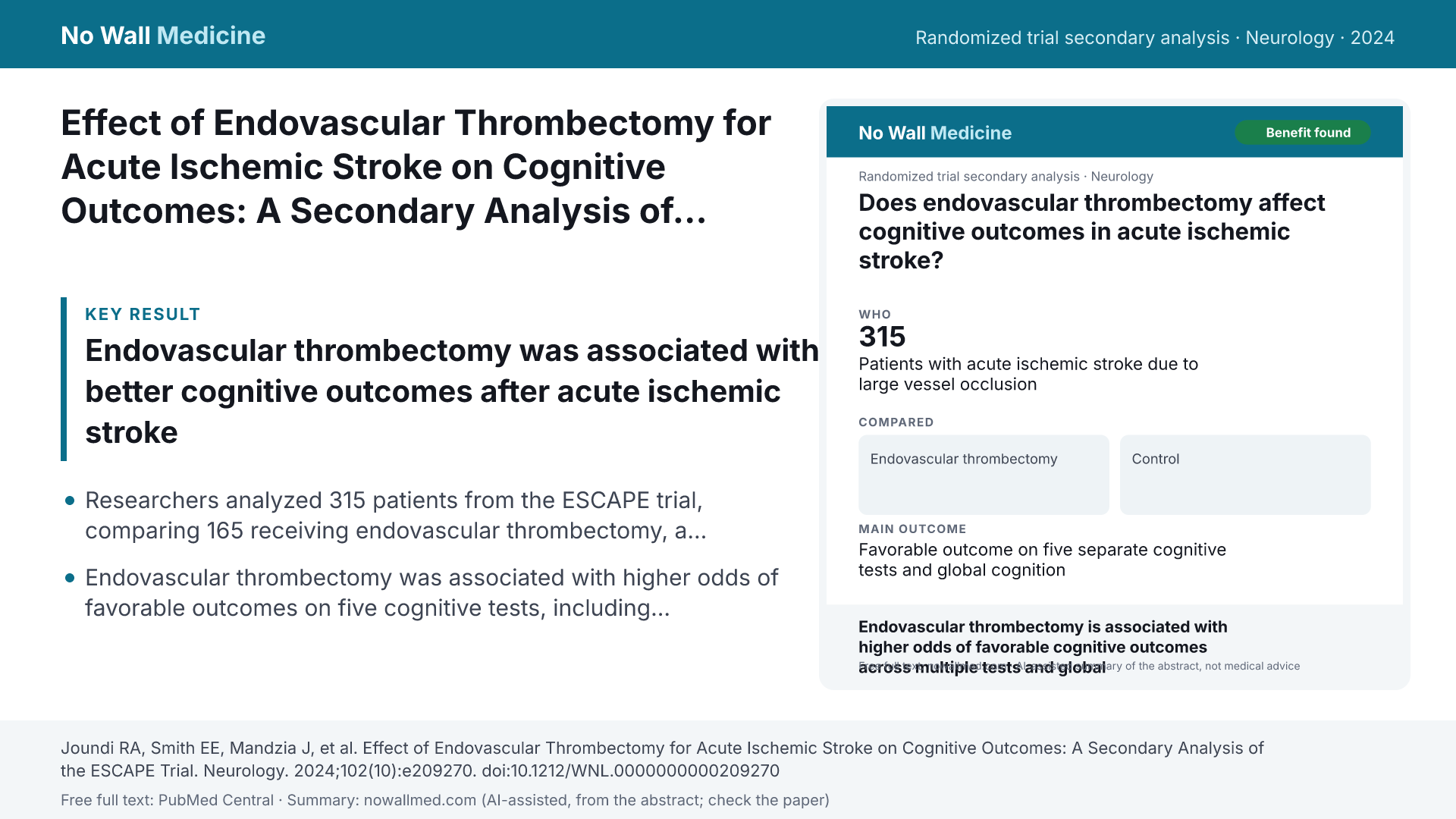
Endovascular thrombectomy was associated with better cognitive outcomes after acute ischemic stroke
Effect of Endovascular Thrombectomy for Acute Ischemic Stroke on Cognitive Outcomes: A Secondary Analysis of the ESCAPE Trial
Randomized trial secondary analysisBenefit found
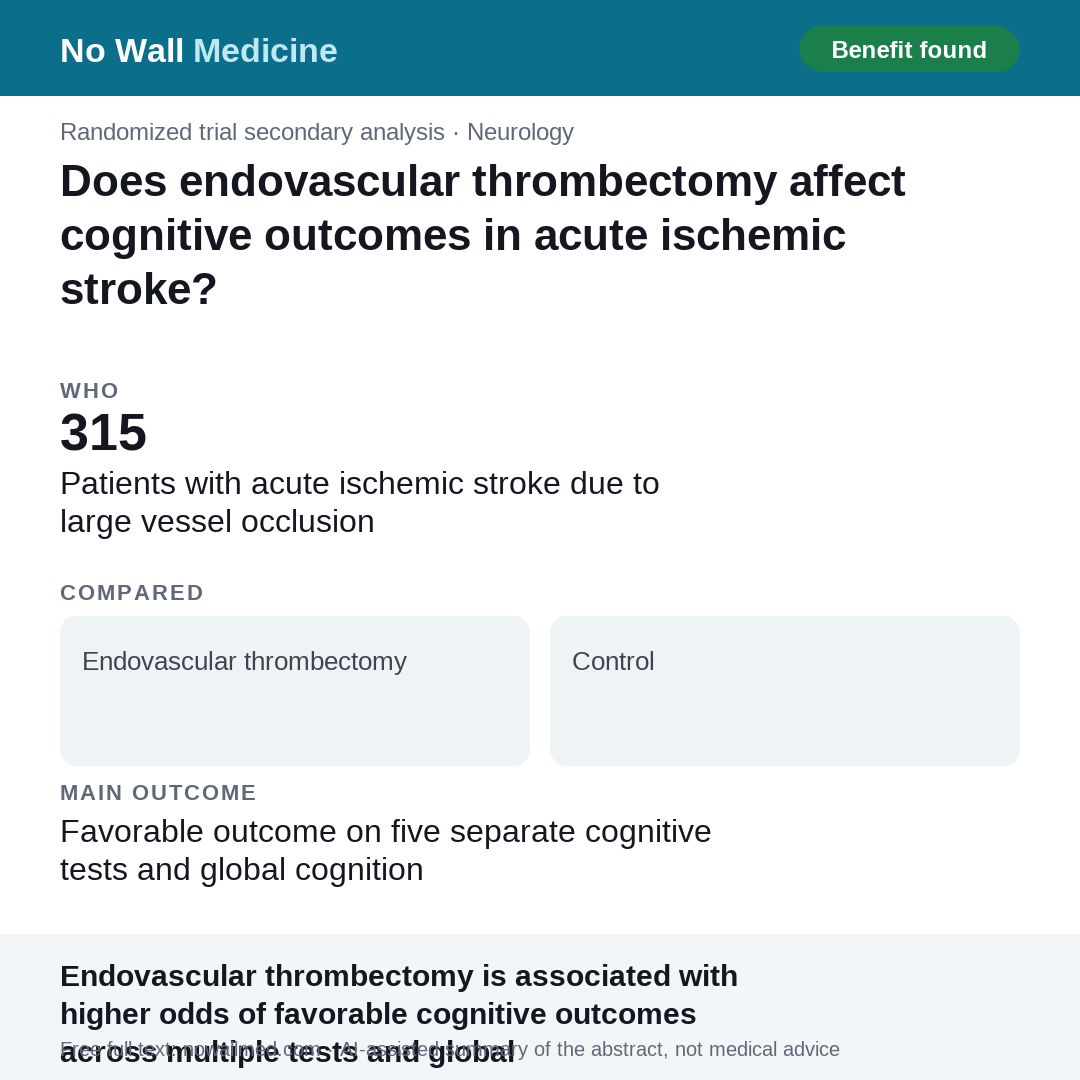
Does endovascular thrombectomy affect cognitive outcomes in acute ischemic stroke?
Who
315
Patients with acute ischemic stroke due to large vessel occlusion
Compared
Endovascular thrombectomy
Control
Main outcome
Favorable outcome on five separate cognitive tests and global cognition
Result: adjusted odds ratio 2.57 (95% CI 1.67 to 3.94) for global binary analysis
Bottom line: Endovascular thrombectomy is associated with higher odds of favorable cognitive outcomes across multiple tests and global assessments.
Neurology · 2024-05-13Download image
Clinical question: Does endovascular thrombectomy affect cognitive outcomes in acute ischemic stroke?
Why it matters: The effect of endovascular therapy for large vessel occlusion stroke on cognitive outcomes is not well understood.
Key points
- Researchers analyzed 315 patients from the ESCAPE trial, comparing 165 receiving endovascular thrombectomy, a procedure to remove a clot from a blood vessel, to 150 in a control group.
- Endovascular thrombectomy was associated with higher odds of favorable outcomes on five cognitive tests, including a Montreal Cognitive Assessment adjusted odds ratio of 2.32.
- Global cognitive function analysis showed higher odds of favorable outcomes with endovascular thrombectomy, with an adjusted odds ratio of 2.83 in ordinal analyses.
Headline and key points written with AI from the paper’s abstract, with every number checked against it. Read the paper before relying on them.
Was this summary helpful?
Subject terms
Cite this article
Joundi RA, Smith EE, Mandzia J, Ganesh A, Menon BK, Rempel JL. Effect of Endovascular Thrombectomy for Acute Ischemic Stroke on Cognitive Outcomes: A Secondary Analysis of the ESCAPE Trial. Neurology. 2024. doi:10.1212/WNL.0000000000209270
Spotted a mistake? Suggest a correction
Top studies every Monday
The week’s key trials and guidelines in your specialties, plus any topics you follow. By email, free.
Get the weekly digest