Medication optimization was more effective than cognitive behavioral therapy for pain in veterans
Effect of Medication Optimization vs Cognitive Behavioral Therapy Among US Veterans With Chronic Low Back Pain Receiving Long-term Opioid Therapy: A Randomized Clinical Trial
Randomized clinical trialBenefit found
Is medication optimization or cognitive behavioral therapy more effective for chronic low back pain?
Who
261
Veterans with chronic low back pain receiving long-term opioid therapy · 7 Veterans Affairs primary care clinics
Compared
Medication optimization
Cognitive behavioral therapy
Main outcome
Change in Brief Pain Inventory total score
Result: between-group difference, -0.54 (95% CI, -1.18 to -0.31)
Bottom line: Medication optimization was modestly more effective than cognitive behavioral therapy in reducing pain impact at 12 months.
Limitation: The difference may not be clinically meaningful or generalize to nonveteran populations.
JAMA Netw Open · 2022-11-01Download image
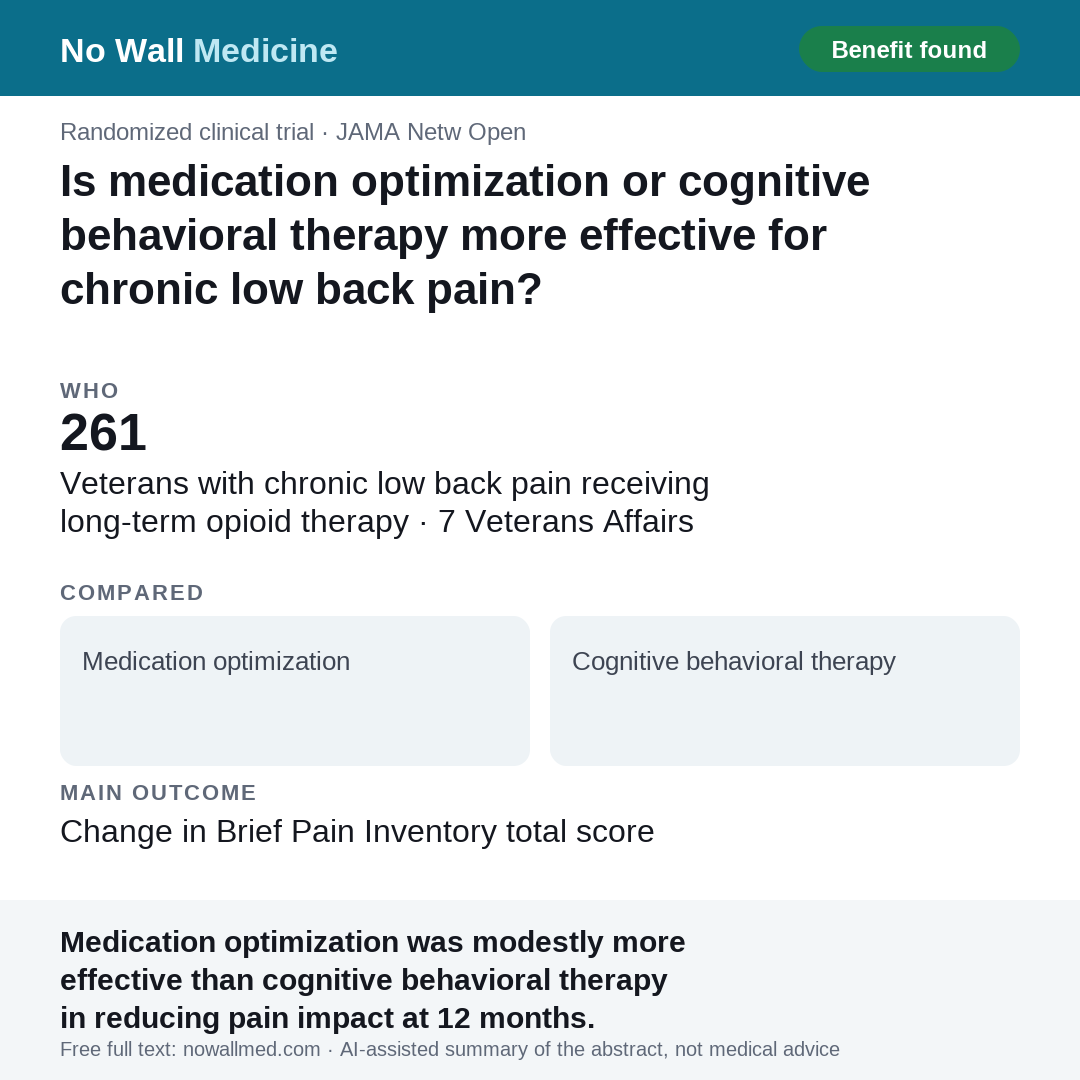
Clinical question: Is medication optimization or cognitive behavioral therapy more effective for chronic low back pain?
Why it matters: Evidence is limited regarding whether medication optimization or cognitive behavioral therapy is more effective for managing pain in patients on long-term opioids.
Key points
- Researchers studied 261 veterans with chronic low back pain receiving long-term opioid therapy and compared medication optimization to cognitive behavioral therapy.
- At 12 months, the medication optimization group had significantly greater improvements in pain intensity and interference scores than the cognitive behavioral therapy group.
- Secondary outcomes including depression, anxiety, and substance misuse did not differ significantly between the two treatment groups.
Limitation the authors note: The authors state that the results may not be clinically meaningful or generalize to nonveteran populations.
Headline and key points written with AI from the paper’s abstract, with every number checked against it. Read the paper before relying on them.
Was this summary helpful?
Subject terms
Cite this article
Bushey MA, Slaven JE, Outcalt SD, Kroenke K, Kempf C, Froman A. Effect of Medication Optimization vs Cognitive Behavioral Therapy Among US Veterans With Chronic Low Back Pain Receiving Long-term Opioid Therapy: A Randomized Clinical Trial. JAMA Netw Open. 2022. doi:10.1001/jamanetworkopen.2022.42533
Spotted a mistake? Suggest a correction
Top studies every Monday
The week’s key trials and guidelines in your specialties, plus any topics you follow. By email, free.
Get the weekly digest