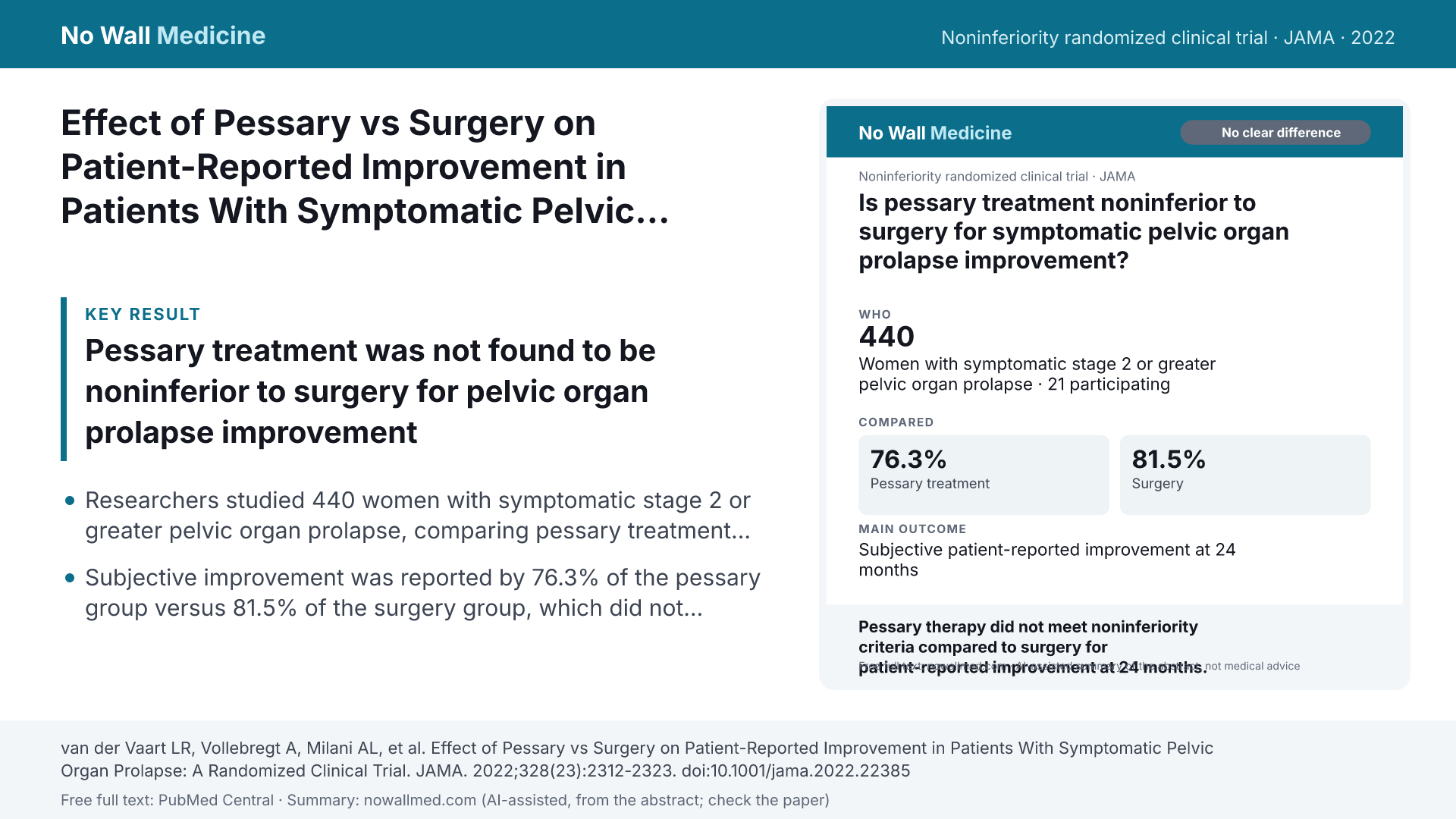
Pessary treatment was not found to be noninferior to surgery for pelvic organ prolapse improvement
Effect of Pessary vs Surgery on Patient-Reported Improvement in Patients With Symptomatic Pelvic Organ Prolapse: A Randomized Clinical Trial
Noninferiority randomized clinical trialNo clear difference
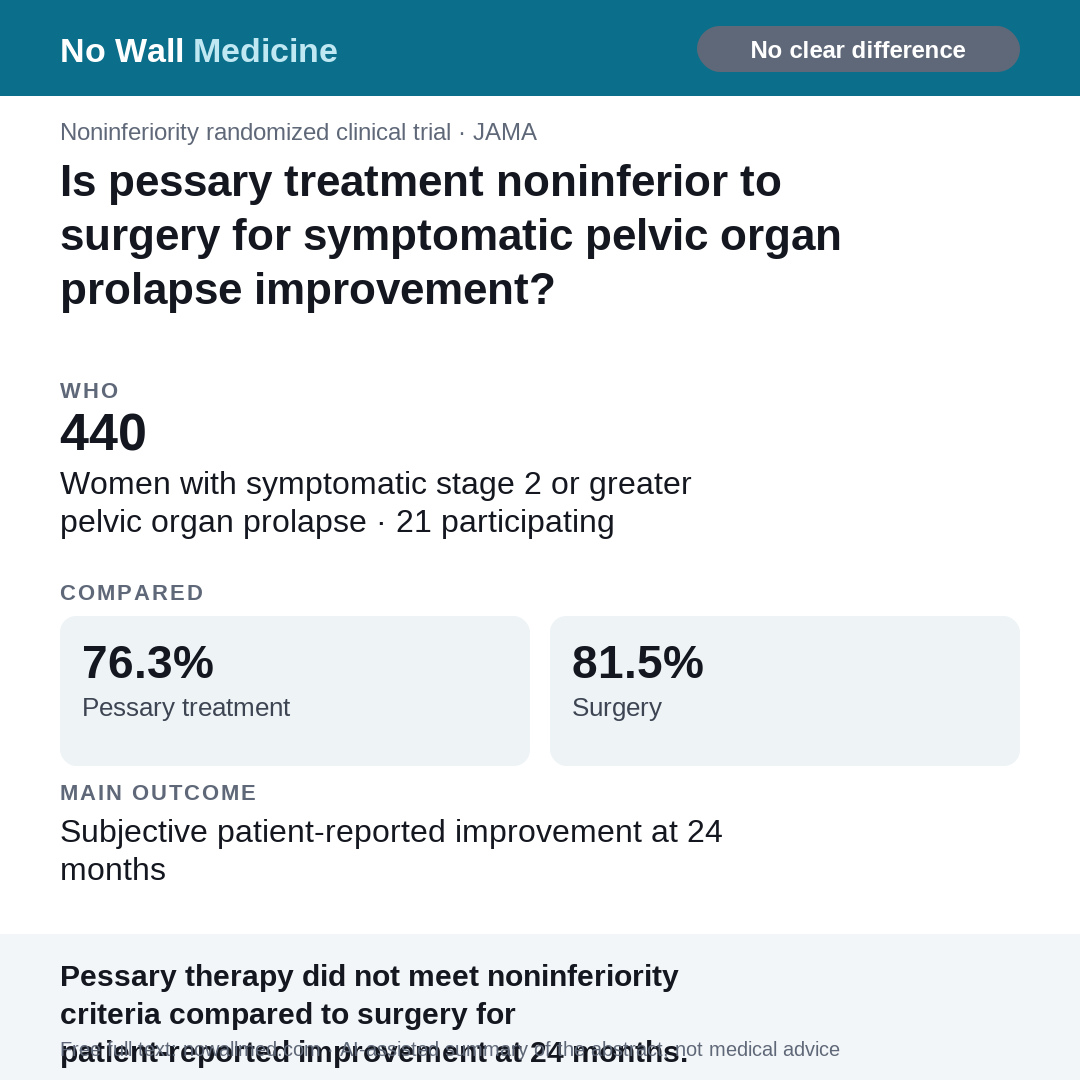
Is pessary treatment noninferior to surgery for symptomatic pelvic organ prolapse improvement?
Who
440
Women with symptomatic stage 2 or greater pelvic organ prolapse · 21 participating hospitals in the Netherlands
Compared
76.3%Pessary treatment
81.5%Surgery
Main outcome
Subjective patient-reported improvement at 24 months
Result: risk difference, -6.1% [1-sided 95% CI, -12.7 to ∞]
Bottom line: Pessary therapy did not meet noninferiority criteria compared to surgery for patient-reported improvement at 24 months.
Limitation: Interpretation is limited by loss to follow-up and large amount of participant crossover from pessary to surgery.
JAMA · 2022-12-20Download image
Clinical question: Is pessary treatment noninferior to surgery for symptomatic pelvic organ prolapse improvement?
Why it matters: There is a need for cost-effective care options for women with pelvic organ prolapse as global demand increases with rising life expectancy.
Key points
- Researchers studied 440 women with symptomatic stage 2 or greater pelvic organ prolapse, comparing pessary treatment to surgery over 24 months.
- Subjective improvement was reported by 76.3% of the pessary group versus 81.5% of the surgery group, which did not meet noninferiority criteria.
- The most common adverse event for pessary users was discomfort at 42.7%, while urinary tract infections occurred in 9% of surgery patients.
Limitation the authors note: The interpretation is limited by loss to follow-up and the large amount of participant crossover from pessary therapy to surgery.
Headline and key points written with AI from the paper’s abstract, with every number checked against it. Read the paper before relying on them.
Was this summary helpful?
Subject terms
Cite this article
van der Vaart LR, Vollebregt A, Milani AL, et al. Effect of Pessary vs Surgery on Patient-Reported Improvement in Patients With Symptomatic Pelvic Organ Prolapse: A Randomized Clinical Trial. JAMA. 2022. doi:10.1001/jama.2022.22385
Spotted a mistake? Suggest a correction