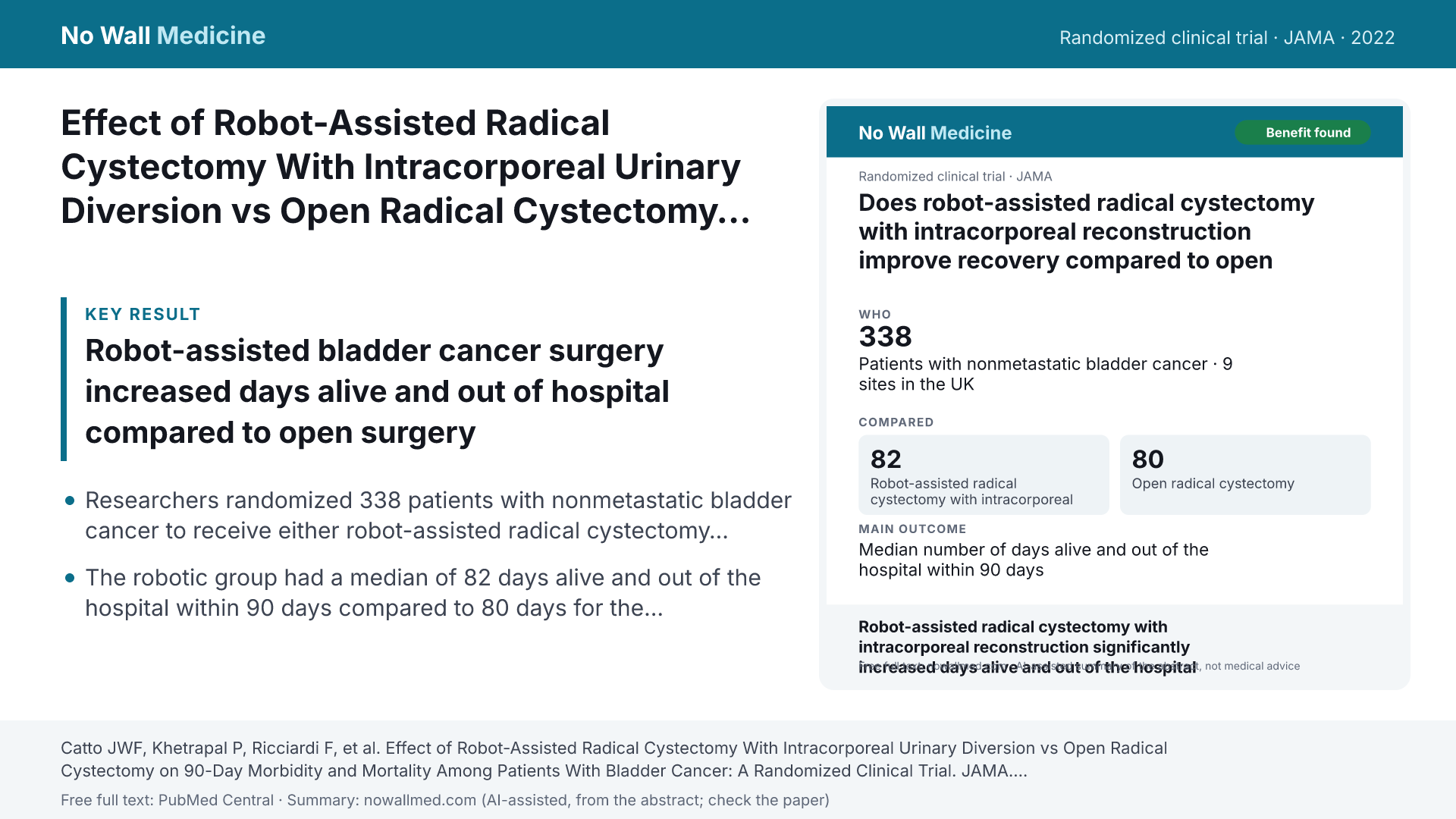
Robot-assisted bladder cancer surgery increased days alive and out of hospital compared to open surgery
Effect of Robot-Assisted Radical Cystectomy With Intracorporeal Urinary Diversion vs Open Radical Cystectomy on 90-Day Morbidity and Mortality Among Patients With Bladder Cancer: A Randomized Clinical Trial
Randomized clinical trialBenefit found
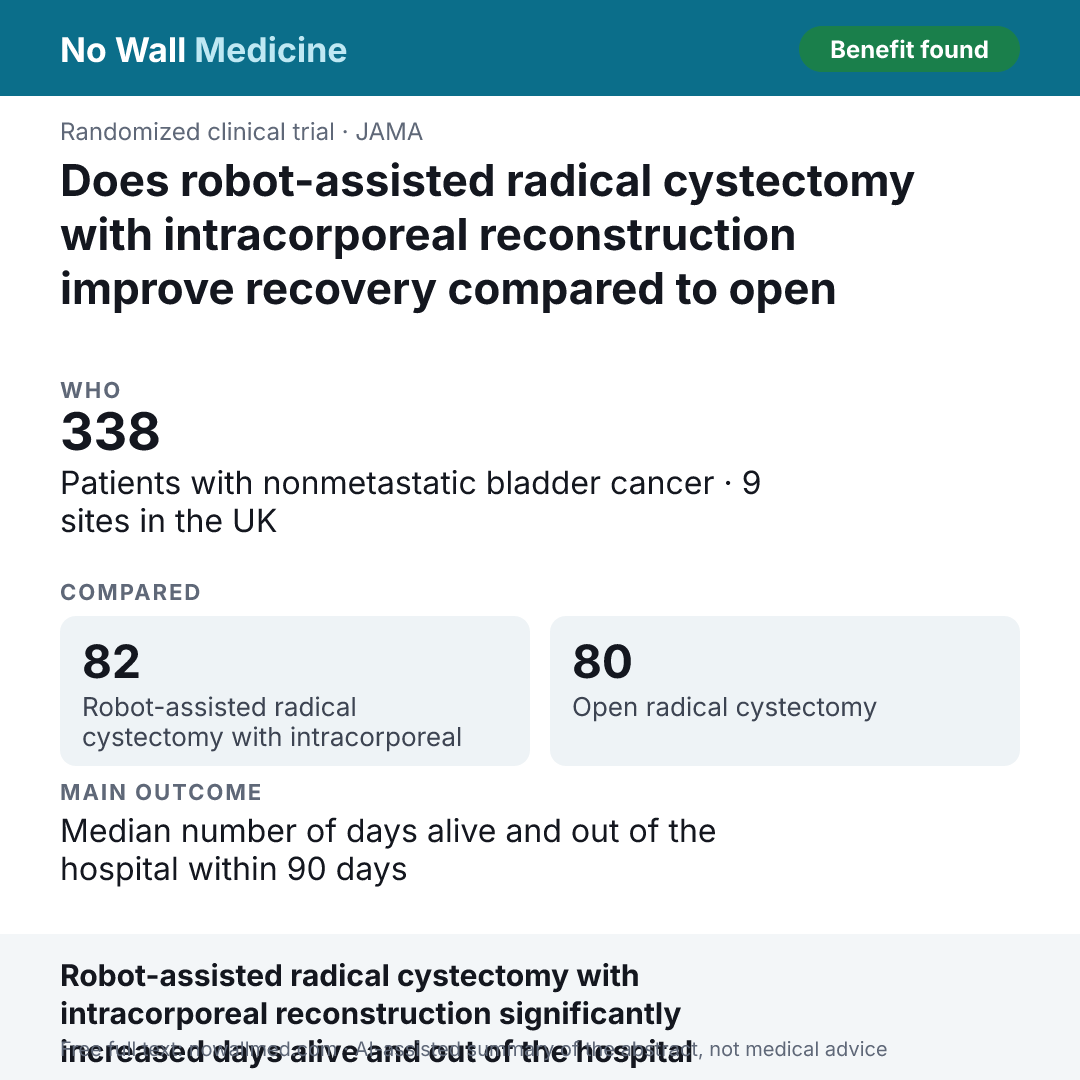
Does robot-assisted radical cystectomy with intracorporeal reconstruction improve recovery compared to open radical cystectomy?
Who
338
Patients with nonmetastatic bladder cancer · 9 sites in the UK
Compared
82Robot-assisted radical cystectomy with intracorporeal reconstruction (IQR, 76-84)
80Open radical cystectomy (IQR, 72-83)
Main outcome
Median number of days alive and out of the hospital within 90 days
Result: adjusted difference, 2.2 days (95% CI, 0.50-3.85)
Bottom line: Robot-assisted radical cystectomy with intracorporeal reconstruction significantly increased days alive and out of the hospital compared to open surgery.
Limitation: The clinical importance of these findings remains uncertain.
JAMA · 2022-05-16 · Save PNG
Same trial (ISRCTN13680280, NCT03049410)
Papers we list that report this registered trial, oldest first. Read a secondary analysis alongside the main results.
- Main results Benefit found
This paper JAMA 2022-05 - Related analysis Mixed results
Robot-assisted bladder cancer surgery was associated with lower intensive care admissions and hospital readmissions JAMA Netw Open 2023-06
Clinical question: Does robot-assisted radical cystectomy with intracorporeal reconstruction improve recovery compared to open radical cystectomy?
Key points
- Researchers randomized 338 patients with nonmetastatic bladder cancer to receive either robot-assisted radical cystectomy with intracorporeal urinary diversion or open radical cystectomy.
- The robotic group had a median of 82 days alive and out of the hospital within 90 days compared to 80 days for the open surgery group.
- Robotic surgery was associated with lower rates of blood clot complications at 1.9% versus 8.3% and wound complications at 5.6% versus 16.0%.
Headline and key points written with AI from the paper’s abstract, with every number checked against it. Read the paper before relying on them.
Was this summary helpful?
Subject terms
Headline, design, result, key points, caveat and citation as plain text.
Cite this article
Catto JWF, Khetrapal P, Ricciardi F, et al. Effect of Robot-Assisted Radical Cystectomy With Intracorporeal Urinary Diversion vs Open Radical Cystectomy on 90-Day Morbidity and Mortality Among Patients With Bladder Cancer: A Randomized Clinical Trial. JAMA. 2022. doi:10.1001/jama.2022.7393
Spotted a mistake? Suggest a correction