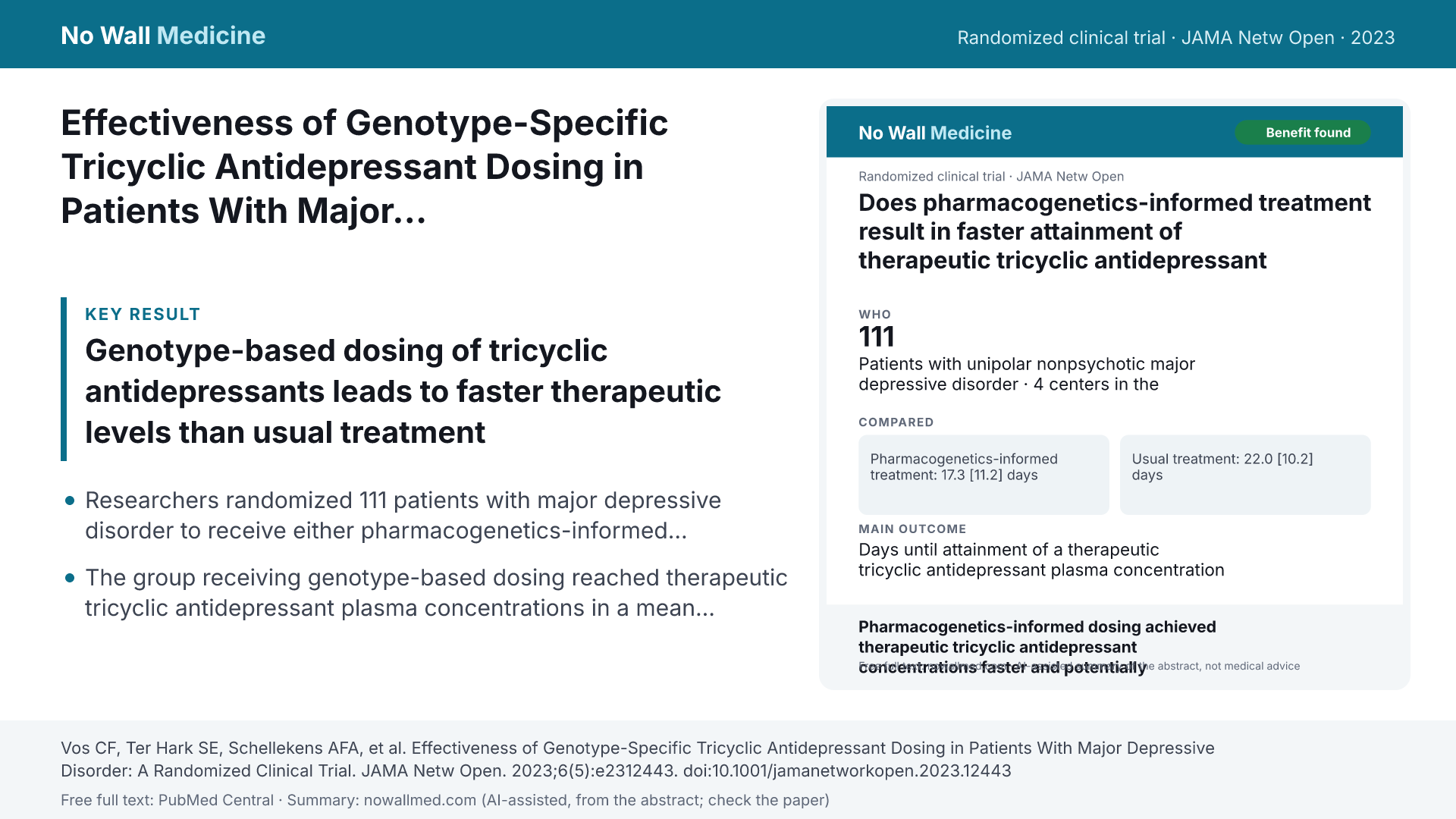
Genotype-based dosing of tricyclic antidepressants leads to faster therapeutic levels than usual treatment
Effectiveness of Genotype-Specific Tricyclic Antidepressant Dosing in Patients With Major Depressive Disorder: A Randomized Clinical Trial
Randomized clinical trialBenefit found
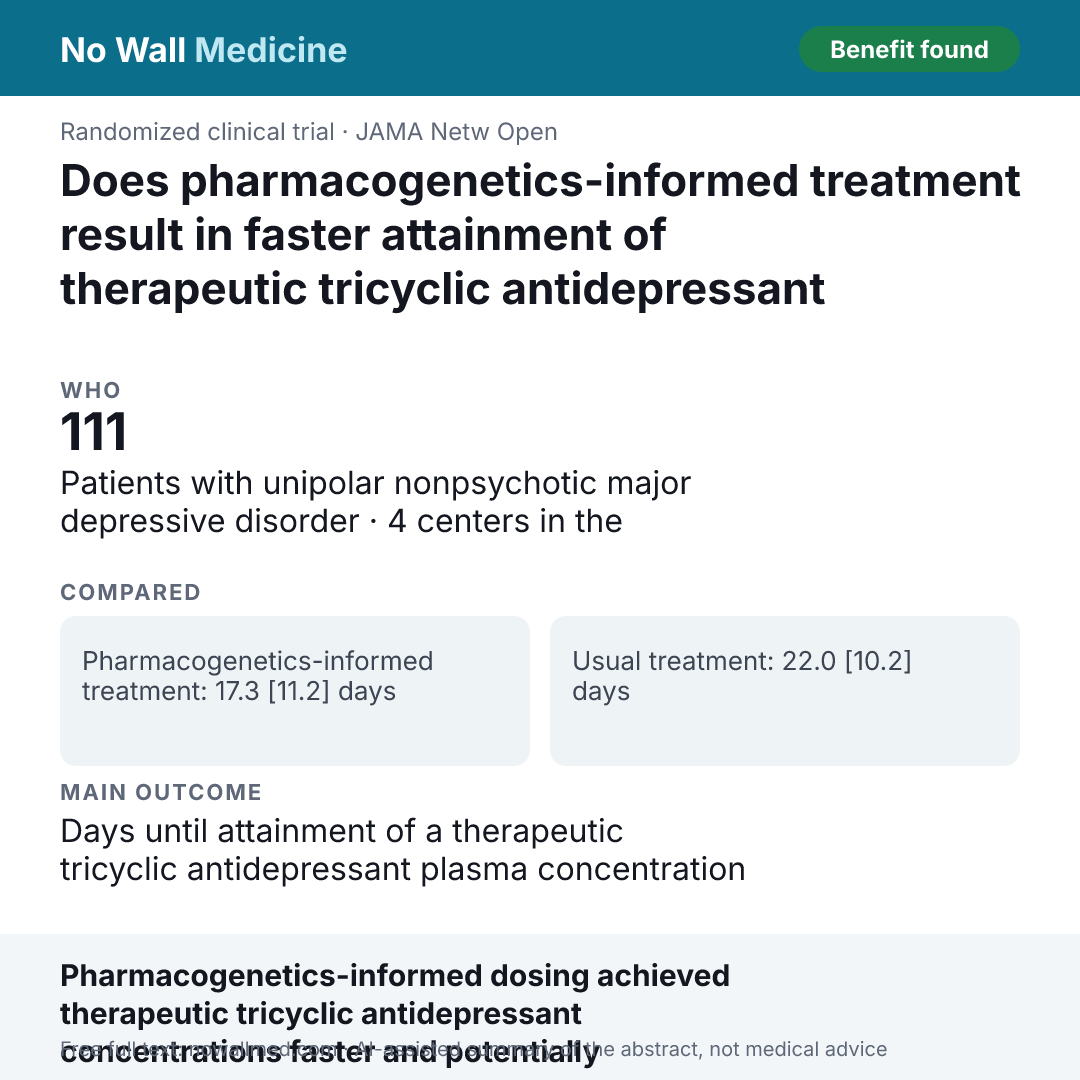
Does pharmacogenetics-informed treatment result in faster attainment of therapeutic tricyclic antidepressant plasma concentrations?
Who
111
Patients with unipolar nonpsychotic major depressive disorder · 4 centers in the Netherlands
Compared
Pharmacogenetics-informed treatment: 17.3 [11.2] days
Usual treatment: 22.0 [10.2] days
Main outcome
Days until attainment of a therapeutic tricyclic antidepressant plasma concentration
Bottom line: Pharmacogenetics-informed dosing achieved therapeutic tricyclic antidepressant concentrations faster and potentially reduced adverse effects without changing depressive symptoms.
JAMA Netw Open · 2023-05-01 · Save PNG
Clinical question: Does pharmacogenetics-informed treatment result in faster attainment of therapeutic tricyclic antidepressant plasma concentrations?
Key points
- Researchers randomized 111 patients with major depressive disorder to receive either pharmacogenetics-informed treatment based on CYP2D6 and CYP2C19 genes or usual standard dosing.
- The group receiving genotype-based dosing reached therapeutic tricyclic antidepressant plasma concentrations in a mean of 17.3 [11.2] days compared to 22.0 [10.2] days in the control group.
- While no significant difference was seen in the reduction of depressive symptoms, the genotype-based group experienced a relatively greater decrease in the frequency, severity, and burden of adverse effects.
Headline and key points written with AI from the paper’s abstract, with every number checked against it. Read the paper before relying on them.
Was this summary helpful?
Subject terms
Headline, design, result, key points, caveat and citation as plain text.
Cite this article
Vos CF, Ter Hark SE, Schellekens AFA, et al. Effectiveness of Genotype-Specific Tricyclic Antidepressant Dosing in Patients With Major Depressive Disorder: A Randomized Clinical Trial. JAMA Netw Open. 2023;6(5):e2312443. doi:10.1001/jamanetworkopen.2023.12443
Spotted a mistake? Suggest a correction