Combining acetazolamide and remote ischemic preconditioning reduced the incidence of acute mountain sickness
Effects of acetazolamide combined with remote ischemic preconditioning on risk of acute mountain sickness: a randomized clinical trial
Prospective, randomized, open-label, blinded endpoint trialBenefit found
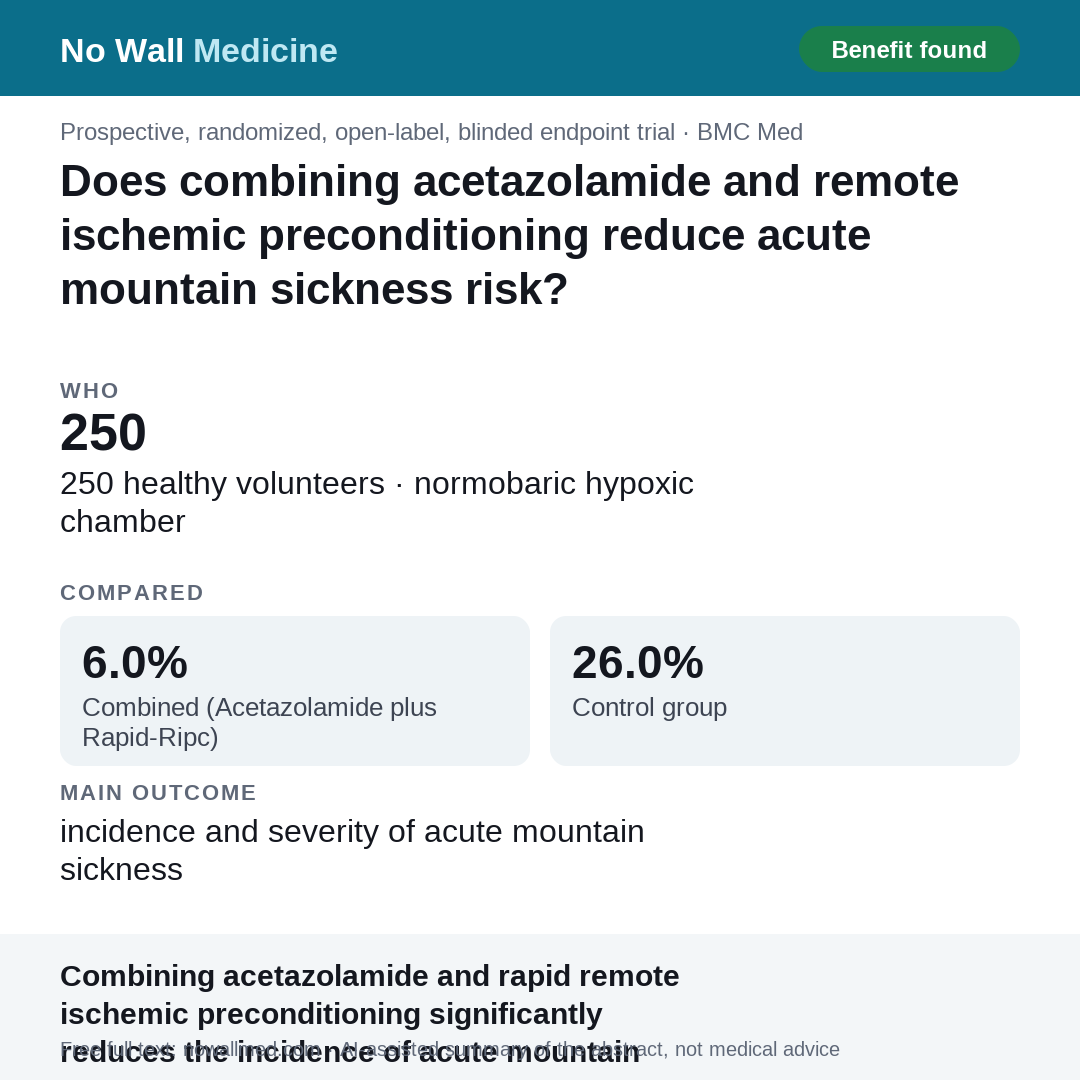
Does combining acetazolamide and remote ischemic preconditioning reduce acute mountain sickness risk?
Who
250
250 healthy volunteers · normobaric hypoxic chamber
Compared
6.0%Combined (Acetazolamide plus Rapid-Ripc)
26.0%Control group
Main outcome
incidence and severity of acute mountain sickness
Result: RR 0.23, 95% CI 0.07-0.70
Bottom line: Combining acetazolamide and rapid remote ischemic preconditioning significantly reduces the incidence of acute mountain sickness.
BMC Med · 2024-01-02Download image
Clinical question: Does combining acetazolamide and remote ischemic preconditioning reduce acute mountain sickness risk?
Why it matters: It is unknown if combining acetazolamide with remote ischemic preconditioning can reduce the incidence and severity of acute mountain sickness during rapid ascent.
In absolute numbers
Combined (Acetazolamide plus Rapid-Ripc): 6% · Control group: 26% → a difference of 20 percentage points, so about 5 people would need the treatment for 1 more to benefit (number needed to treat) over the trial’s follow-up.
Worked out by us from the two group results above, not reported by the authors. Check the paper for the exact outcome and timing.
Key points
- Researchers studied 250 healthy volunteers randomized into five groups to compare remote ischemic preconditioning, acetazolamide, a combination of both, or a control group.
- The combination of acetazolamide and remote ischemic preconditioning reduced the incidence of acute mountain sickness from 26.0% in the control group to 6.0%.
- The combined group also showed the lowest acute mountain sickness score of 0.92 ± 1.10 and improved blood oxygen saturation levels of 89% to 91%.
Headline and key points written with AI from the paper’s abstract, with every number checked against it. Read the paper before relying on them.
Was this summary helpful?
Subject terms
Cite this article
Liu M, Jiao X, Li R, Li J, Wang L, Wang L. Effects of acetazolamide combined with remote ischemic preconditioning on risk of acute mountain sickness: a randomized clinical trial. BMC Med. 2024. doi:10.1186/s12916-023-03209-7
Spotted a mistake? Suggest a correction
Top studies every Monday
The week’s key trials and guidelines in your specialties, plus any topics you follow. By email, free.
Get the weekly digest