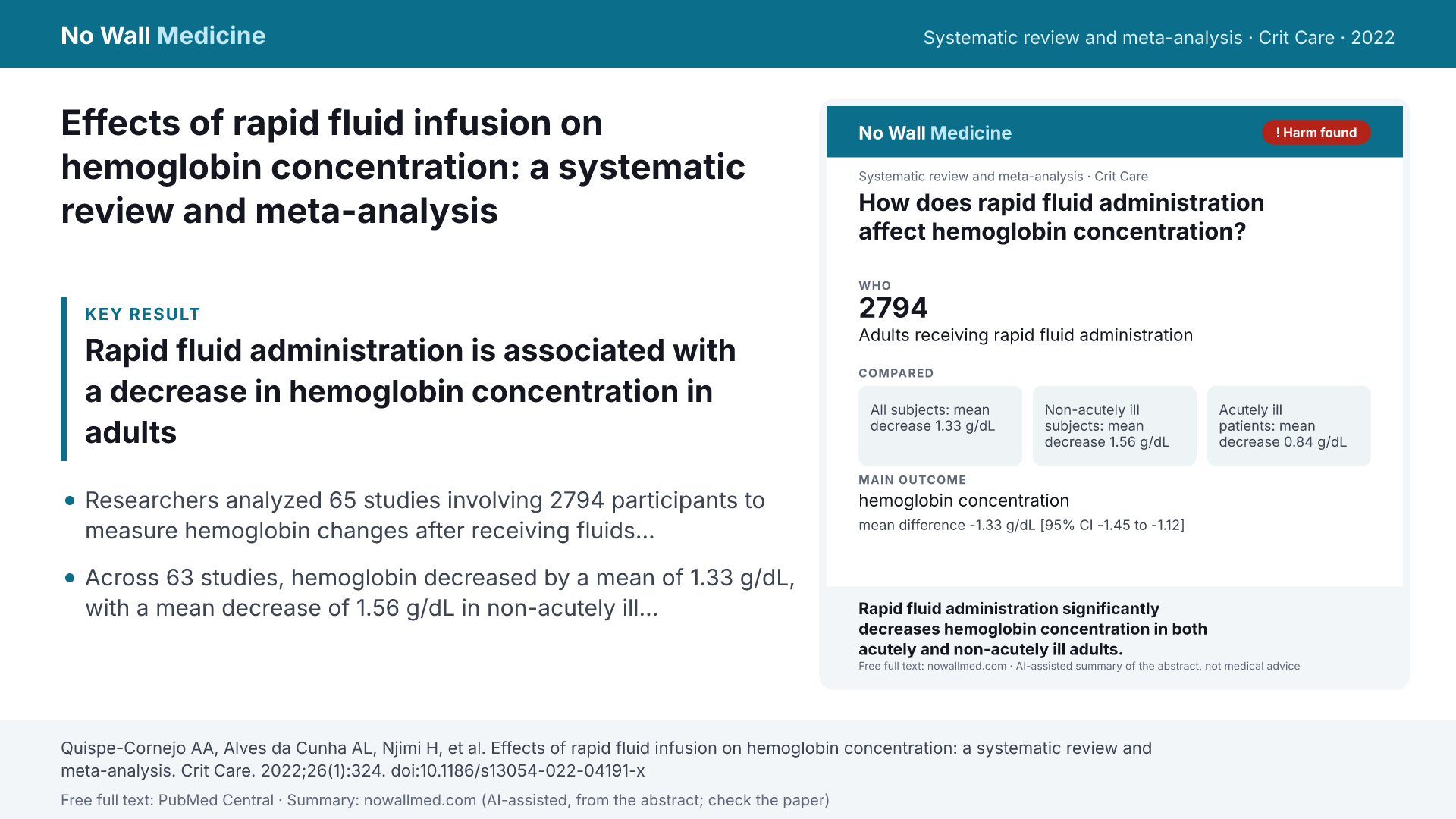
Rapid fluid administration is associated with a decrease in hemoglobin concentration in adults
Effects of rapid fluid infusion on hemoglobin concentration: a systematic review and meta-analysis
Systematic review and meta-analysisHarm found
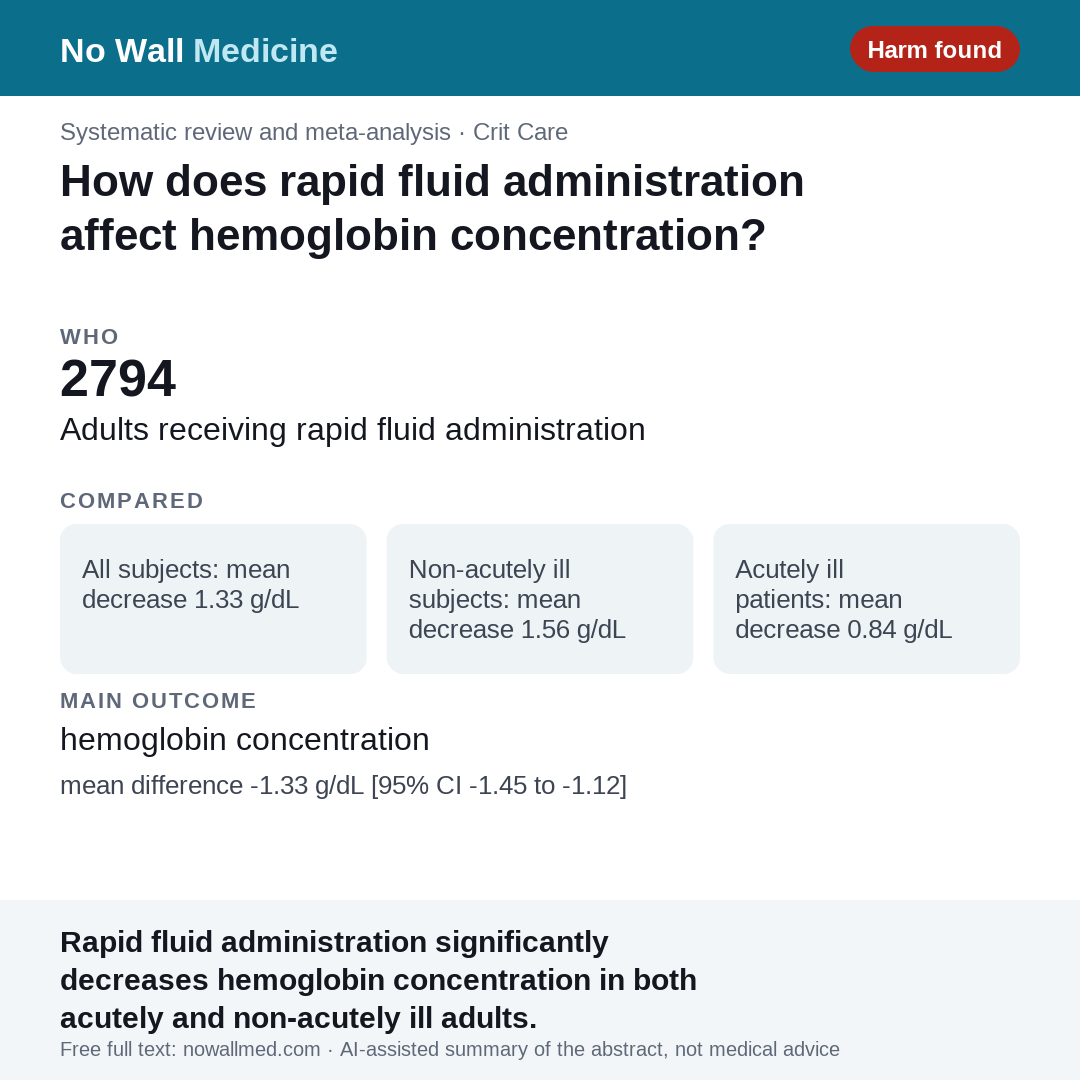
How does rapid fluid administration affect hemoglobin concentration?
Who
2794
Adults receiving rapid fluid administration
Compared
All subjects: mean decrease 1.33 g/dL
Non-acutely ill subjects: mean decrease 1.56 g/dL
Acutely ill patients: mean decrease 0.84 g/dL
Main outcome
hemoglobin concentration
Result: mean difference -1.33 g/dL [95% CI -1.45 to -1.12]
Bottom line: Rapid fluid administration significantly decreases hemoglobin concentration in both acutely and non-acutely ill adults.
Crit Care · 2022-10-23Download image
Clinical question: How does rapid fluid administration affect hemoglobin concentration?
Why it matters: It is unknown how much rapid fluid administration decreases hemoglobin concentration and whether this diluting effect might limit oxygen delivery in critically ill patients.
Key points
- Researchers analyzed 65 studies involving 2794 participants to measure hemoglobin changes after receiving fluids quickly, which is defined as being given over less than 120 minutes.
- Across 63 studies, hemoglobin decreased by a mean of 1.33 g/dL, with a mean decrease of 1.56 g/dL in non-acutely ill subjects and 0.84 g/dL in acutely ill patients.
- In patients who did not respond to fluids, oxygen delivery, the amount of oxygen sent to tissues, decreased significantly alongside the decrease in hemoglobin.
Headline and key points written with AI from the paper’s abstract, with every number checked against it. Read the paper before relying on them.
Was this summary helpful?
Subject terms
Cite this article
Quispe-Cornejo AA, Alves da Cunha AL, Njimi H, Mongkolpun W, Valle-Martins AL, Arébalo-López M. Effects of rapid fluid infusion on hemoglobin concentration: a systematic review and meta-analysis. Crit Care. 2022. doi:10.1186/s13054-022-04191-x
Spotted a mistake? Suggest a correction