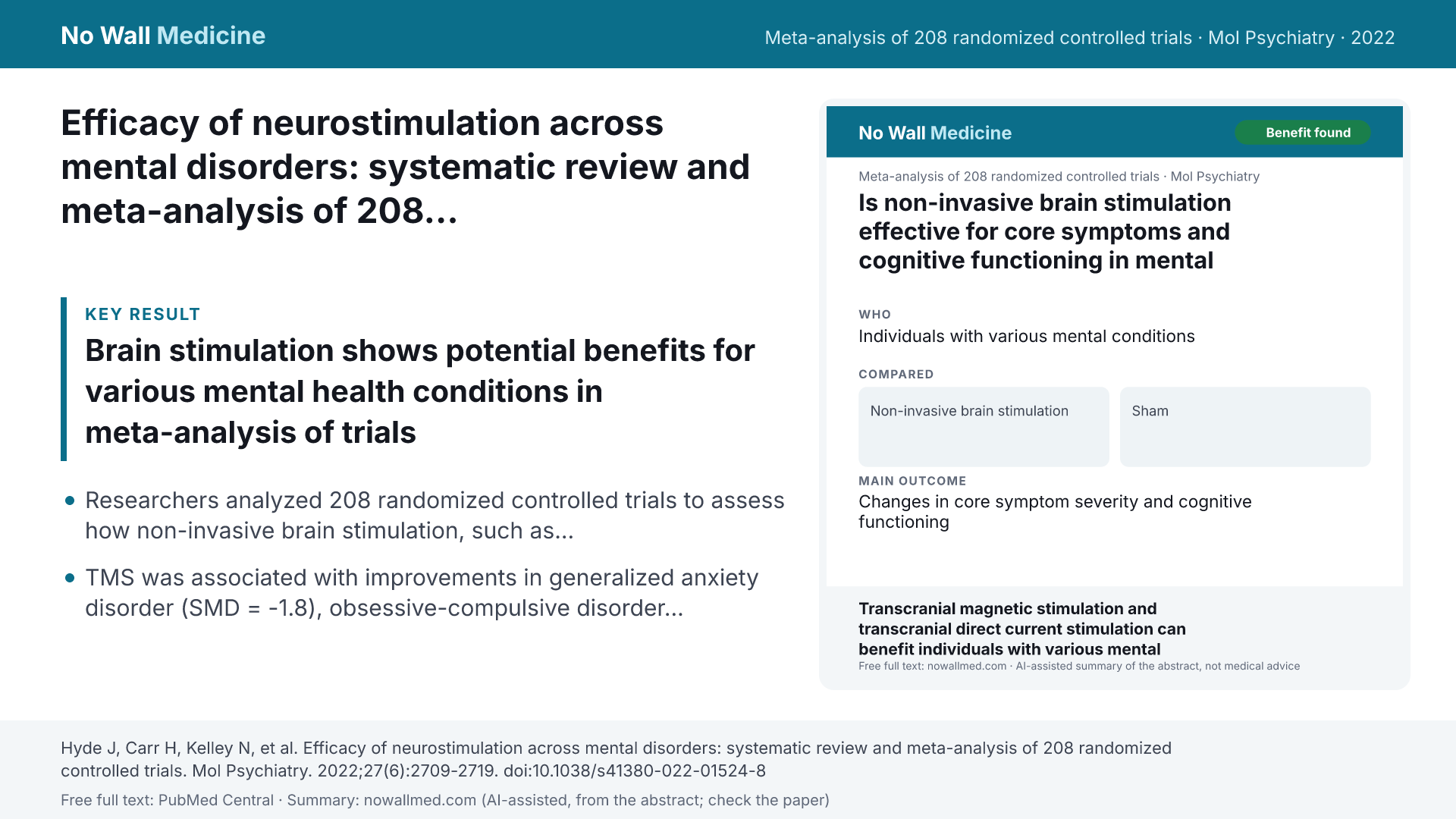
Brain stimulation shows potential benefits for various mental health conditions in meta-analysis of trials
Efficacy of neurostimulation across mental disorders: systematic review and meta-analysis of 208 randomized controlled trials
Meta-analysis of 208 randomized controlled trialsBenefit found
Is non-invasive brain stimulation effective for core symptoms and cognitive functioning in mental disorders?
Who
208
Individuals with various mental conditions
Compared
Non-invasive brain stimulation
Sham
Main outcome
Changes in core symptom severity and cognitive functioning
Bottom line: Transcranial magnetic stimulation and transcranial direct current stimulation can benefit individuals with various mental conditions.
Mol Psychiatry · 2022-04-01Download image
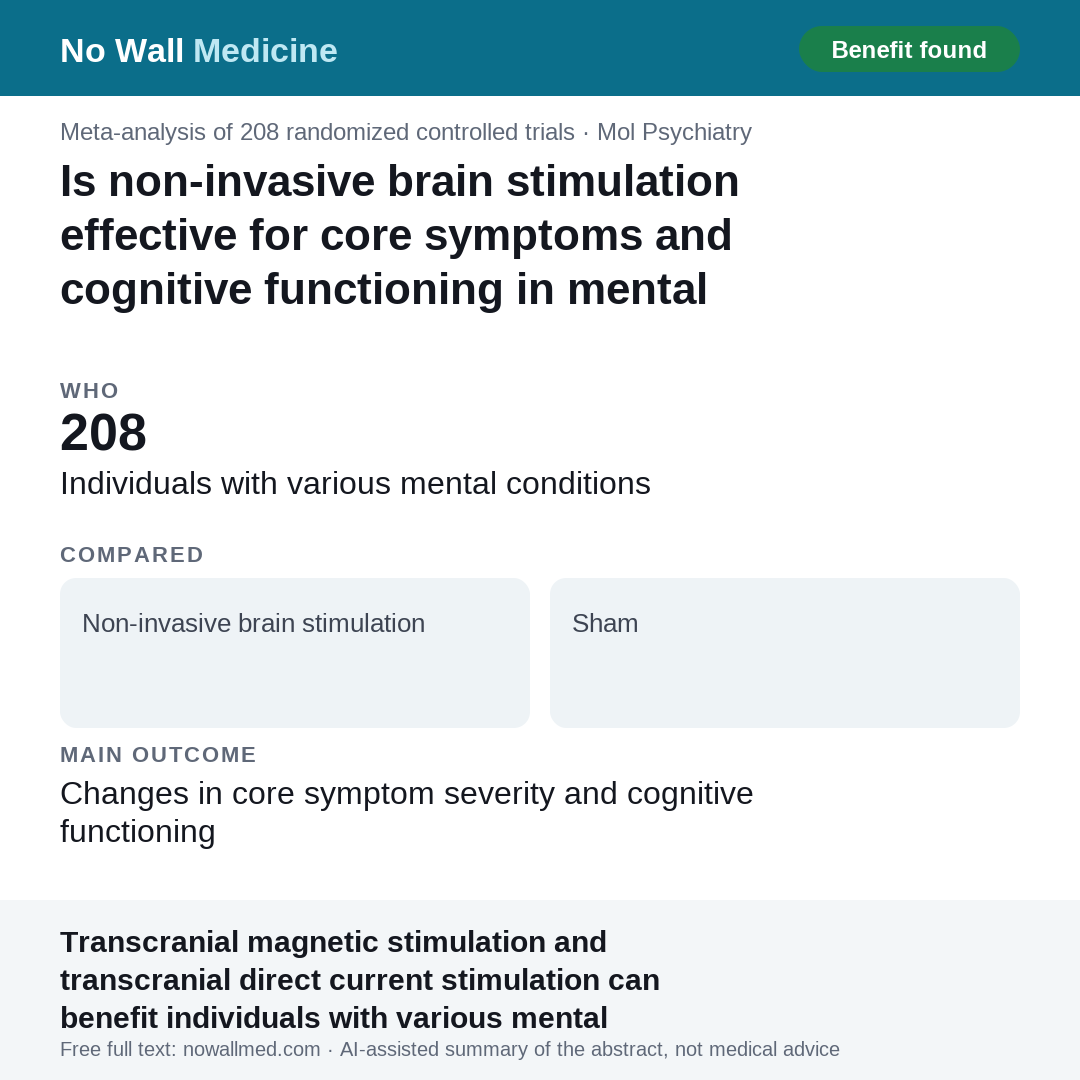
Clinical question: Is non-invasive brain stimulation effective for core symptoms and cognitive functioning in mental disorders?
Why it matters: A quantitative synthesis of randomized controlled trials using consistent criteria across multiple mental health conditions was previously unavailable.
Key points
- Researchers analyzed 208 randomized controlled trials to assess how non-invasive brain stimulation, such as transcranial magnetic stimulation (TMS) and transcranial direct current stimulation (tDCS), affects mental health symptoms.
- TMS was associated with improvements in generalized anxiety disorder (SMD = -1.8), obsessive-compulsive disorder (-0.66), and unipolar depression (-0.60), while tDCS was associated with improvements in substance use disorder (-0.73).
- In individuals with schizophrenia, tDCS was associated with improvements in attention (-0.3) and working memory (-0.38).
Headline and key points written with AI from the paper’s abstract, with every number checked against it. Read the paper before relying on them.
Was this summary helpful?
Subject terms
Cite this article
Hyde J, Carr H, Kelley N, Seneviratne R, Reed C, Parlatini V. Efficacy of neurostimulation across mental disorders: systematic review and meta-analysis of 208 randomized controlled trials. Mol Psychiatry. 2022. doi:10.1038/s41380-022-01524-8
Spotted a mistake? Suggest a correction
Top studies every Monday
The week’s key trials and guidelines in your specialties, plus any topics you follow. By email, free.
Get the weekly digest