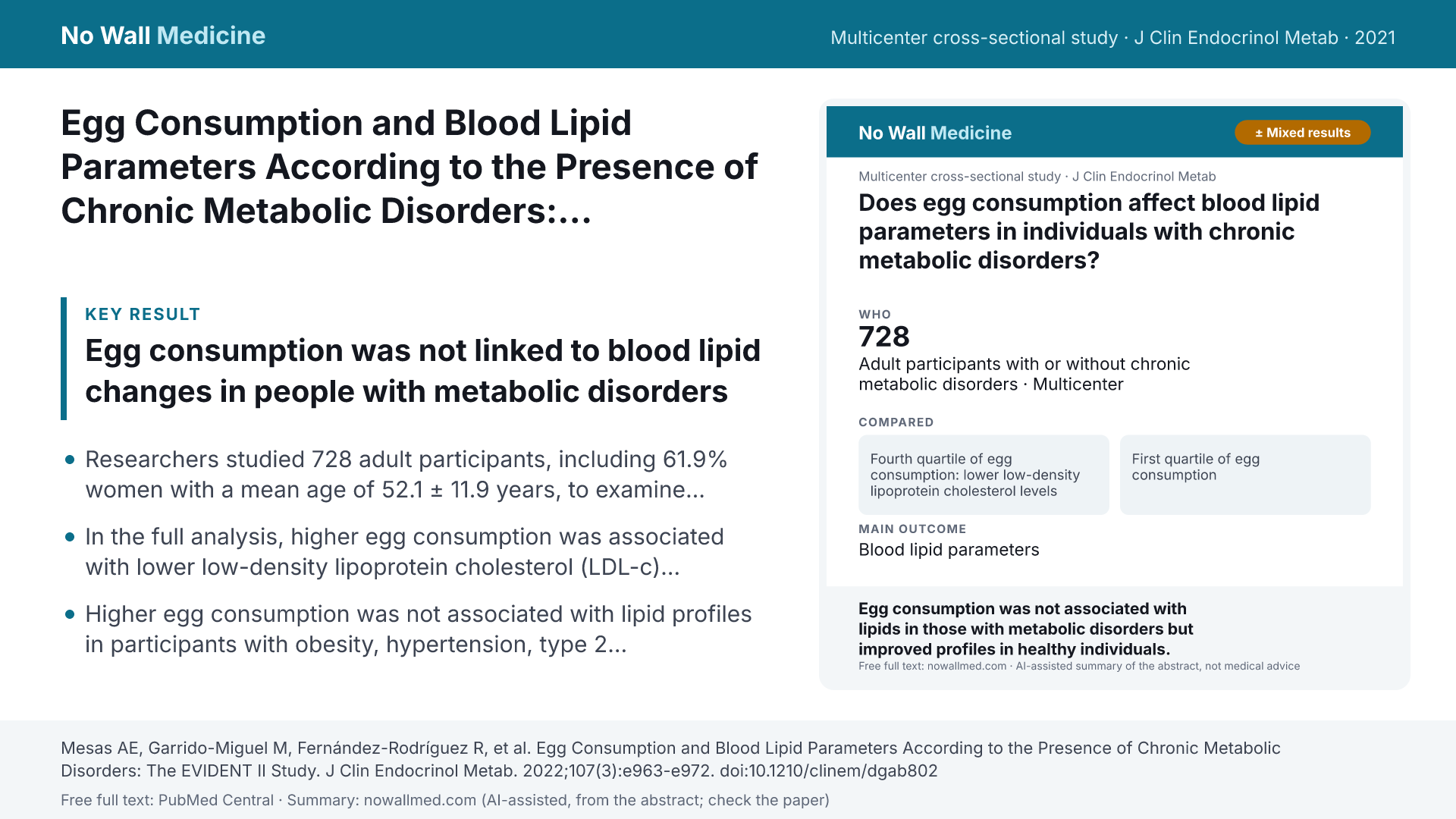
Egg consumption was not linked to blood lipid changes in people with metabolic disorders
Egg Consumption and Blood Lipid Parameters According to the Presence of Chronic Metabolic Disorders: The EVIDENT II Study
Multicenter cross-sectional studyMixed results
Does egg consumption affect blood lipid parameters in individuals with chronic metabolic disorders?
Who
728
Adult participants with or without chronic metabolic disorders · Multicenter
Compared
Fourth quartile of egg consumption: lower low-density lipoprotein cholesterol levels
First quartile of egg consumption
Main outcome
Blood lipid parameters
Result: coefficient -7.01 (95% CI -13.39, -0.62)
Bottom line: Egg consumption was not associated with lipids in those with metabolic disorders but improved profiles in healthy individuals.
J Clin Endocrinol Metab · 2021-11-05Download image
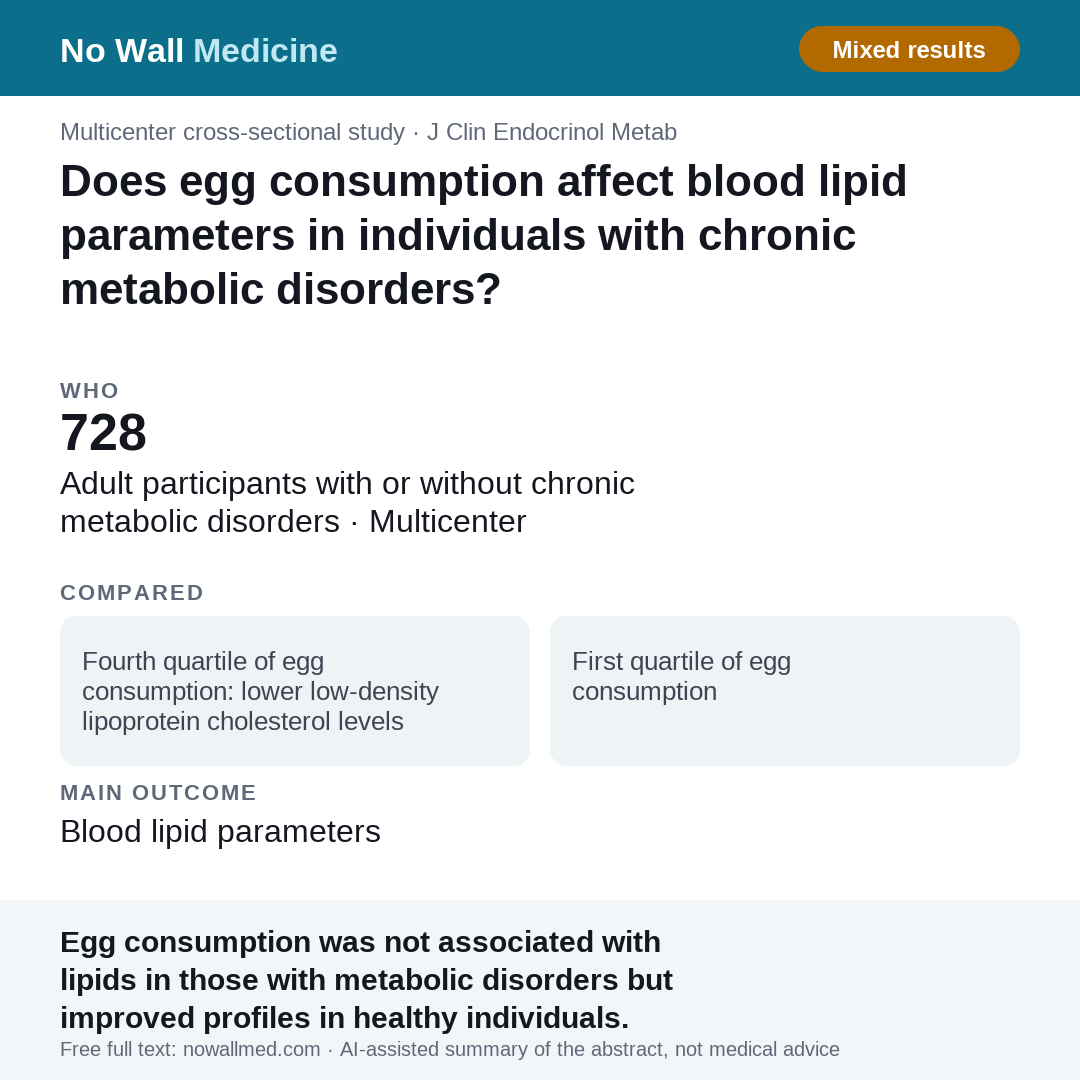
Clinical question: Does egg consumption affect blood lipid parameters in individuals with chronic metabolic disorders?
Why it matters: It is controversial whether eating more eggs leads to a worse blood lipid profile, especially in people with chronic metabolic disorders.
Key points
- Researchers studied 728 adult participants, including 61.9% women with a mean age of 52.1 ± 11.9 years, to examine egg consumption and blood lipids.
- In the full analysis, higher egg consumption was associated with lower low-density lipoprotein cholesterol (LDL-c) levels (coefficient -7.01; 95% CI -13.39, -0.62) and a lower LDL-c/HDL-c ratio.
- Higher egg consumption was not associated with lipid profiles in participants with obesity, hypertension, type 2 diabetes, dyslipidemia, or those treated with cholesterol-lowering drugs.
Headline and key points written with AI from the paper’s abstract, with every number checked against it. Read the paper before relying on them.
Was this summary helpful?
Subject terms
Cite this article
Mesas AE, Garrido-Miguel M, Fernández-Rodríguez R, Fernández Franco S, Lugones-Sánchez C, García-Ortiz L. Egg Consumption and Blood Lipid Parameters According to the Presence of Chronic Metabolic Disorders: The EVIDENT II Study. J Clin Endocrinol Metab. 2021. doi:10.1210/clinem/dgab802
Spotted a mistake? Suggest a correction