Oral vancomycin combined with radiation therapy was associated with better survival in lung cancer patients
Enhancing outcomes in medically inoperable early-stage NSCLC with gut-targeted antibiotics and stereotactic body radiotherapy: results from a randomized pilot study
Randomized, open-label pilot studyBenefit found
Does combining oral vancomycin with stereotactic body radiotherapy improve outcomes in early-stage NSCLC?
Who
Patients with early-stage non-small cell lung cancer
Compared
Vancomycin and stereotactic body radiotherapy
Control
Main outcome
Progression-free survival and overall survival
Result: hazard ratio 0.42 (95% CI 0.18 to 0.96) for progression-free survival
Bottom line: Combining oral vancomycin with stereotactic body radiotherapy may improve progression-free and overall survival in early-stage non-small cell lung cancer.
J Immunother Cancer · 2025-07-10Download image
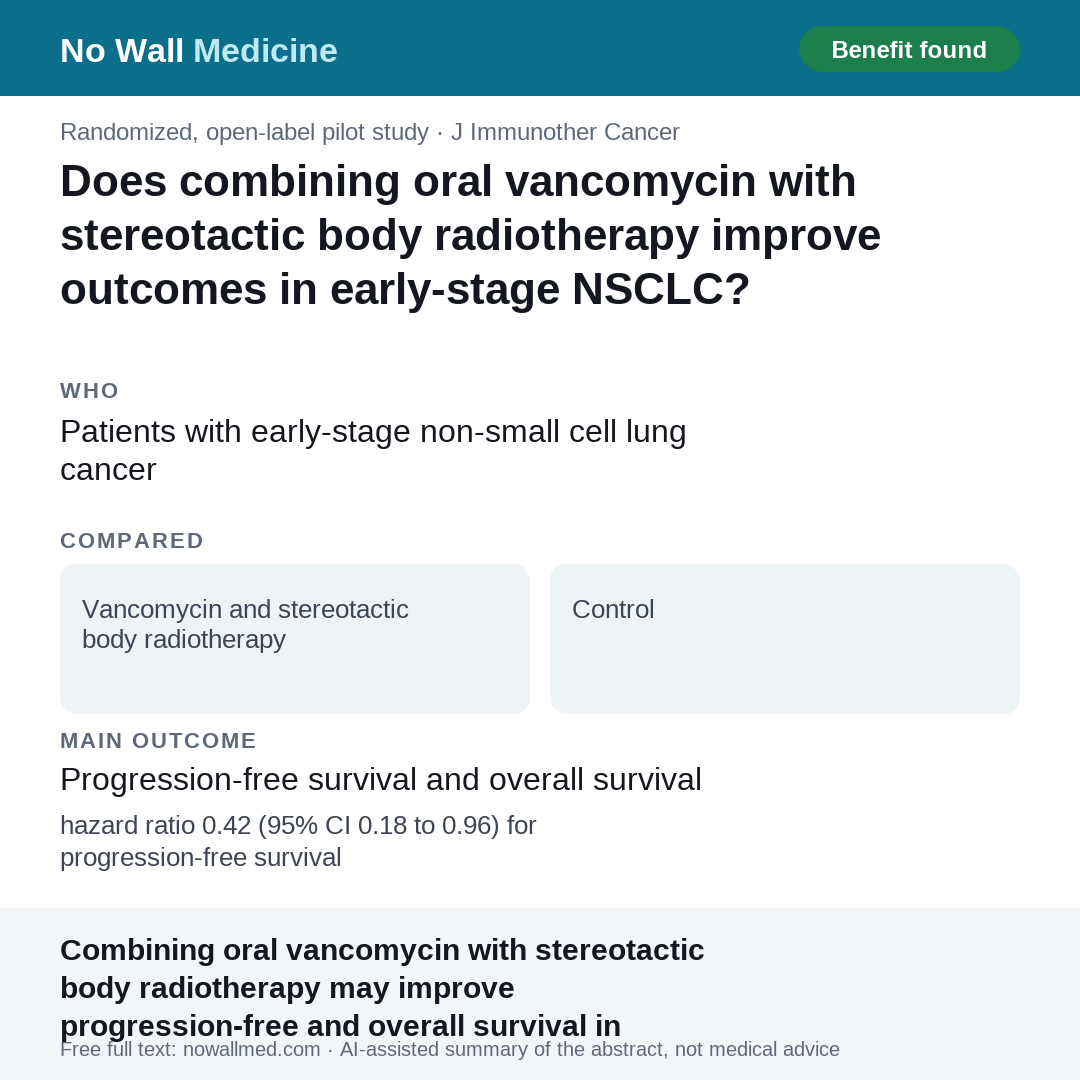
Clinical question: Does combining oral vancomycin with stereotactic body radiotherapy improve outcomes in early-stage NSCLC?
Why it matters: It is unclear if modulating the gut microbiota with antibiotics can enhance the antitumor effects of radiation therapy in patients with early-stage lung cancer.
Key points
- Researchers conducted a randomized pilot study in patients with early-stage non-small cell lung cancer receiving stereotactic body radiotherapy, which is targeted radiation.
- Patients receiving oral vancomycin had a progression-free survival hazard ratio of 0.42 (95% CI 0.18 to 0.96; p=0.049) and an overall survival hazard ratio of 0.38 (95% CI 0.14 to 0.99; p=0.033).
- The combination treatment was well tolerated with no grade 3 or 4 adverse events reported.
Headline and key points written with AI from the paper’s abstract, with every number checked against it. Read the paper before relying on them.
Was this summary helpful?
Abstract
Background
Gut microbiota modulation is an emerging strategy to improve cancer therapy outcomes. This study evaluated the safety and therapeutic potential of combining oral vancomycin-a non-absorbed, gut-restricted antibiotic with primary activity against gram-positive bacteria-with stereotactic body radiotherapy (SBRT) in early-stage non-small cell lung cancer (NSCLC). The underlying hypothesis was that vancomycin-induced changes in gut microbiota could enhance the antitumor effects of SBRT. Methods
We conducted a randomized, open-label pilot study in patients with early-stage NSCLC. Patients received oral vancomycin (125 mg, four times daily for 5 weeks, starting 1 week prior to SBRT). Safety, progression-free survival (PFS), overall survival (OS), gut microbiota composition, gut metabolome, and immune responses were evaluated. Results
The combination of vancomycin and SBRT was well tolerated, with no grade 3 or 4 adverse events reported. Vancomycin treatment selectively depleted certain bacterial strains while enriching others, leading to significant restructuring of the gut microbiota and alterations in the gut metabolome, including reductions in short-chain fatty acids and shifts in other important immunomodulatory metabolites. These changes were associated with dendritic cell and T cell activation, suggesting enhanced systemic immune engagement. Patients receiving vancomycin showed improved outcomes, with a PFS HR of 0.42 (95% CI 0.18 to 0.96; p=0.049) and OS HR of 0.38 (95% CI 0.14 to 0.99; p=0.033), compared with controls. Conclusions
This pilot study demonstrates that gut microbiome modulation using a gram-positive-targeting, gut-restricted antibiotic in combination with SBRT is safe and may improve clinical outcomes in early-stage NSCLC. These findings support further investigation of targeted microbiome modulation strategies as adjuvants to immunogenic therapies like radiation. Trial registration number
NCT03546829.
Abstract reproduced under the article’s CC BY NC licence.
Subject terms
Cite this article
Feigenberg SJ, Costabile F, Tanes C, Bittinger K, O'Connor R, Agarwal D. Enhancing outcomes in medically inoperable early-stage NSCLC with gut-targeted antibiotics and stereotactic body radiotherapy: results from a randomized pilot study. J Immunother Cancer. 2025. doi:10.1136/jitc-2024-011356
Spotted a mistake? Suggest a correction
Top studies every Monday
The week’s key trials and guidelines in your specialties, plus any topics you follow. By email, free.
Get the weekly digest