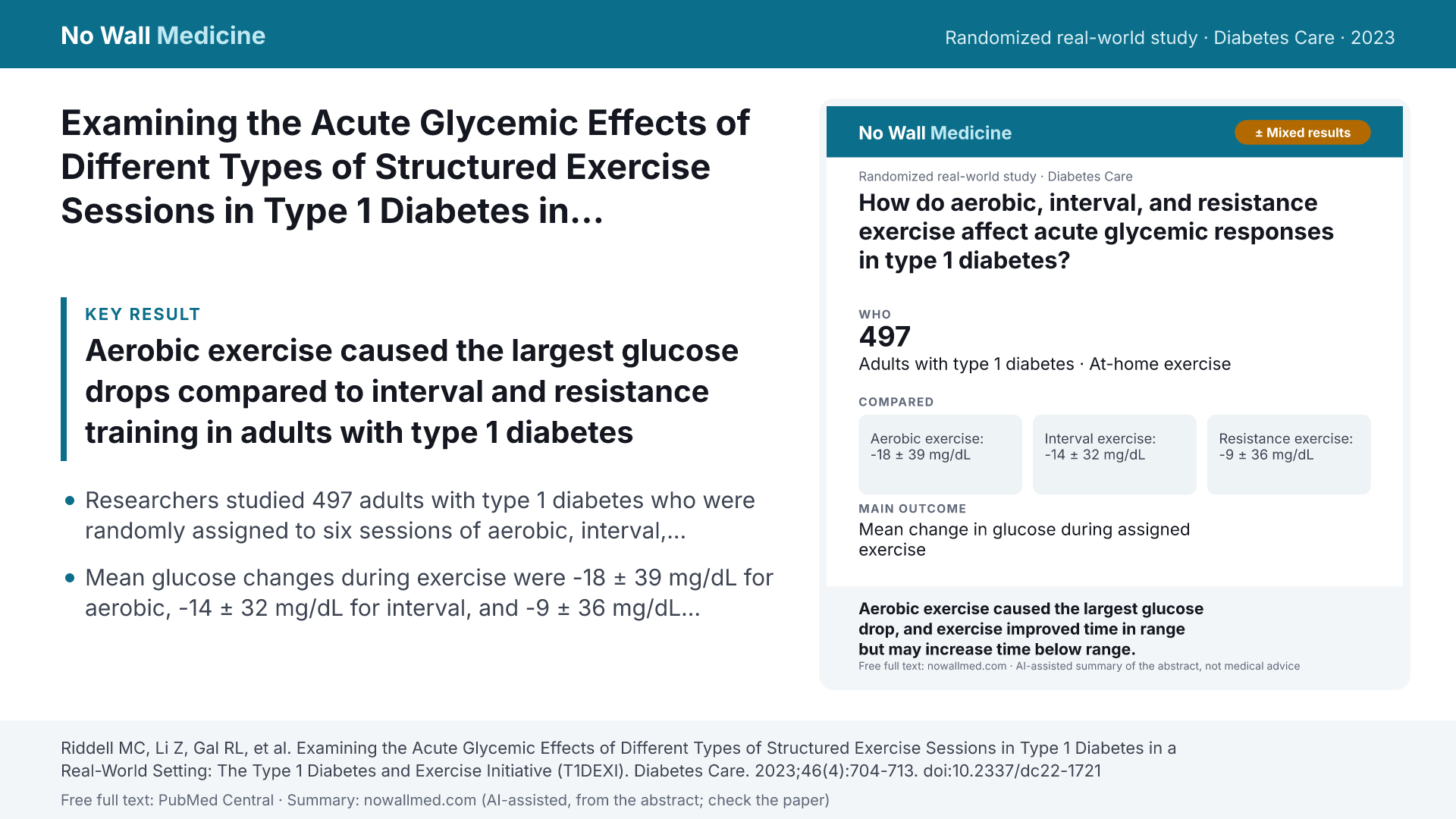
Aerobic exercise caused the largest glucose drops compared to interval and resistance training in adults with type 1 diabetes
Examining the Acute Glycemic Effects of Different Types of Structured Exercise Sessions in Type 1 Diabetes in a Real-World Setting: The Type 1 Diabetes and Exercise Initiative (T1DEXI)
Randomized real-world studyMixed results
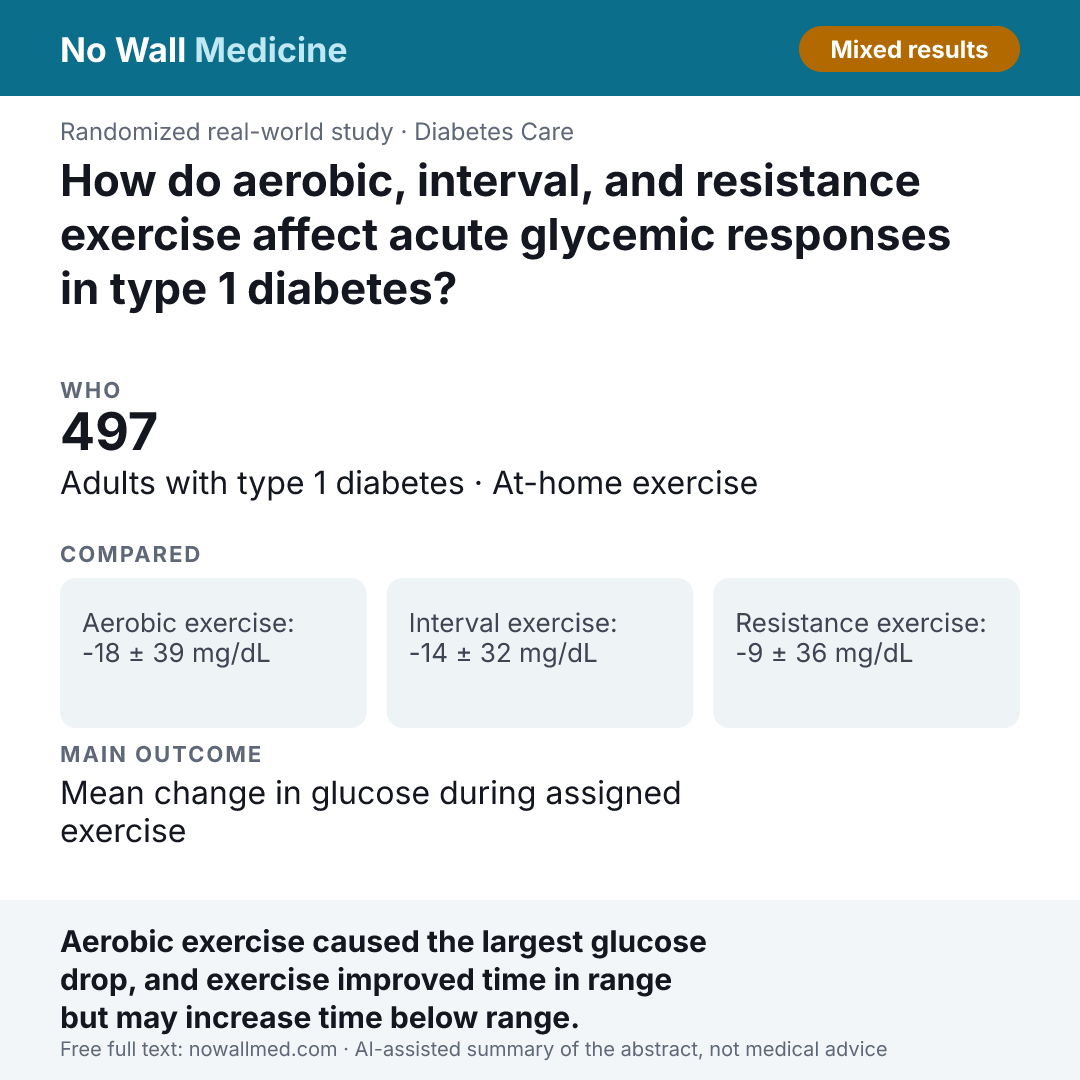
How do aerobic, interval, and resistance exercise affect acute glycemic responses in type 1 diabetes?
Who
497
Adults with type 1 diabetes · At-home exercise
Compared
Aerobic exercise: -18 ± 39 mg/dL
Interval exercise: -14 ± 32 mg/dL
Resistance exercise: -9 ± 36 mg/dL
Main outcome
Mean change in glucose during assigned exercise
Bottom line: Aerobic exercise caused the largest glucose drop, and exercise improved time in range but may increase time below range.
Diabetes Care · 2023-02-17 · Save PNG
Clinical question: How do aerobic, interval, and resistance exercise affect acute glycemic responses in type 1 diabetes?
Key points
- Researchers studied 497 adults with type 1 diabetes who were randomly assigned to six sessions of aerobic, interval, or resistance exercise over 4 weeks.
- Mean glucose changes during exercise were -18 ± 39 mg/dL for aerobic, -14 ± 32 mg/dL for interval, and -9 ± 36 mg/dL for resistance training.
- Time in the target glucose range of 70-180 mg/dL was 76 ± 20% during the 24 h after exercise compared to 70 ± 23% on non-exercise days.
Headline and key points written with AI from the paper’s abstract, with every number checked against it. Read the paper before relying on them.
Was this summary helpful?
Subject terms
Headline, design, result, key points, caveat and citation as plain text.
Cite this article
Riddell MC, Li Z, Gal RL, et al. Examining the Acute Glycemic Effects of Different Types of Structured Exercise Sessions in Type 1 Diabetes in a Real-World Setting: The Type 1 Diabetes and Exercise Initiative (T1DEXI). Diabetes Care. 2023. doi:10.2337/dc22-1721
Spotted a mistake? Suggest a correction