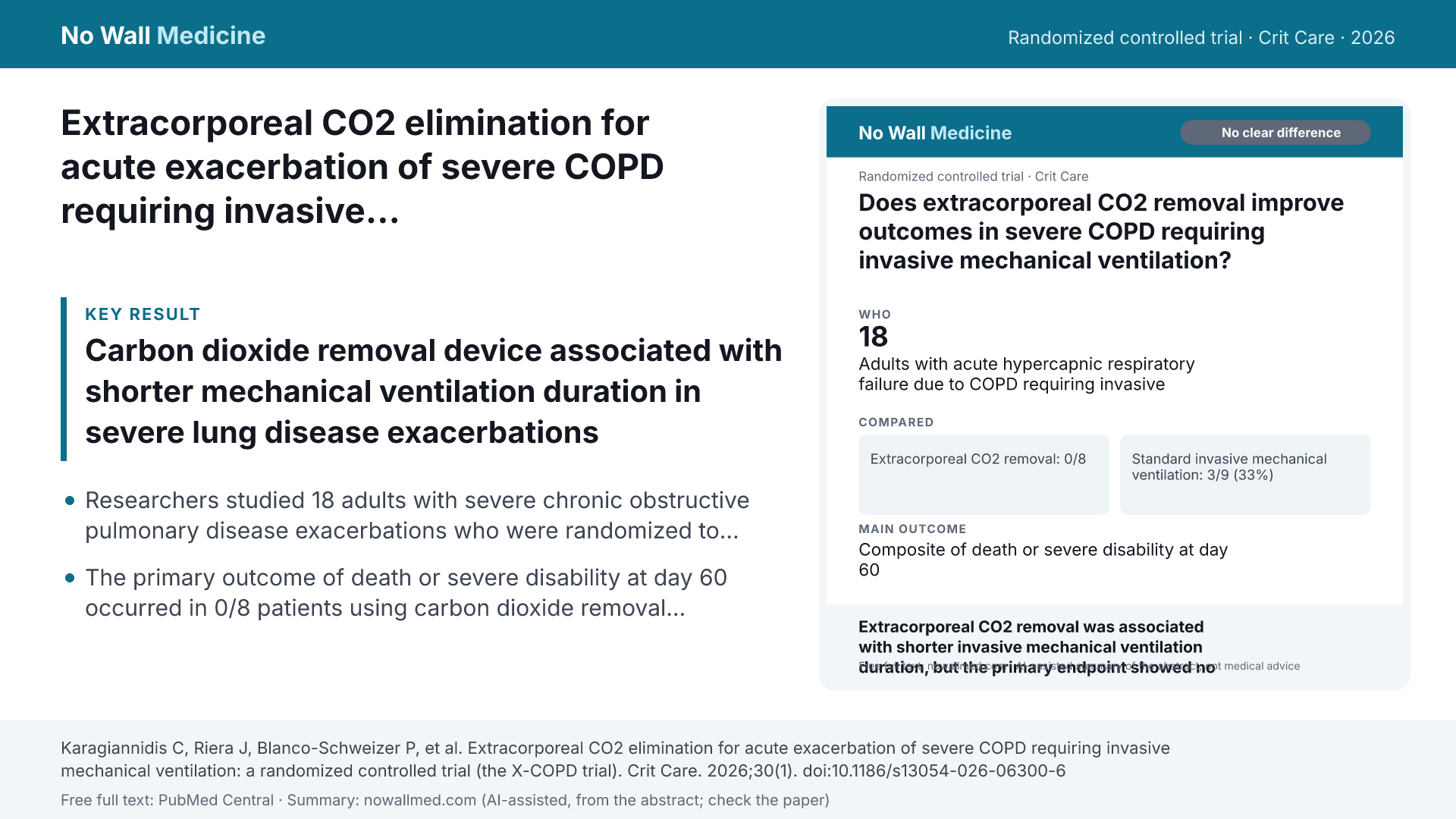
Carbon dioxide removal device associated with shorter mechanical ventilation duration in severe lung disease exacerbations
Extracorporeal CO2 elimination for acute exacerbation of severe COPD requiring invasive mechanical ventilation: a randomized controlled trial (the X-COPD trial)
Randomized controlled trialNo clear difference
Does extracorporeal CO2 removal improve outcomes in severe COPD requiring invasive mechanical ventilation?
Who
18
Adults with acute hypercapnic respiratory failure due to COPD requiring invasive mechanical ventilation
Compared
Extracorporeal CO2 removal: 0/8
Standard invasive mechanical ventilation: 3/9 (33%)
Main outcome
Composite of death or severe disability at day 60
Result: risk difference -33% (95% CI -65% to 6%)
Bottom line: Extracorporeal CO2 removal was associated with shorter invasive mechanical ventilation duration, but the primary endpoint showed no significant difference.
Limitation: Premature termination and very small sample size
Crit Care · 2026-09-03Download image
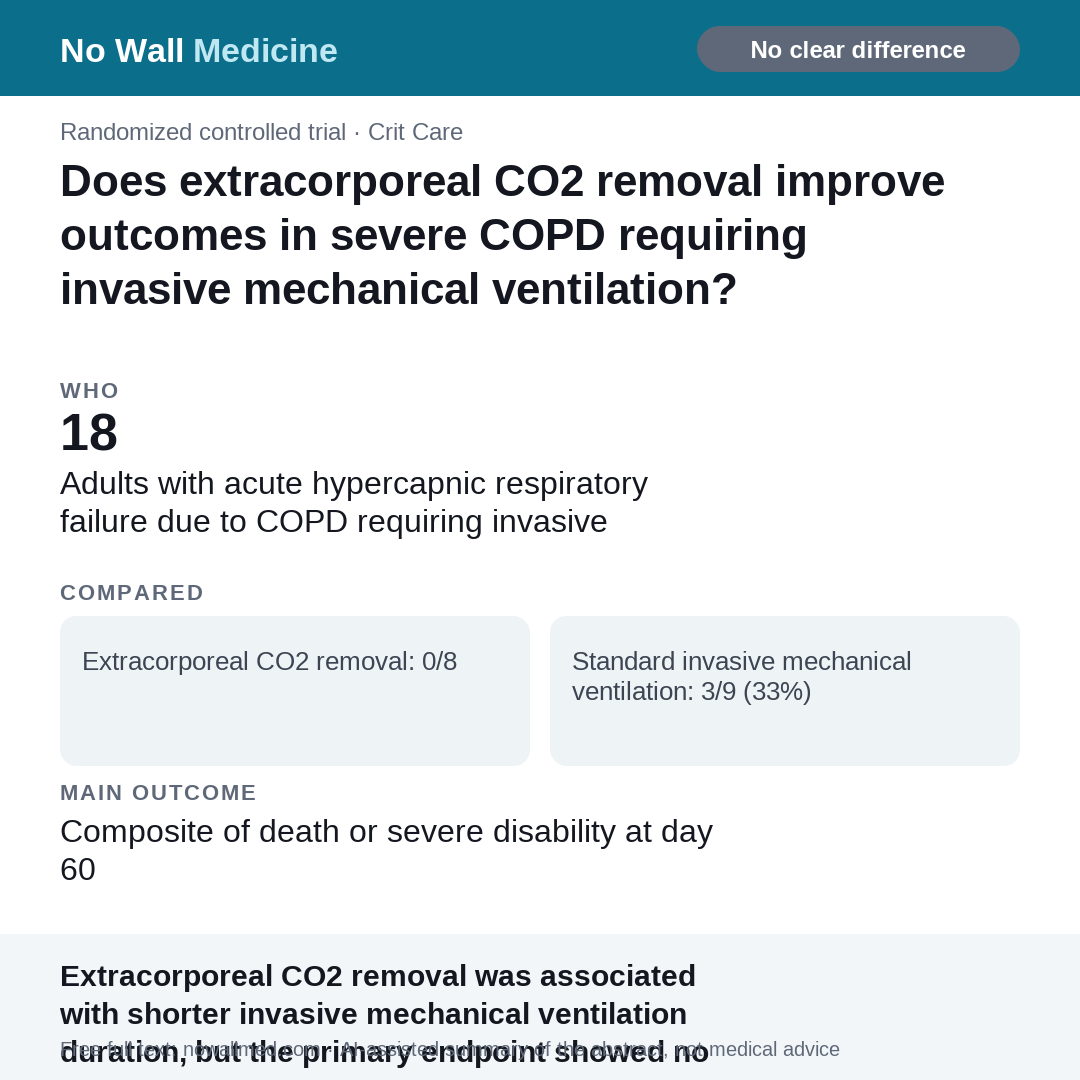
Clinical question: Does extracorporeal CO2 removal improve outcomes in severe COPD requiring invasive mechanical ventilation?
Why it matters: Doctors do not know if using a device to remove carbon dioxide from the blood can help patients with severe lung disease be taken off ventilators sooner.
Key points
- Researchers studied 18 adults with severe chronic obstructive pulmonary disease exacerbations who were randomized to receive either extracorporeal carbon dioxide removal or standard invasive mechanical ventilation.
- The primary outcome of death or severe disability at day 60 occurred in 0/8 patients using carbon dioxide removal versus 3/9 patients in the standard group (p = 0.21).
- Invasive mechanical ventilation lasted 7.1 ± 2.0 days in the carbon dioxide removal group compared to 24.3 ± 21.4 days in the standard group (p = 0.043).
Limitation the authors note: The trial was terminated early by the sponsor for financial reasons and had a very small sample size.
Headline and key points written with AI from the paper’s abstract, with every number checked against it. Read the paper before relying on them.
Was this summary helpful?
Subject terms
Cite this article
Karagiannidis C, Riera J, Blanco-Schweizer P, et al. Extracorporeal CO2 elimination for acute exacerbation of severe COPD requiring invasive mechanical ventilation: a randomized controlled trial (the X-COPD trial). Crit Care. 2026. doi:10.1186/s13054-026-06300-6
Spotted a mistake? Suggest a correction