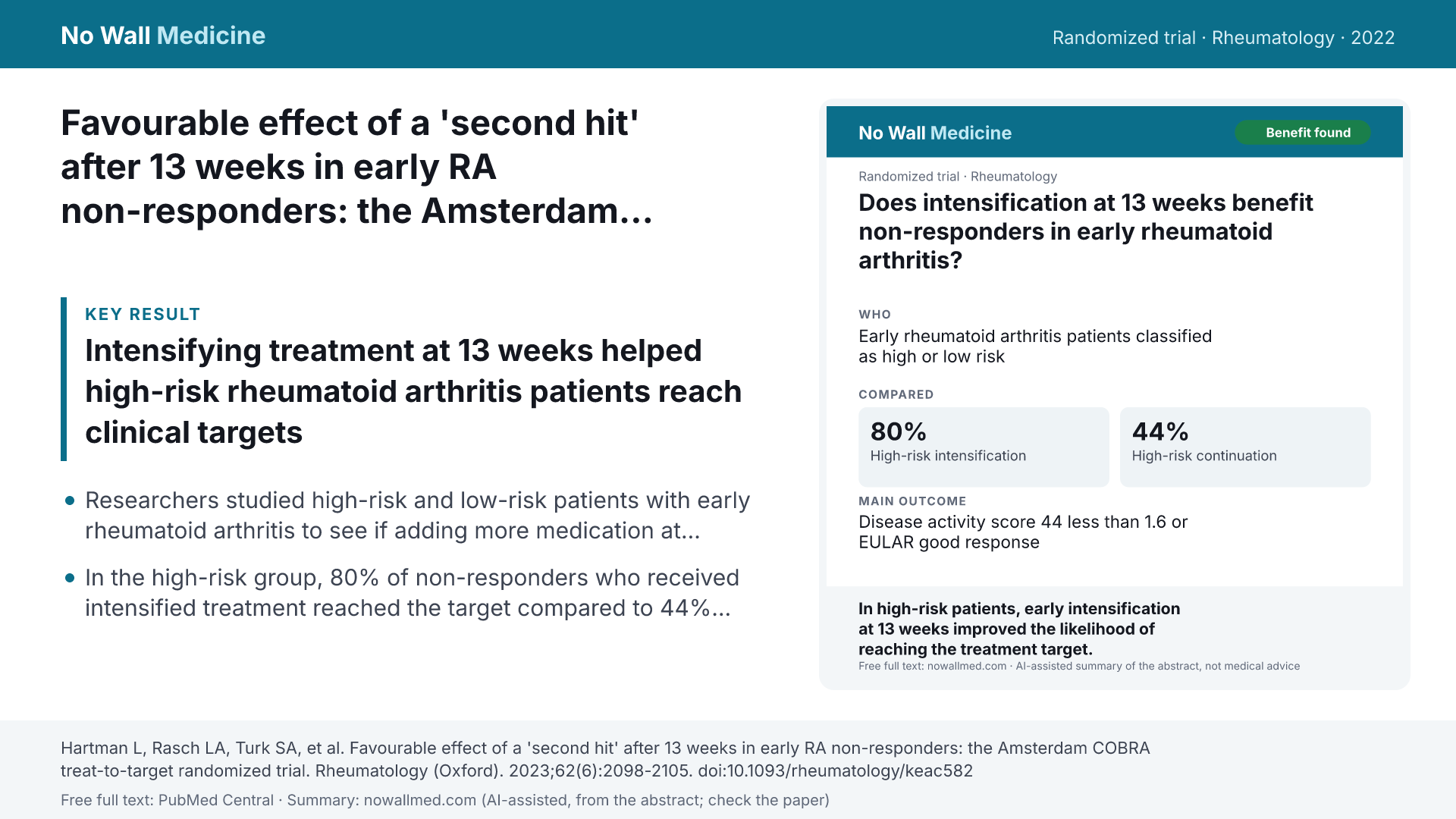
Intensifying treatment at 13 weeks helped high-risk rheumatoid arthritis patients reach clinical targets
Favourable effect of a 'second hit' after 13 weeks in early RA non-responders: the Amsterdam COBRA treat-to-target randomized trial
Randomized trialBenefit found
Does intensification at 13 weeks benefit non-responders in early rheumatoid arthritis?
Who
Early rheumatoid arthritis patients classified as high or low risk
Compared
80%High-risk intensification
44%High-risk continuation
Main outcome
Disease activity score 44 less than 1.6 or EULAR good response
Result: difference: 36%, (95% CI 2%, 71%)
Bottom line: In high-risk patients, early intensification at 13 weeks improved the likelihood of reaching the treatment target.
Rheumatology · 2022-10-08Download image
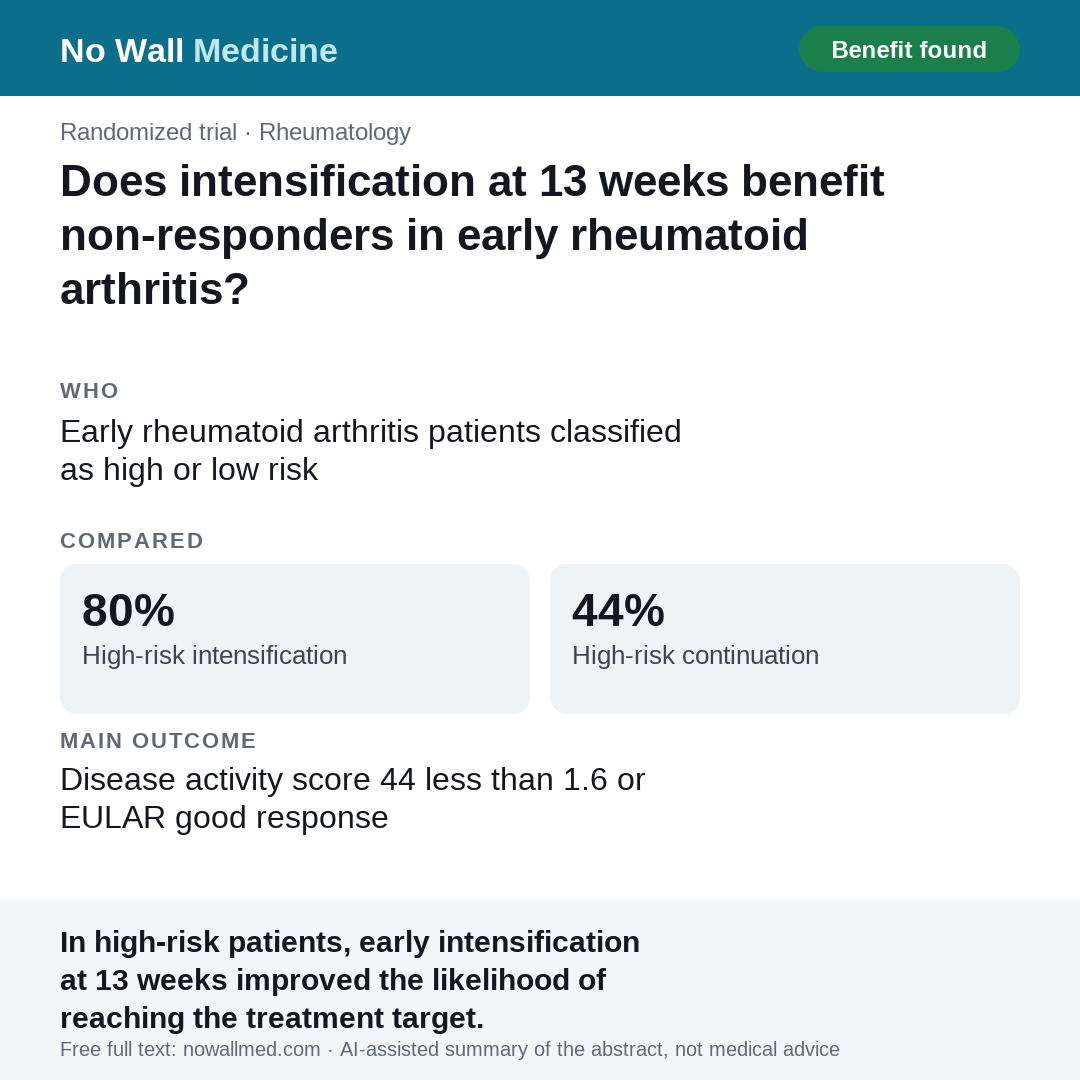
Clinical question: Does intensification at 13 weeks benefit non-responders in early rheumatoid arthritis?
Why it matters: It is unknown if intensifying combination therapy for patients not meeting strict targets at 13 weeks improves clinical outcomes in early rheumatoid arthritis.
Key points
- Researchers studied high-risk and low-risk patients with early rheumatoid arthritis to see if adding more medication at 13 weeks improved outcomes.
- In the high-risk group, 80% of non-responders who received intensified treatment reached the target compared to 44% of those who continued standard therapy.
- Adverse event rates were higher in the high-risk group and specifically within the subgroup receiving intensified treatment.
Limitation the authors note: The low-risk group was too small for drawing conclusions and protocol violations were frequent.
Headline and key points written with AI from the paper’s abstract, with every number checked against it. Read the paper before relying on them.
Was this summary helpful?
Subject terms
Cite this article
Hartman L, Rasch LA, Turk SA, et al. Favourable effect of a 'second hit' after 13 weeks in early RA non-responders: the Amsterdam COBRA treat-to-target randomized trial. Rheumatology. 2022. doi:10.1093/rheumatology/keac582
Spotted a mistake? Suggest a correction