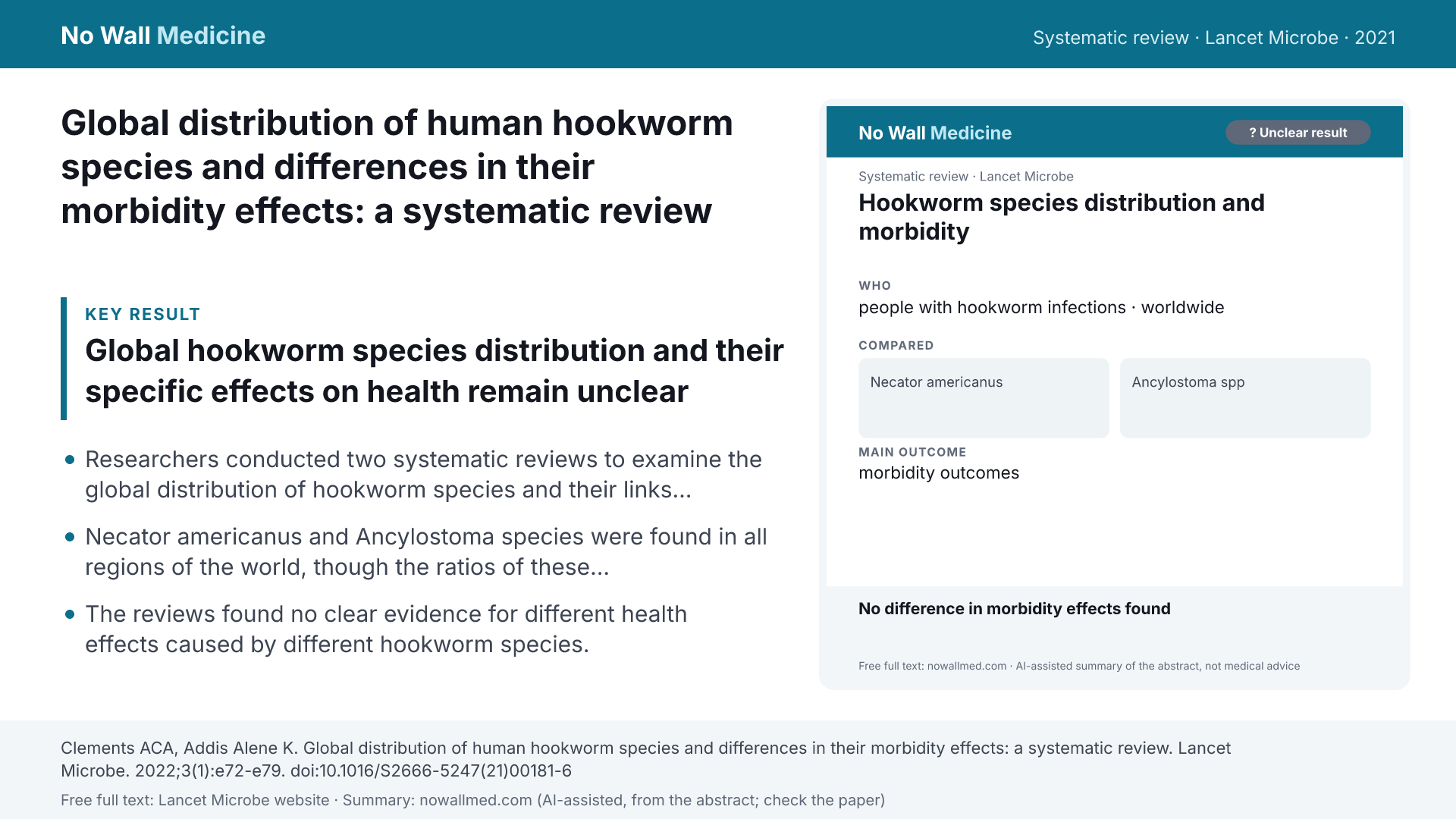
Global hookworm species distribution and their specific effects on health remain unclear
Global distribution of human hookworm species and differences in their morbidity effects: a systematic review
Systematic reviewUnclear result
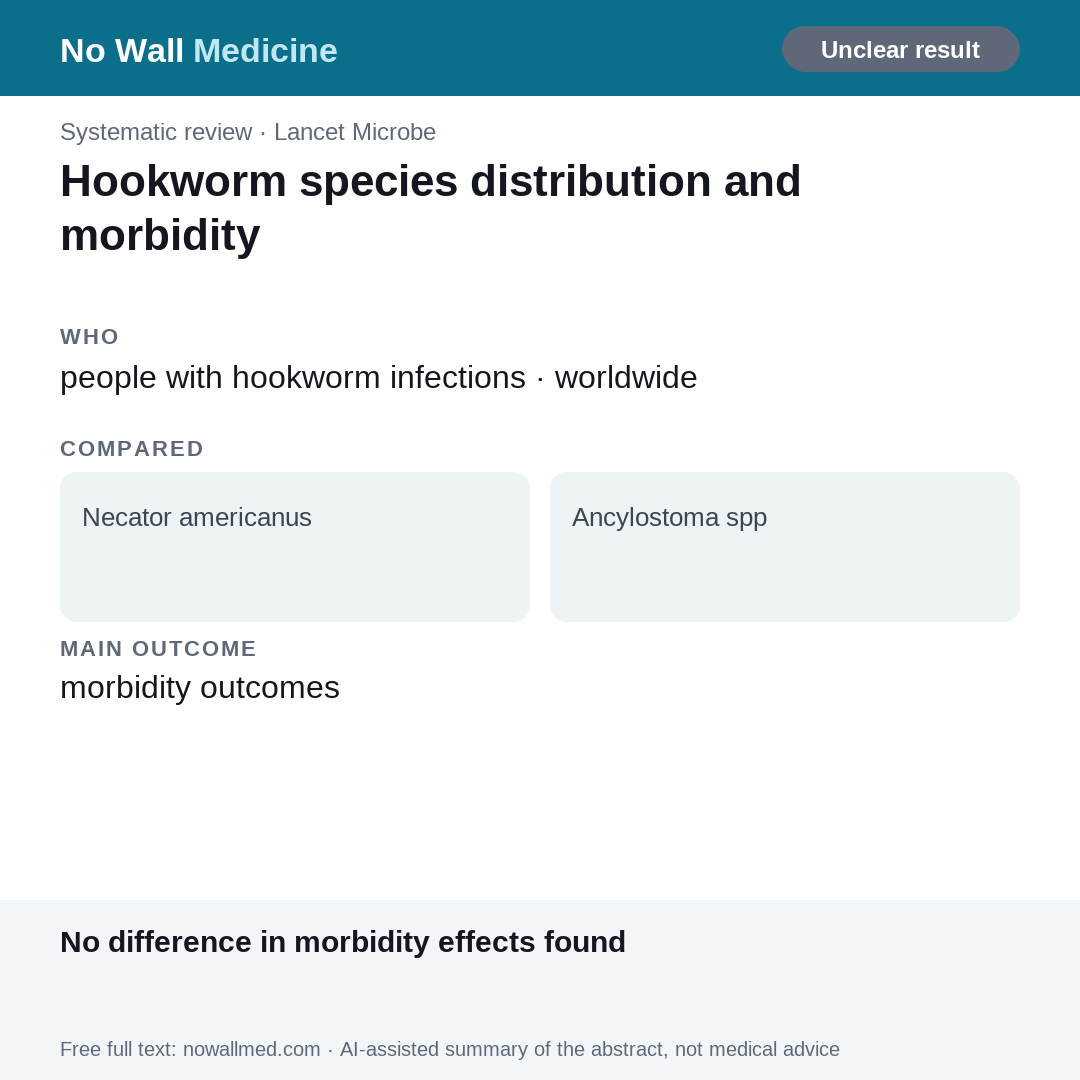
Hookworm species distribution and morbidity
Who
people with hookworm infections · worldwide
Compared
Necator americanus
Ancylostoma spp
Main outcome
morbidity outcomes
Bottom line: No difference in morbidity effects found
Lancet Microbe · 2021-09-28Download image
Why it matters: The global distribution and specific health impacts of different hookworm species are unknown, which prevents the use of the best local control interventions.
Key points
- Researchers conducted two systematic reviews to examine the global distribution of hookworm species and their links to health outcomes like severe anemia.
- Necator americanus and Ancylostoma species were found in all regions of the world, though the ratios of these species varied.
- The reviews found no clear evidence for different health effects caused by different hookworm species.
Headline and key points written with AI from the paper’s abstract, with every number checked against it. Read the paper before relying on them.
Was this summary helpful?
Abstract
The global distribution and morbidity effects for each specific hookworm species is unknown, which prevents implementation of the optimum intervention for local hookworm control. We did two systematic reviews of studies on the proportion of hookworm isolates of each species and genus by region of the world and associations between hookworm species-specific infections and morbidity outcomes, particularly severe anaemia. Necator americanus and Ancylostoma spp were present in all regions of the world, although at different ratios. No clear evidence was found for the differential morbidity effects of different hookworm species. Diagnostic methods that differentiate between hookworm species, including molecular methods, need to be developed for widespread use in control programmes to elucidate key features of hookworm epidemiology and control.
Abstract reproduced under the article’s CC BY NC ND licence.
Subject terms
Cite this article
Clements ACA, Addis Alene K. Global distribution of human hookworm species and differences in their morbidity effects: a systematic review. Lancet Microbe. 2021. doi:10.1016/S2666-5247(21)00181-6
Spotted a mistake? Suggest a correction
Top studies every Monday
The week’s key trials and guidelines in your specialties, plus any topics you follow. By email, free.
Get the weekly digest