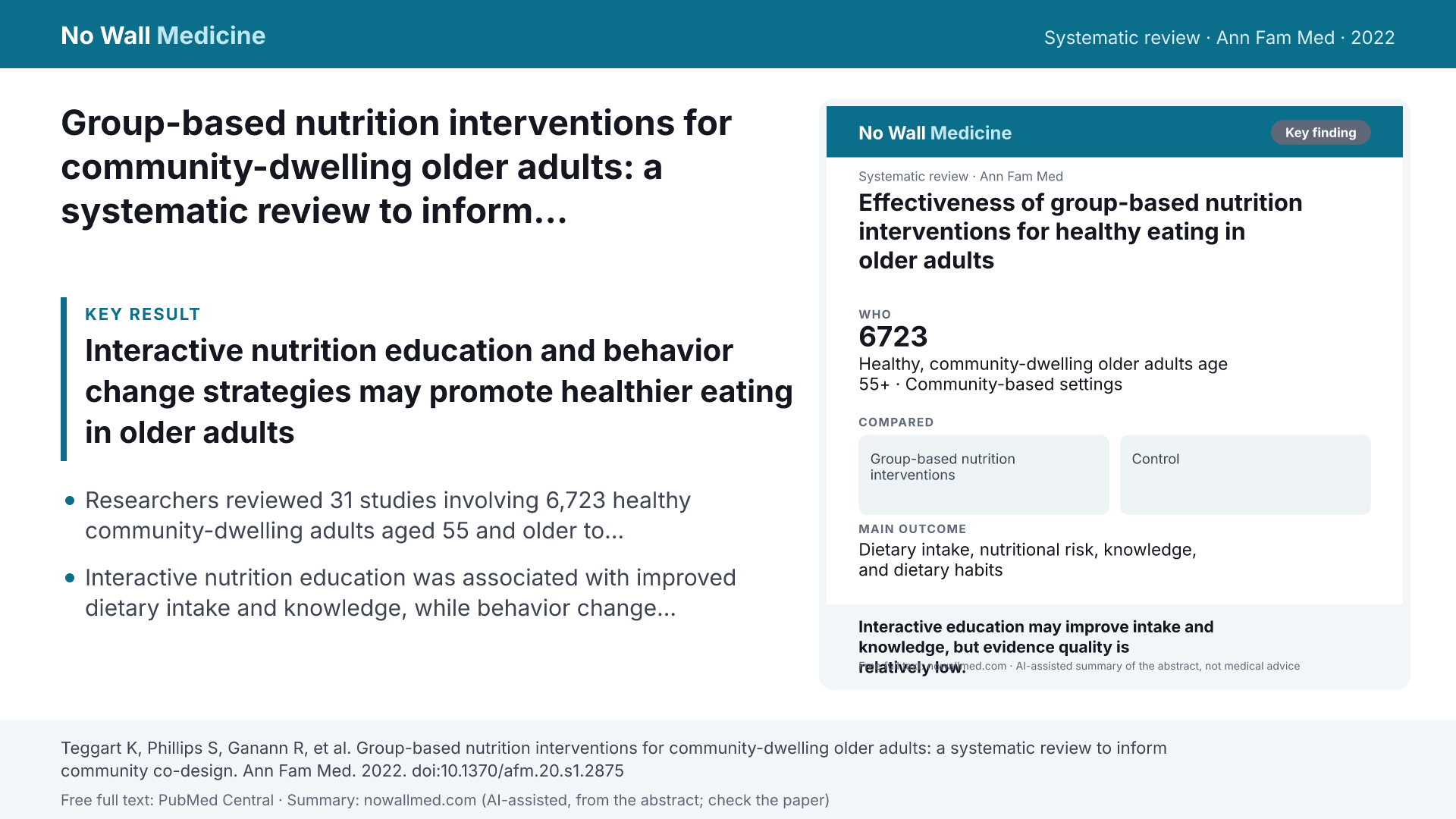
Interactive nutrition education and behavior change strategies may promote healthier eating in older adults
Group-based nutrition interventions for community-dwelling older adults: a systematic review to inform community co-design
Systematic reviewKey finding
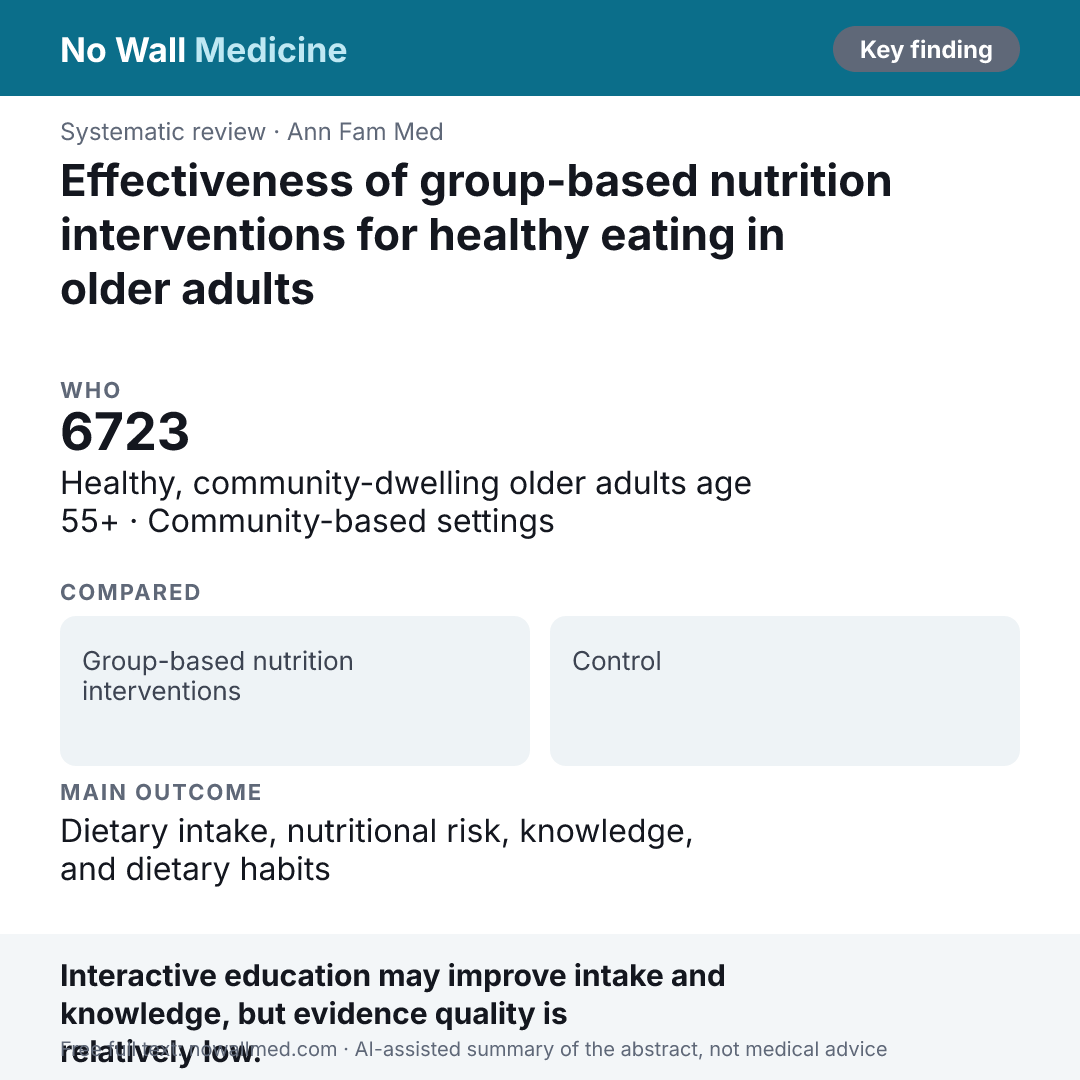
Effectiveness of group-based nutrition interventions for healthy eating in older adults
Who
6723
Healthy, community-dwelling older adults age 55+ · Community-based settings
Compared
Group-based nutrition interventions
Control
Main outcome
Dietary intake, nutritional risk, knowledge, and dietary habits
Bottom line: Interactive education may improve intake and knowledge, but evidence quality is relatively low.
Limitation: Studies had generally unclear or high risk of bias
Ann Fam Med · 2022-04-01 · Save PNG
Key points
- Researchers reviewed 31 studies involving 6,723 healthy community-dwelling adults aged 55 and older to evaluate group-based nutrition programs.
- Interactive nutrition education was associated with improved dietary intake and knowledge, while behavior change strategies were associated with a greater reduction in nutritional risk.
- The included studies generally had an unclear or high risk of bias.
Limitation the authors note: The available evidence was relatively low quality and studies had generally unclear or high risk of bias.
Headline and key points written with AI from the paper’s abstract, with every number checked against it. Read the paper before relying on them.
Was this summary helpful?
Subject terms
Headline, design, result, key points, caveat and citation as plain text.
Cite this article
Teggart K, Phillips S, Ganann R, et al. Group-based nutrition interventions for community-dwelling older adults: a systematic review to inform community co-design. Ann Fam Med. 2022. doi:10.1370/afm.20.s1.2875
Spotted a mistake? Suggest a correction