High-intensity training improves cardio-metabolic outcomes more than moderate-intensity training in women with PCOS
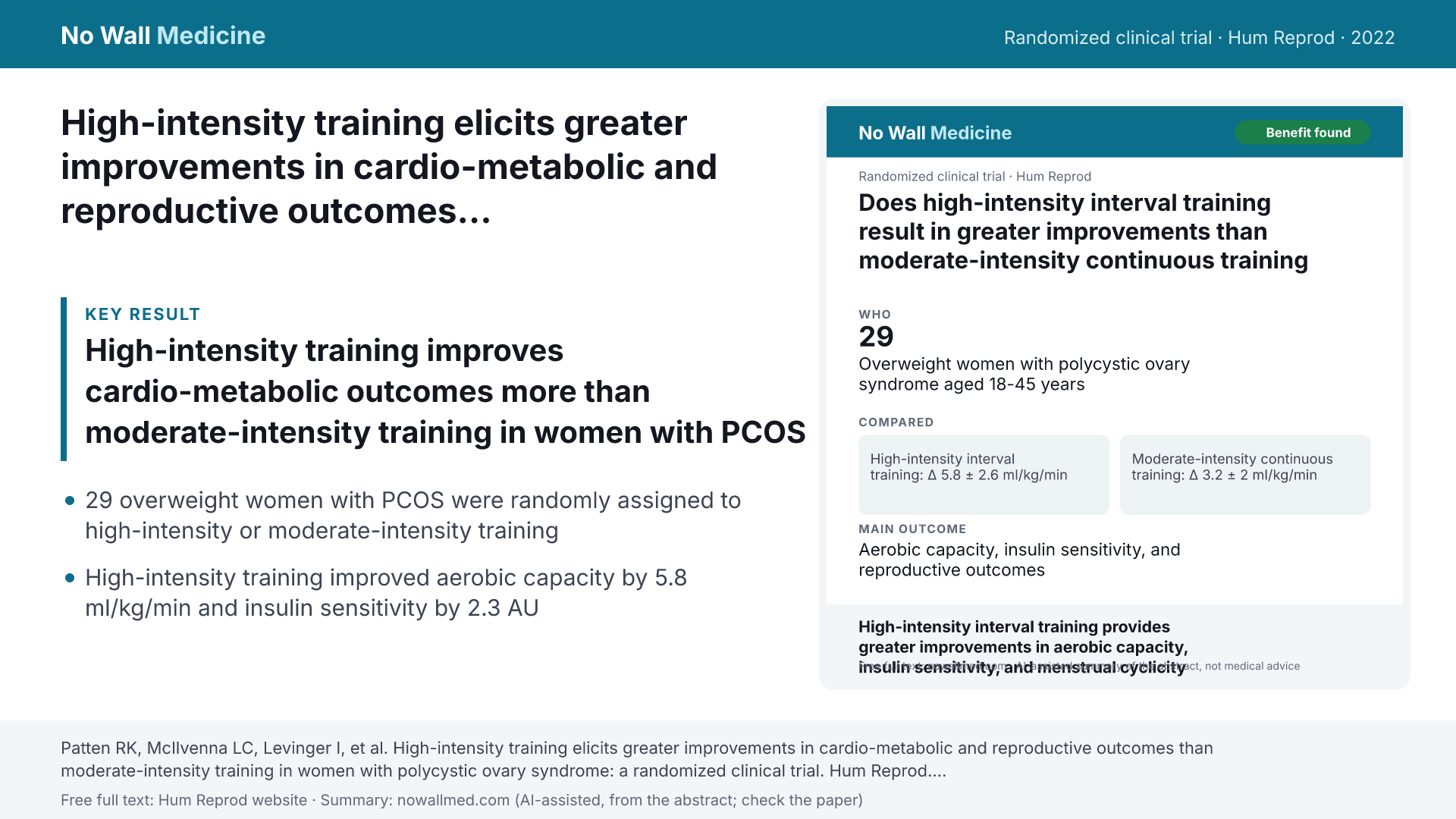
High-intensity training elicits greater improvements in cardio-metabolic and reproductive outcomes than moderate-intensity training in women with polycystic ovary syndrome: a randomized clinical trial
Randomized clinical trialBenefit found
Does high-intensity interval training result in greater improvements than moderate-intensity continuous training in women with PCOS?
Who
29
Overweight women with polycystic ovary syndrome aged 18-45 years
Compared
High-intensity interval training: Δ 5.8 ± 2.6 ml/kg/min
Moderate-intensity continuous training: Δ 3.2 ± 2 ml/kg/min
Main outcome
Aerobic capacity, insulin sensitivity, and reproductive outcomes
Result: odds ratio 7.8, P = 0.04
Bottom line: High-intensity interval training provides greater improvements in aerobic capacity, insulin sensitivity, and menstrual cyclicity than moderate-intensity continuous training.
Limitation: Small sample size and limited to overweight reproductive-aged women without co-existing co-morbidities.
Funded by: Australian National Health and Medical Research Council
Hum Reprod · 2022-03-25Download image
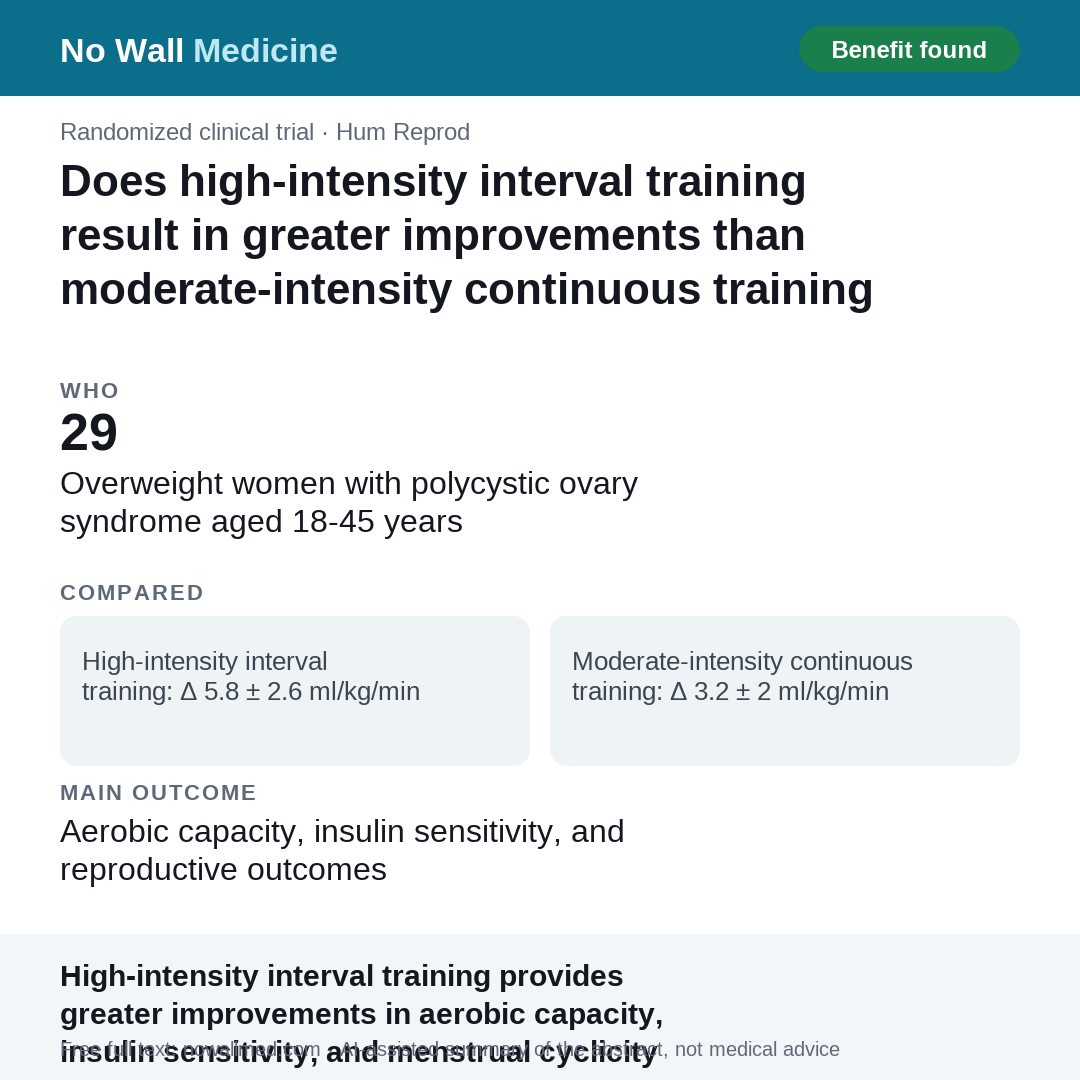
Clinical question: Does high-intensity interval training result in greater improvements than moderate-intensity continuous training in women with PCOS?
Key points
- 29 overweight women with PCOS were randomly assigned to high-intensity or moderate-intensity training.
- High-intensity training improved aerobic capacity by 5.8 ml/kg/min and insulin sensitivity by 2.3 AU.
- High-intensity training participants were 7.8 times more likely to report improved menstrual cyclicity.
Limitation the authors note: This study has a small sample size and the findings are limited to overweight reproductive-aged women without co-existing co-morbidities
Headline and key points written with AI from the paper’s abstract, with every number checked against it. Read the paper before relying on them.
Was this summary helpful?
Subject terms
Cite this article
Patten RK, McIlvenna LC, Levinger I, et al. High-intensity training elicits greater improvements in cardio-metabolic and reproductive outcomes than moderate-intensity training in women with polycystic ovary syndrome: a randomized clinical trial. Hum Reprod. 2022. doi:10.1093/humrep/deac047
Spotted a mistake? Suggest a correction