Home-based brain stimulation was associated with slower disease progression in people with ALS
Home-Based Tele-tDCS in Amyotrophic Lateral Sclerosis: Feasibility, Safety, and Preliminary Efficacy
Double-blinded pilot studyBenefit found
Is home-based tele-tDCS feasible, safe, and effective in amyotrophic lateral sclerosis?
Who
14
Spinal-onset amyotrophic lateral sclerosis participants
Compared
Intervention group: mean ALSFRS-R change of -1.7
Delayed-start group: mean ALSFRS-R change of -13.6
Main outcome
Amyotrophic lateral sclerosis functional rating scale-revised scores
Bottom line: Home-based tele-tDCS was feasible, safe, and may slow disease progression in amyotrophic lateral sclerosis.
Limitation: This was a pilot study with ten participants completing the study.
Ann Clin Transl Neurol · 2025-03-24Download image
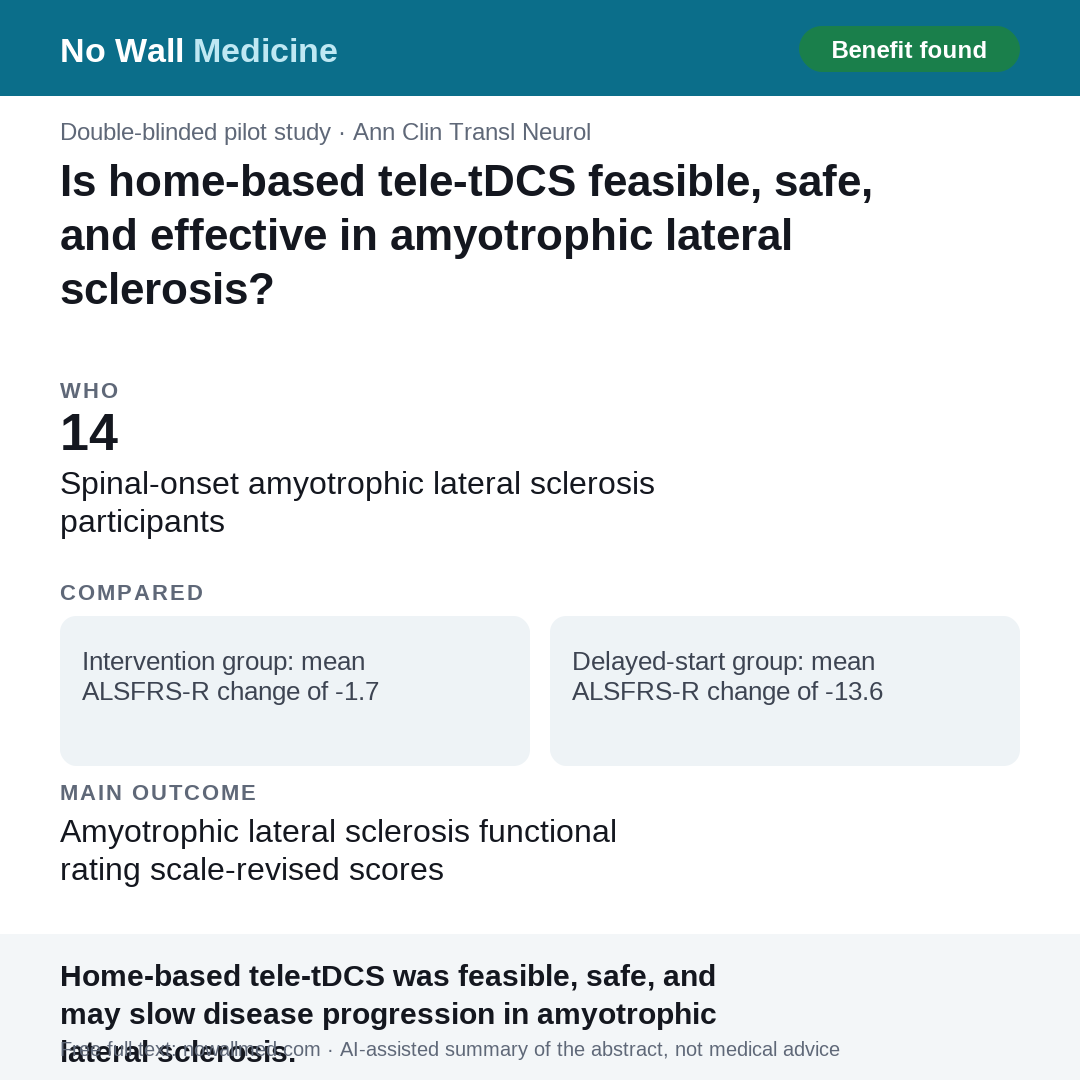
Clinical question: Is home-based tele-tDCS feasible, safe, and effective in amyotrophic lateral sclerosis?
Why it matters: It was unknown if remotely supervised brain stimulation delivered at home is feasible, safe, or effective for managing amyotrophic lateral sclerosis.
Key points
- This pilot study randomized 14 participants with spinal-onset amyotrophic lateral sclerosis to receive either 72 sessions of transcranial direct current stimulation (brain stimulation using low electrical currents) or a delayed-start protocol.
- At 24 weeks, the intervention group had a mean ALS Functional Rating Scale-Revised score change of -1.7, compared to -13.6 in the delayed-start group (p = 0.0018).
- The study reported an overall compliance rate of 98.3% and no serious adverse events, though some participants experienced mild itching and tingling.
Headline and key points written with AI from the paper’s abstract, with every number checked against it. Read the paper before relying on them.
Was this summary helpful?
Subject terms
Cite this article
Madhavan S, Deshmukh S, Cummings M, Doshi A, Rezania K, Freels S. Home-Based Tele-tDCS in Amyotrophic Lateral Sclerosis: Feasibility, Safety, and Preliminary Efficacy. Ann Clin Transl Neurol. 2025. doi:10.1002/acn3.70038
Spotted a mistake? Suggest a correction
Top studies every Monday
The week’s key trials and guidelines in your specialties, plus any topics you follow. By email, free.
Get the weekly digest