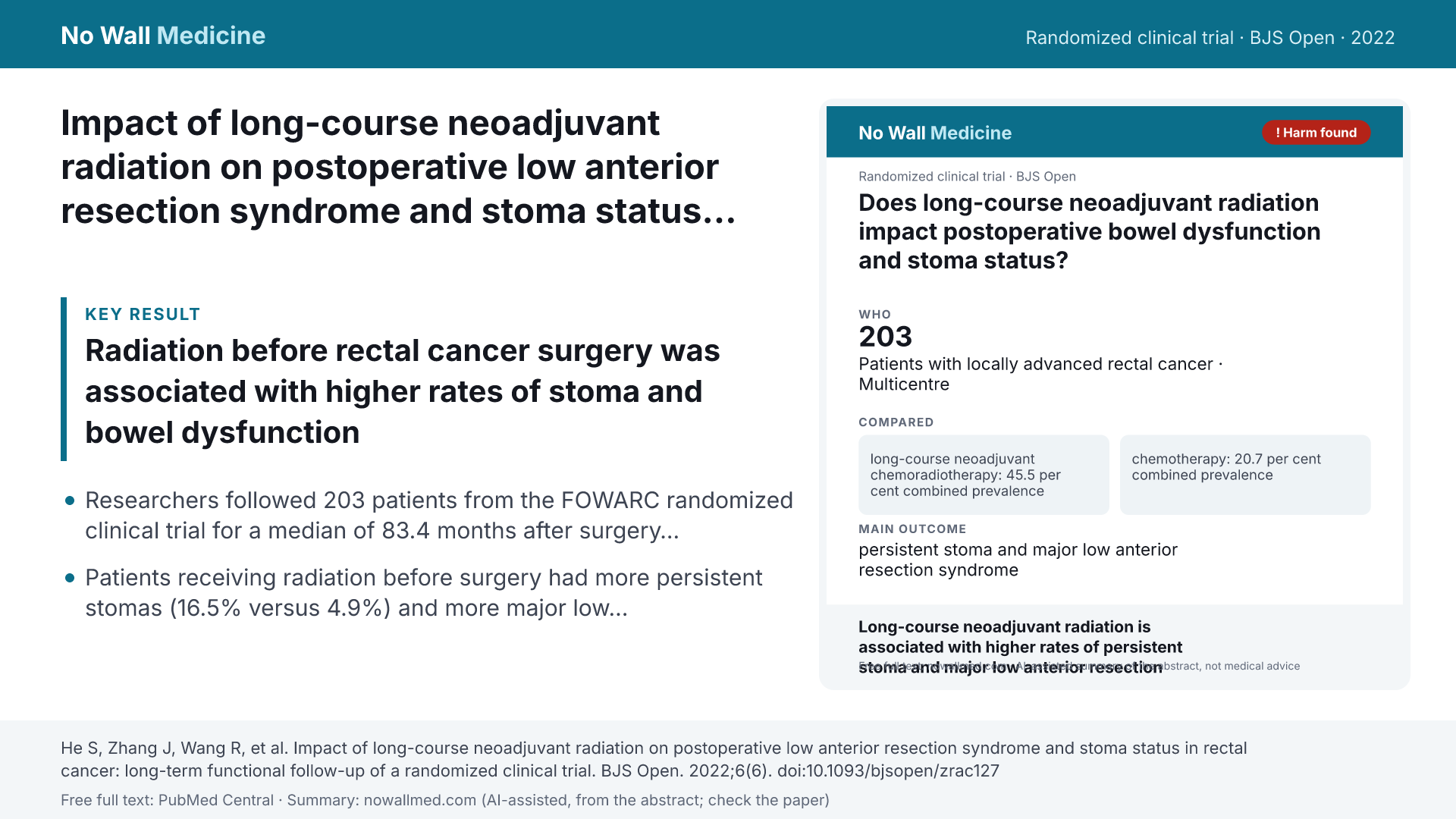
Radiation before rectal cancer surgery was associated with higher rates of stoma and bowel dysfunction
Impact of long-course neoadjuvant radiation on postoperative low anterior resection syndrome and stoma status in rectal cancer: long-term functional follow-up of a randomized clinical trial
Randomized clinical trialHarm found
Does long-course neoadjuvant radiation impact postoperative bowel dysfunction and stoma status?
Who
203
Patients with locally advanced rectal cancer · Multicentre
Compared
long-course neoadjuvant chemoradiotherapy: 45.5 per cent combined prevalence
chemotherapy: 20.7 per cent combined prevalence
Main outcome
persistent stoma and major low anterior resection syndrome
Result: odds ratio 2.20 (95% confidence interval 1.10 to 4.40)
Bottom line: Long-course neoadjuvant radiation is associated with higher rates of persistent stoma and major low anterior resection syndrome.
BJS Open · 2022-11-02Download image
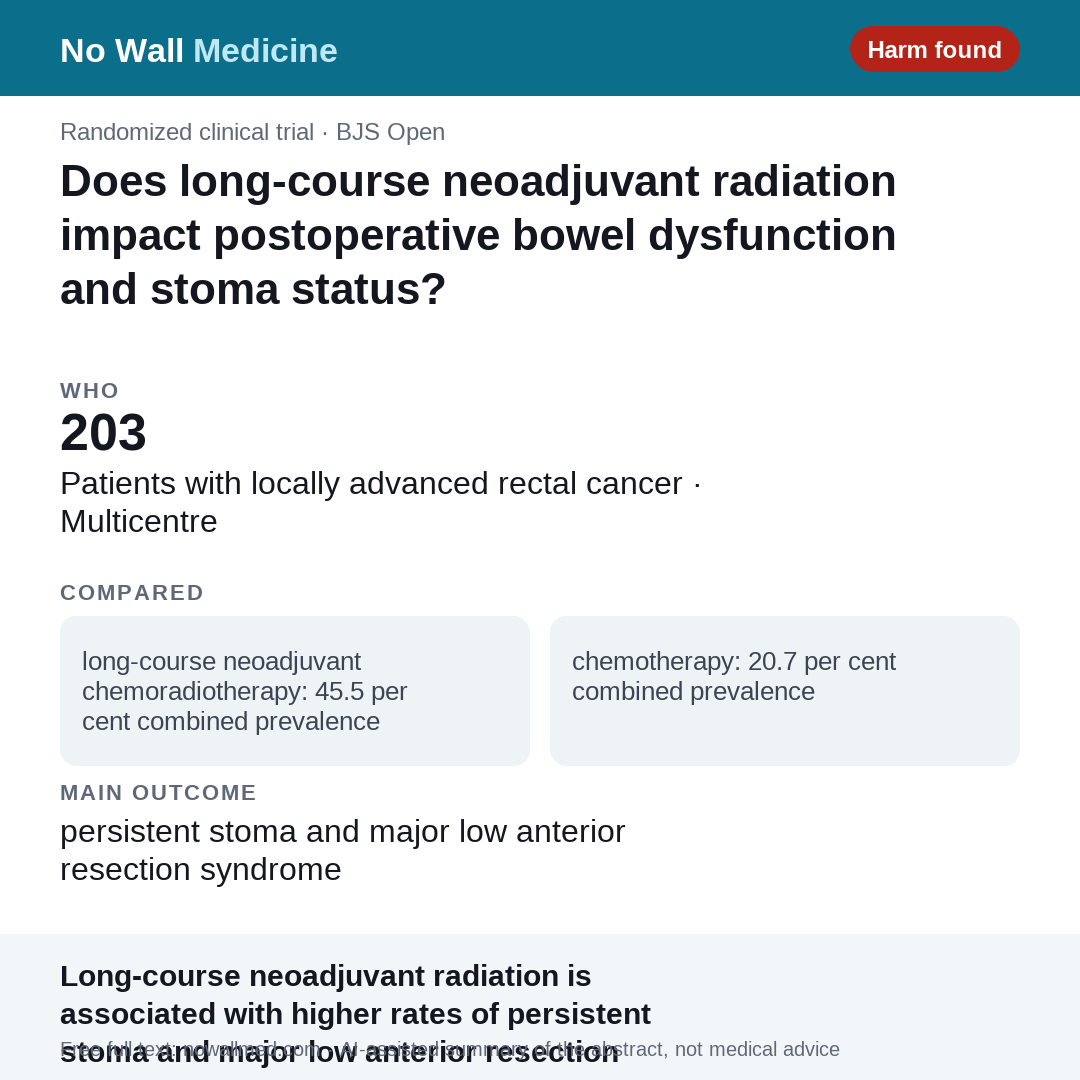
Clinical question: Does long-course neoadjuvant radiation impact postoperative bowel dysfunction and stoma status?
Why it matters: It is unknown how long-course neoadjuvant radiation affects long-term bowel dysfunction and stoma status in patients undergoing sphincter-saving surgery for rectal cancer.
Key points
- Researchers followed 203 patients from the FOWARC randomized clinical trial for a median of 83.4 months after surgery for rectal cancer.
- Patients receiving radiation before surgery had more persistent stomas (16.5% versus 4.9%) and more major low anterior resection syndrome (34.7% versus 16.7%).
- The combined prevalence of persistent stoma and major low anterior resection syndrome was 45.5% in the radiation group compared to 20.7% in the chemotherapy group.
Headline and key points written with AI from the paper’s abstract, with every number checked against it. Read the paper before relying on them.
Was this summary helpful?
Subject terms
Cite this article
He S, Zhang J, Wang R, et al. Impact of long-course neoadjuvant radiation on postoperative low anterior resection syndrome and stoma status in rectal cancer: long-term functional follow-up of a randomized clinical trial. BJS Open. 2022. doi:10.1093/bjsopen/zrac127
Spotted a mistake? Suggest a correction