Robotic surgery and intracorporeal urinary diversion are linked to higher risks of ureteral strictures
Impact of Surgical Techniques on Anastomotic Stricture in Urinary Diversion: A Systematic Review and Meta-analysis
Systematic review and meta-analysisMixed results
How do various surgical techniques impact benign ureteral-ileal anastomotic stricture risk?
Who
11 732
Patients undergoing urinary diversion
Compared
Robotic surgery: RR 1.47
Open surgery
Intracorporeal urinary diversion: RR 1.34
Extracorporeal urinary diversion
Main outcome
Benign ureteral-ileal anastomotic stricture risk
Result: RR 1.47 (95% CI 1.24-1.76) for robotic vs open surgery
Bottom line: Robotic surgery and intracorporeal urinary diversion are associated with higher stricture risk, but other techniques showed no significant difference.
Limitation: Further prospective studies are needed to validate these findings.
Eur Urol Open Sci · 2026-05-20 · Save PNG
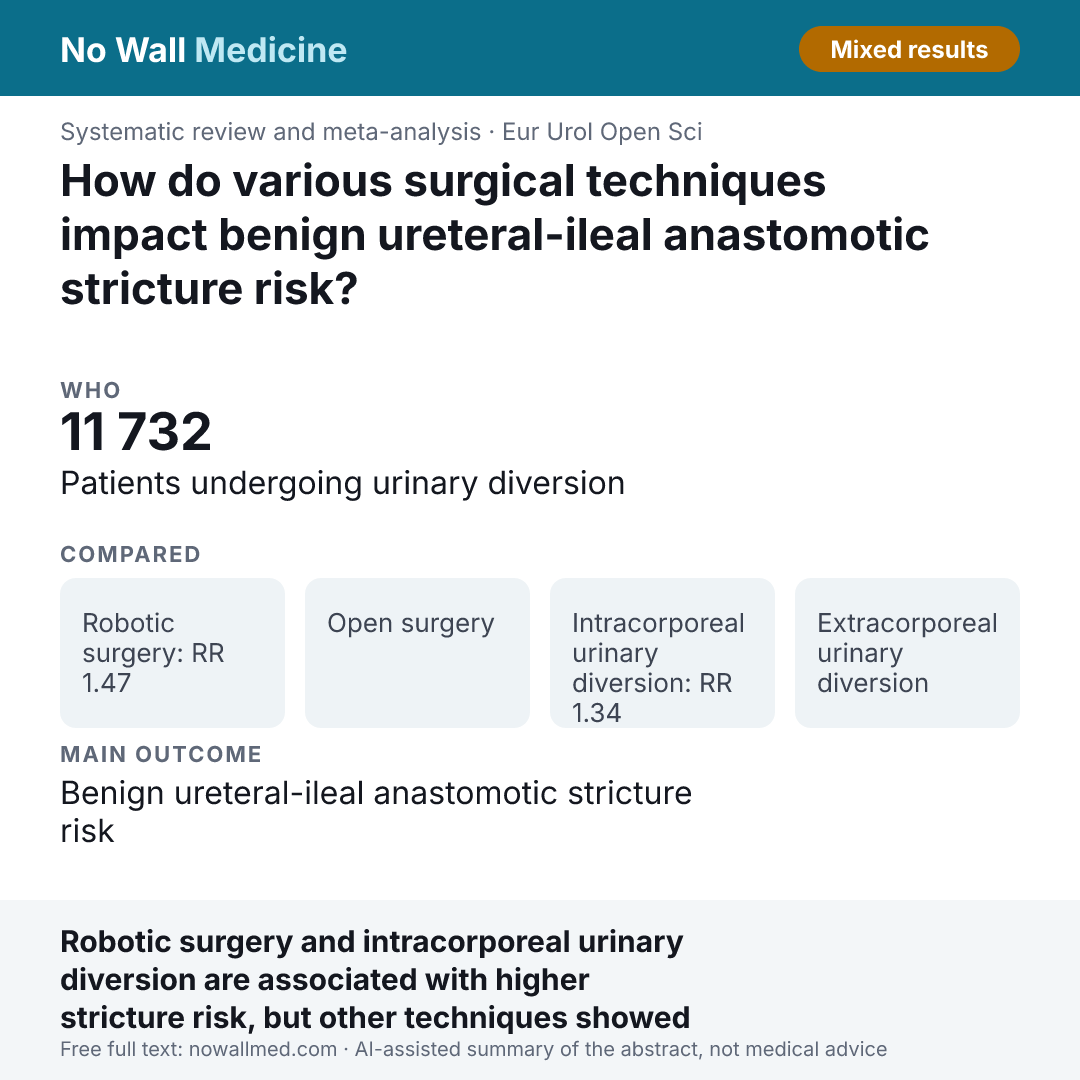
Clinical question: How do various surgical techniques impact benign ureteral-ileal anastomotic stricture risk?
Why it matters: An optimal surgical strategy to reduce the risk of narrowing at the connection between the ureter and the bowel in urinary diversion has not been established.
Key points
- Researchers analyzed 46 studies involving 11,732 patients to compare how different surgical methods affect benign ureteral-ileal anastomotic stricture, which is a narrowing at the connection between the ureter and the bowel.
- Robotic surgery was associated with a higher risk of stricture compared to open surgery (RR: 1.47; 95% CI: 1.24-1.76; p < 0.001).
- Intracorporeal urinary diversion was associated with an increased risk of stricture compared to extracorporeal urinary diversion (RR: 1.34; 95% CI: 1.05-1.72; p = 0.020).
Limitation the authors note: Further prospective studies are needed to validate these findings.
Headline and key points written with AI from the paper’s abstract, with every number checked against it. Read the paper before relying on them.
Was this summary helpful?
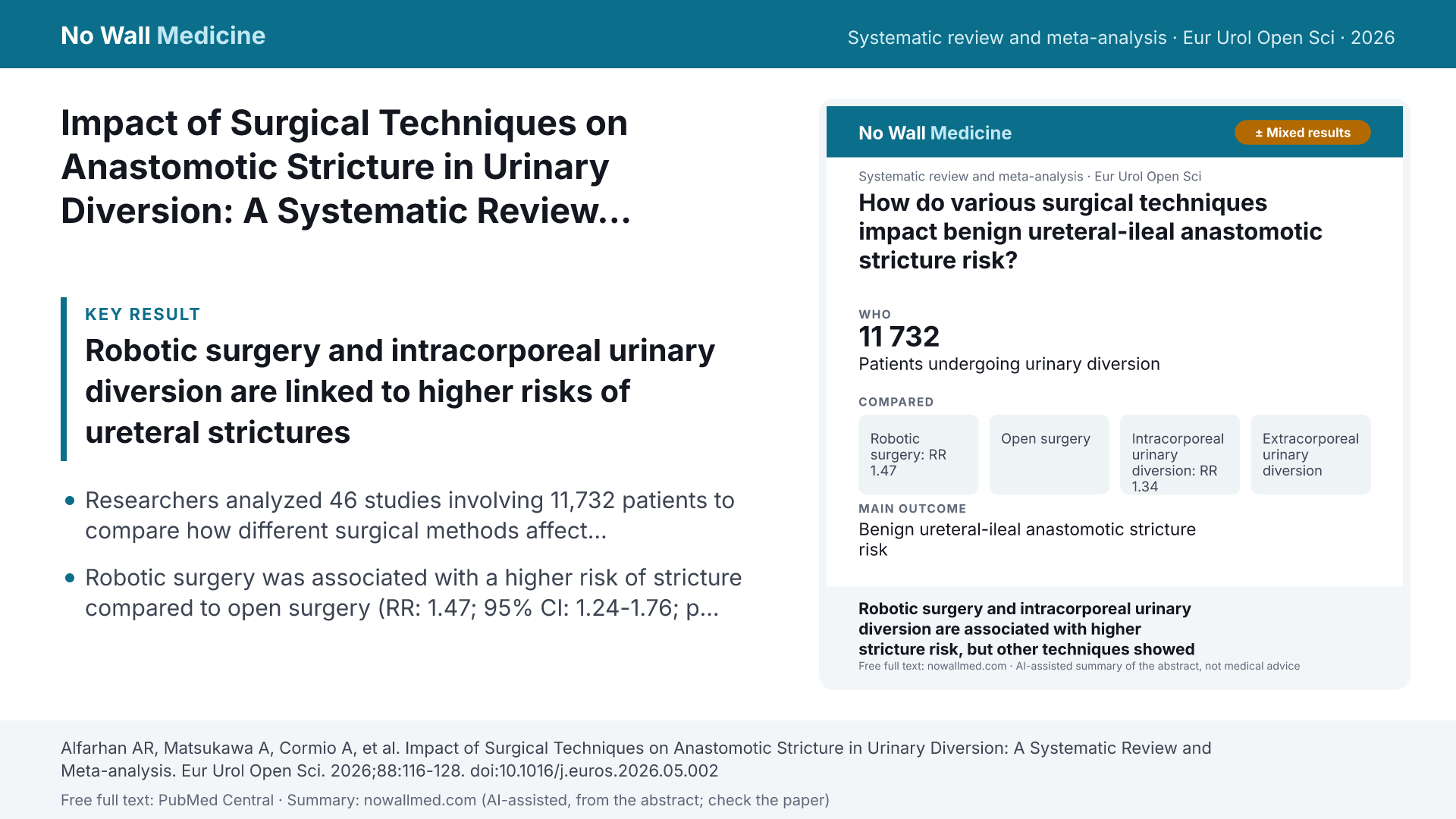
Headline, design, result, key points, caveat and citation as plain text.
Cite this article
Alfarhan AR, Matsukawa A, Cormio A, et al. Impact of Surgical Techniques on Anastomotic Stricture in Urinary Diversion: A Systematic Review and Meta-analysis. Eur Urol Open Sci. 2026;88:116-128. doi:10.1016/j.euros.2026.05.002
Spotted a mistake? Suggest a correction