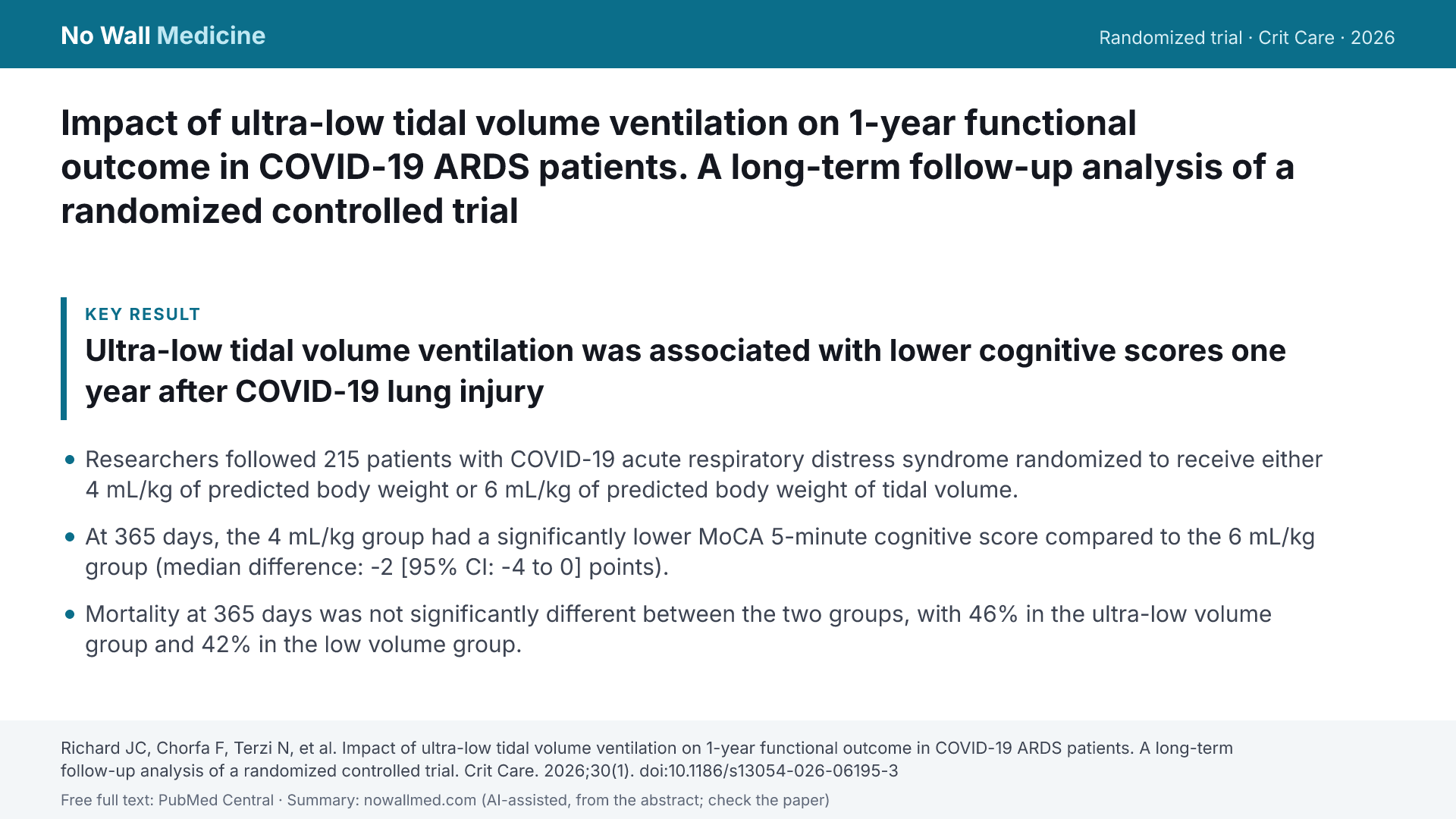
Ultra-low tidal volume ventilation was associated with lower cognitive scores one year after COVID-19 lung injury
Impact of ultra-low tidal volume ventilation on 1-year functional outcome in COVID-19 ARDS patients. A long-term follow-up analysis of a randomized controlled trial
Key points
- Researchers followed 215 patients with COVID-19 acute respiratory distress syndrome randomized to receive either 4 mL/kg of predicted body weight or 6 mL/kg of predicted body weight of tidal volume.
- At 365 days, the 4 mL/kg group had a significantly lower MoCA 5-minute cognitive score compared to the 6 mL/kg group (median difference: -2 [95% CI: -4 to 0] points).
- Mortality at 365 days was not significantly different between the two groups, with 46% in the ultra-low volume group and 42% in the low volume group.
Limitation the authors note: The study had missing data for 34 surviving patients for at least one score and seven patients were lost to follow-up.
Headline and key points written with AI from the paper’s abstract, with every number checked against it. Read the paper before relying on them.
Was this summary helpful?
Subject terms
Headline, design, result, key points, caveat and citation as plain text.
Cite this article
Richard JC, Chorfa F, Terzi N, et al. Impact of ultra-low tidal volume ventilation on 1-year functional outcome in COVID-19 ARDS patients. A long-term follow-up analysis of a randomized controlled trial. Crit Care. 2026;30(1). doi:10.1186/s13054-026-06195-3
Spotted a mistake? Suggest a correction