Virtual reality therapies improved memory, executive function, and visuospatial skills in stroke patients
Impact of Virtual Reality-Based Therapies on Cognition and Mental Health of Stroke Patients: Systematic Review and Meta-analysis
Meta-analysis of 23 randomized controlled trialsMixed results
Do virtual reality-based therapies improve cognition and mental health in stroke patients?
Who
894
Patients with stroke
Compared
Virtual reality intervention
Traditional rehabilitation therapies
Main outcome
Cognitive function and mental health
Result: executive function SMD=0.88 (95% CI 0.06-1.70), memory SMD=1.44 (95% CI 0.21-2.68), visuospatial function SMD=0.78 (95% CI 0.23-1.33)
Bottom line: Virtual reality improves executive function, memory, and visuospatial function but shows no significant difference for other cognitive or mental health outcomes.
J Med Internet Res · 2021-11-17 · Save PNG
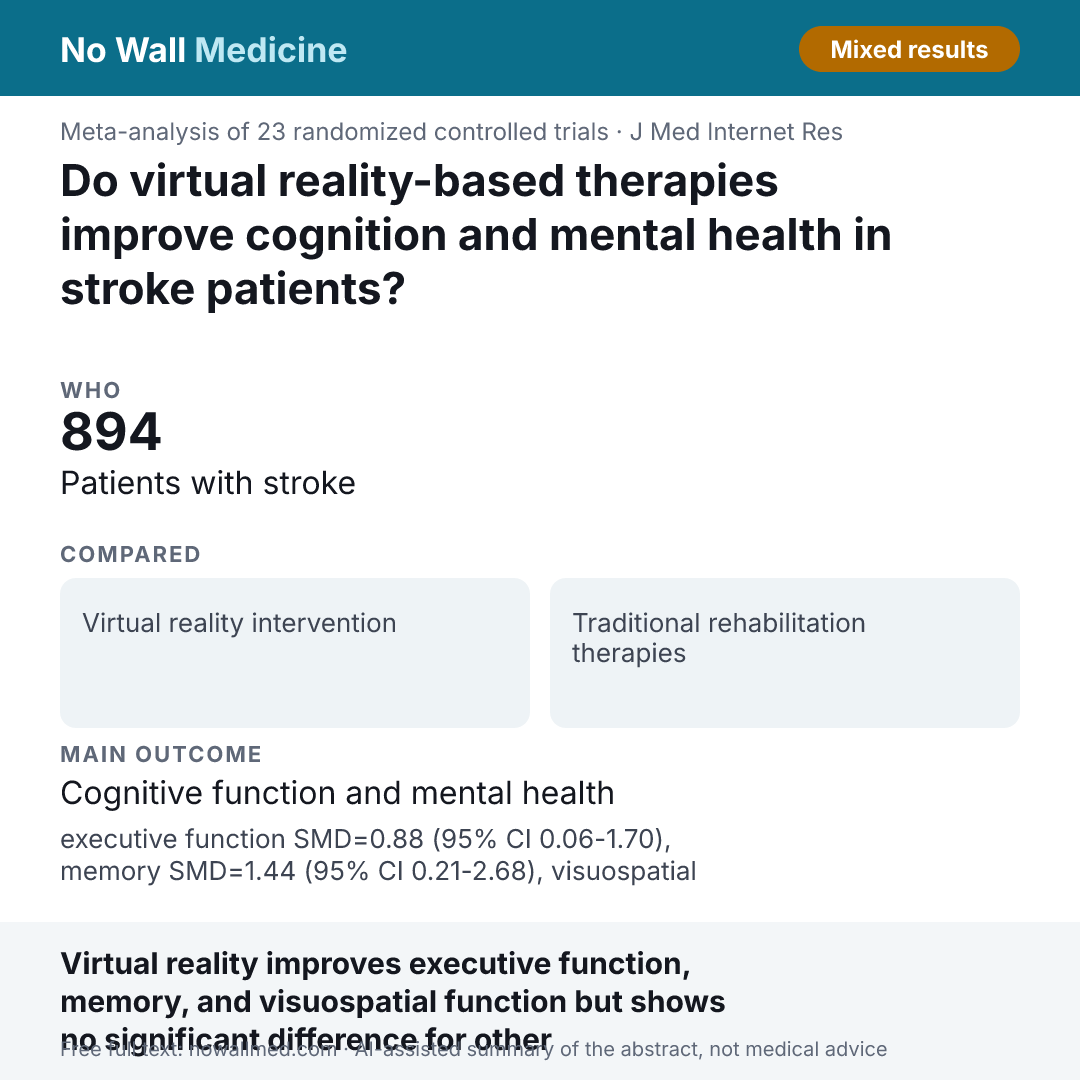
Clinical question: Do virtual reality-based therapies improve cognition and mental health in stroke patients?
Key points
- Researchers analyzed 23 randomized controlled trials involving 894 patients to compare virtual reality therapies against traditional rehabilitation.
- Virtual reality was associated with improvements in executive function (SMD=0.88), memory (SMD=1.44), and visuospatial function (SMD=0.78).
- No significant differences were found for global cognitive function, attention, verbal fluency, depression, or quality of life.
Headline and key points written with AI from the paper’s abstract, with every number checked against it. Read the paper before relying on them.
Was this summary helpful?
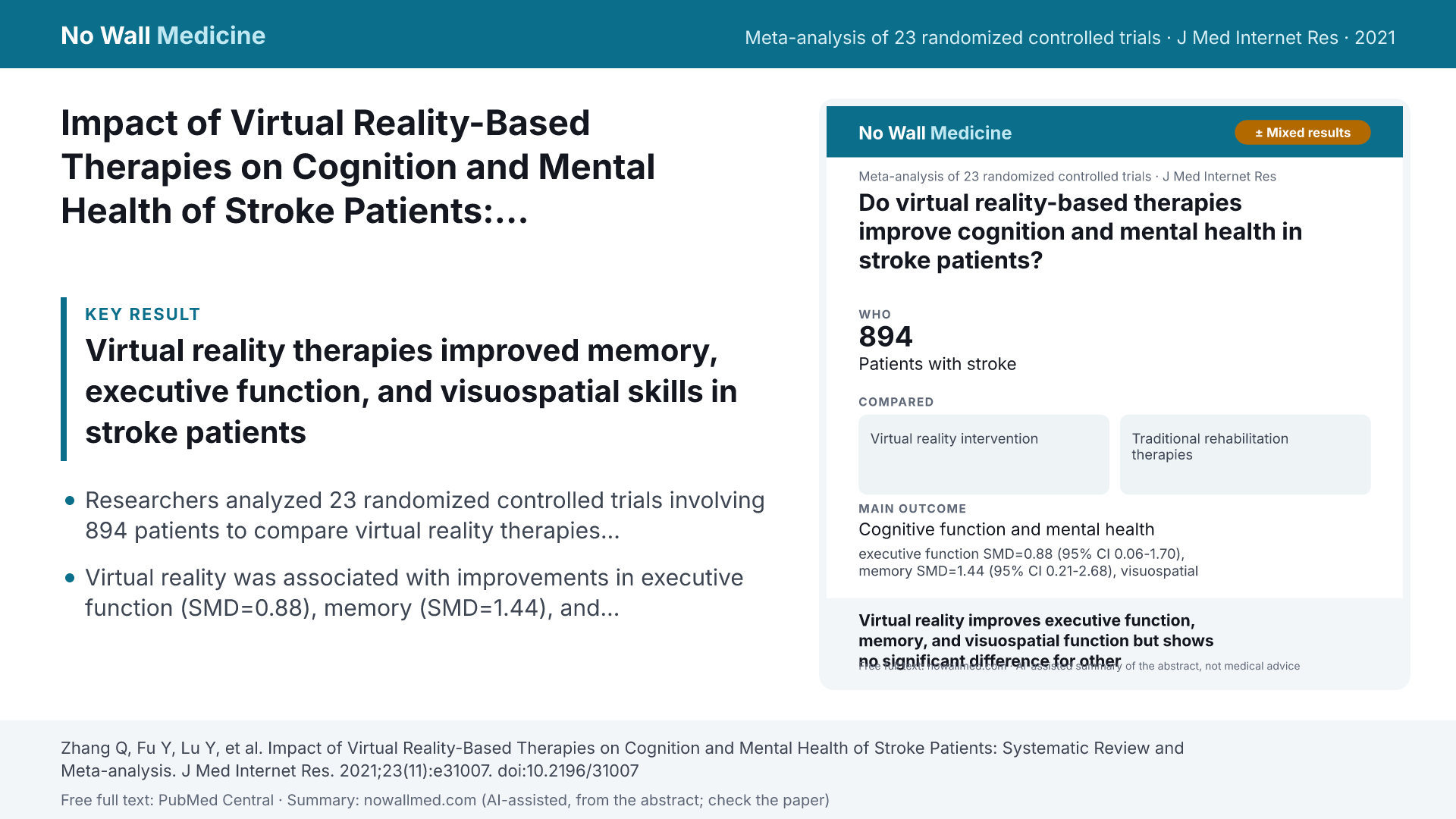
Subject terms
Headline, design, result, key points, caveat and citation as plain text.
Cite this article
Zhang Q, Fu Y, Lu Y, et al. Impact of Virtual Reality-Based Therapies on Cognition and Mental Health of Stroke Patients: Systematic Review and Meta-analysis. J Med Internet Res. 2021;23(11):e31007. doi:10.2196/31007
Spotted a mistake? Suggest a correction