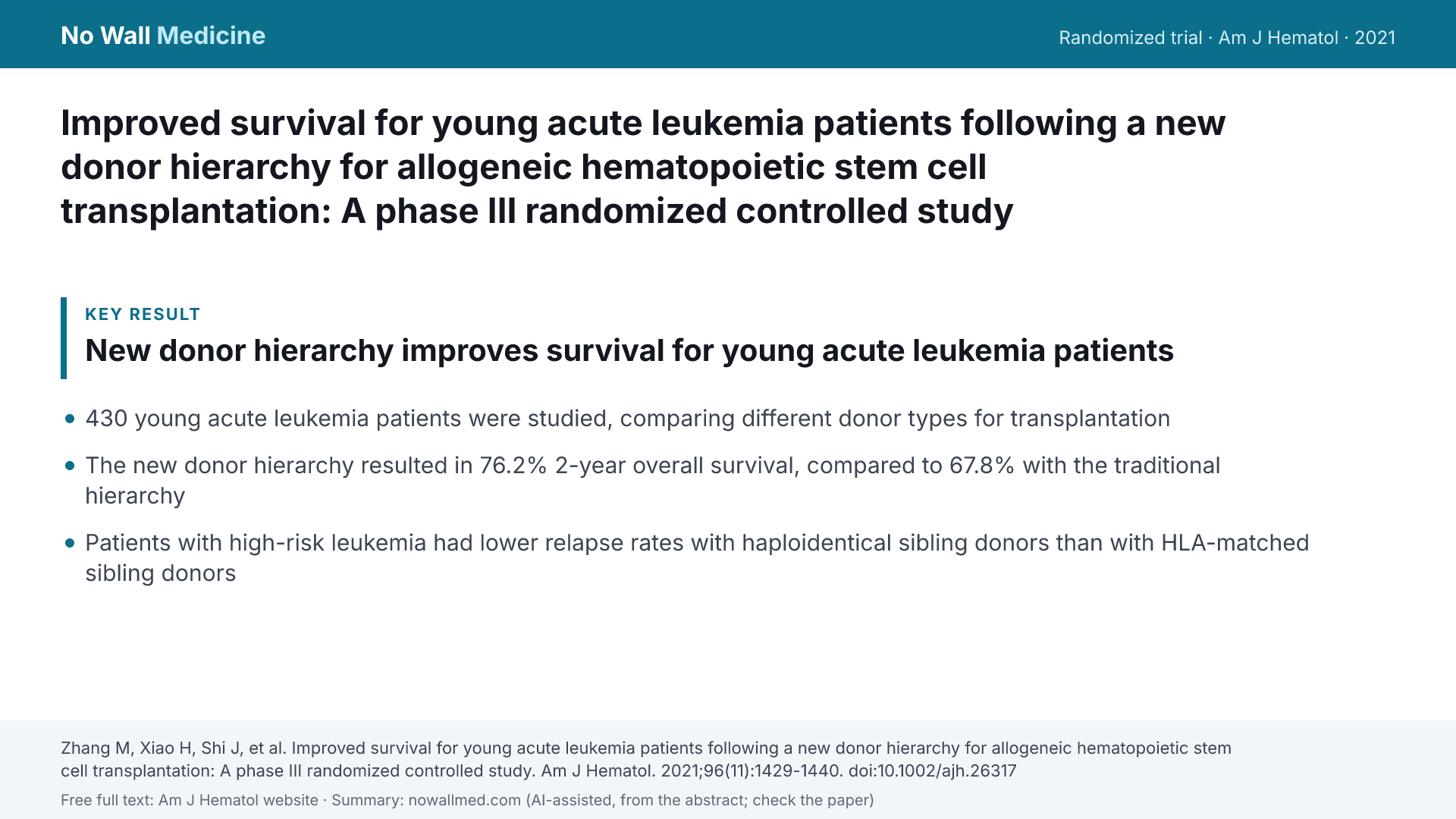
New donor hierarchy improves survival for young acute leukemia patients
Improved survival for young acute leukemia patients following a new donor hierarchy for allogeneic hematopoietic stem cell transplantation: A phase III randomized controlled study
Key points
- 430 young acute leukemia patients were studied, comparing different donor types for transplantation.
- The new donor hierarchy resulted in 76.2% 2-year overall survival, compared to 67.8% with the traditional hierarchy.
- Patients with high-risk leukemia had lower relapse rates with haploidentical sibling donors than with HLA-matched sibling donors.
Headline and key points written with AI from the paper’s abstract, with every number checked against it. Read the paper before relying on them.
Was this summary helpful?
Subject terms
Headline, design, result, key points, caveat and citation as plain text.
Cite this article
Zhang M, Xiao H, Shi J, et al. Improved survival for young acute leukemia patients following a new donor hierarchy for allogeneic hematopoietic stem cell transplantation: A phase III randomized controlled study. Am J Hematol. 2021;96(11):1429-1440. doi:10.1002/ajh.26317
Spotted a mistake? Suggest a correction