Ketamine use during emergency rapid sequence induction was not linked to changes in hypotension incidence
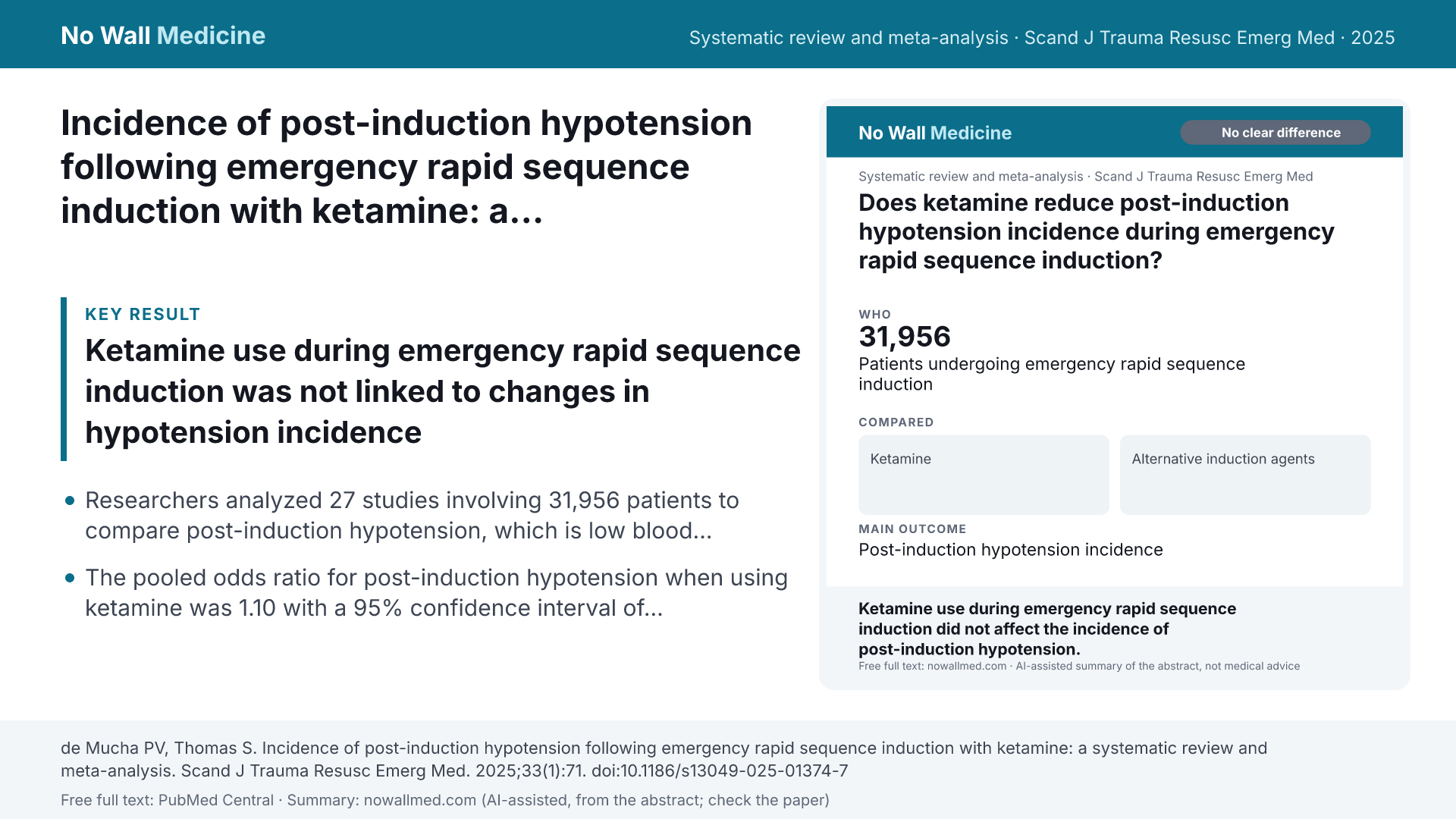
Incidence of post-induction hypotension following emergency rapid sequence induction with ketamine: a systematic review and meta-analysis
Systematic review and meta-analysisNo clear difference
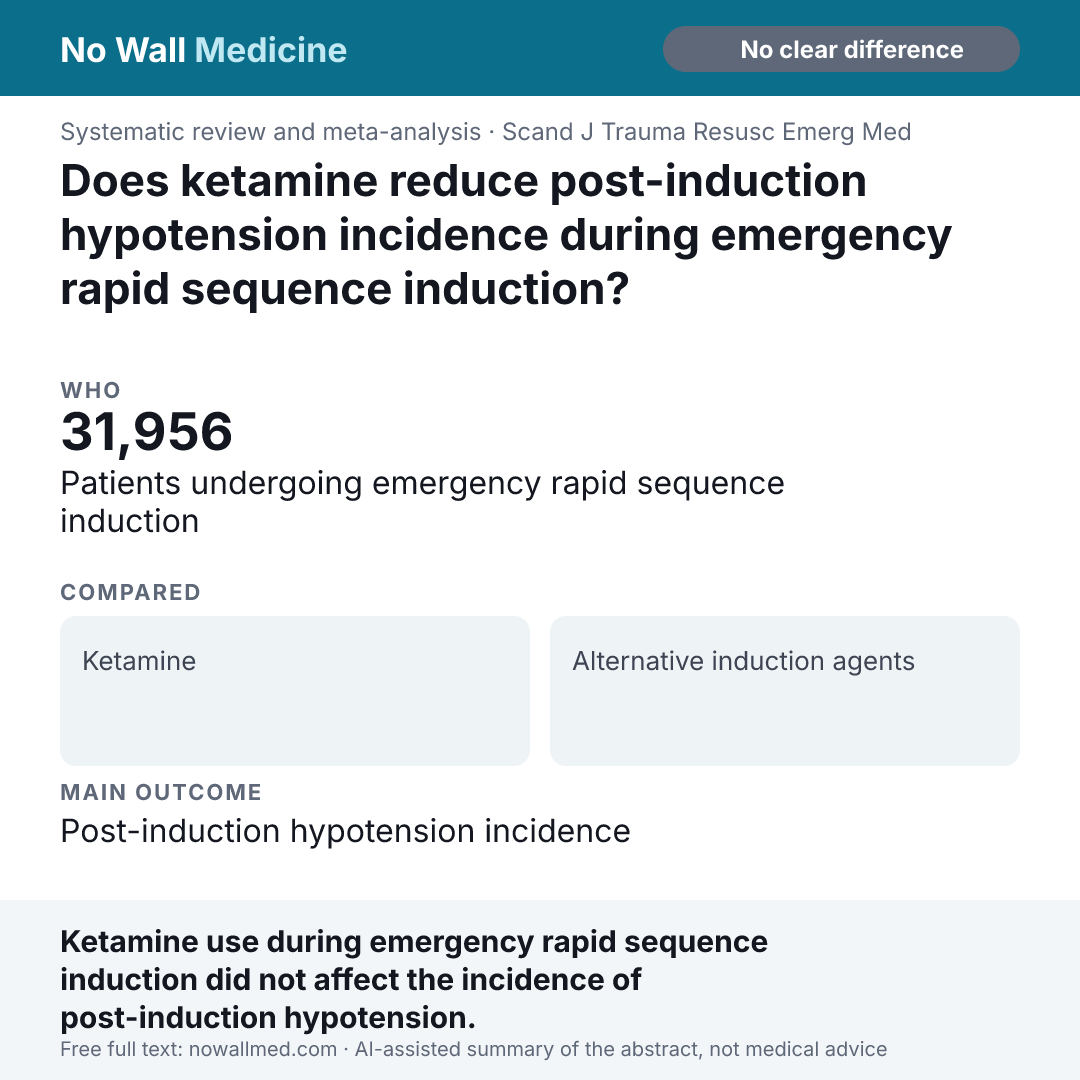
Does ketamine reduce post-induction hypotension incidence during emergency rapid sequence induction?
Who
31,956
Patients undergoing emergency rapid sequence induction
Compared
Ketamine
Alternative induction agents
Main outcome
Post-induction hypotension incidence
Result: odds ratio 1.10 (95% CI 0.78-1.56)
Bottom line: Ketamine use during emergency rapid sequence induction did not affect the incidence of post-induction hypotension.
Limitation: Considerable methodological heterogeneity and breadth of inclusion criteria may limit universal applicability.
Scand J Trauma Resusc Emerg Med · 2025-05-01 · Save PNG
Clinical question: Does ketamine reduce post-induction hypotension incidence during emergency rapid sequence induction?
Why it matters: The optimal induction agent for emergency rapid sequence induction has not been determined to prevent post-induction hypotension.
Key points
- Researchers analyzed 27 studies involving 31,956 patients to compare post-induction hypotension, which is low blood pressure after anesthesia induction, between ketamine and other drugs.
- The pooled odds ratio for post-induction hypotension when using ketamine was 1.10 with a 95% confidence interval of 0.78-1.56, showing no significant difference.
- When excluding 6 studies at greater risk of bias, the pooled odds ratio was 0.99 (0.69-1.43), also showing no significant difference.
Limitation the authors note: The authors state that due to the breadth of inclusion criteria, the applicability of this result is not necessarily universal.
Headline and key points written with AI from the paper’s abstract, with every number checked against it. Read the paper before relying on them.
Was this summary helpful?
Subject terms
Headline, design, result, key points, caveat and citation as plain text.
Cite this article
de Mucha PV, Thomas S. Incidence of post-induction hypotension following emergency rapid sequence induction with ketamine: a systematic review and meta-analysis. Scand J Trauma Resusc Emerg Med. 2025;33(1):71. doi:10.1186/s13049-025-01374-7
Spotted a mistake? Suggest a correction