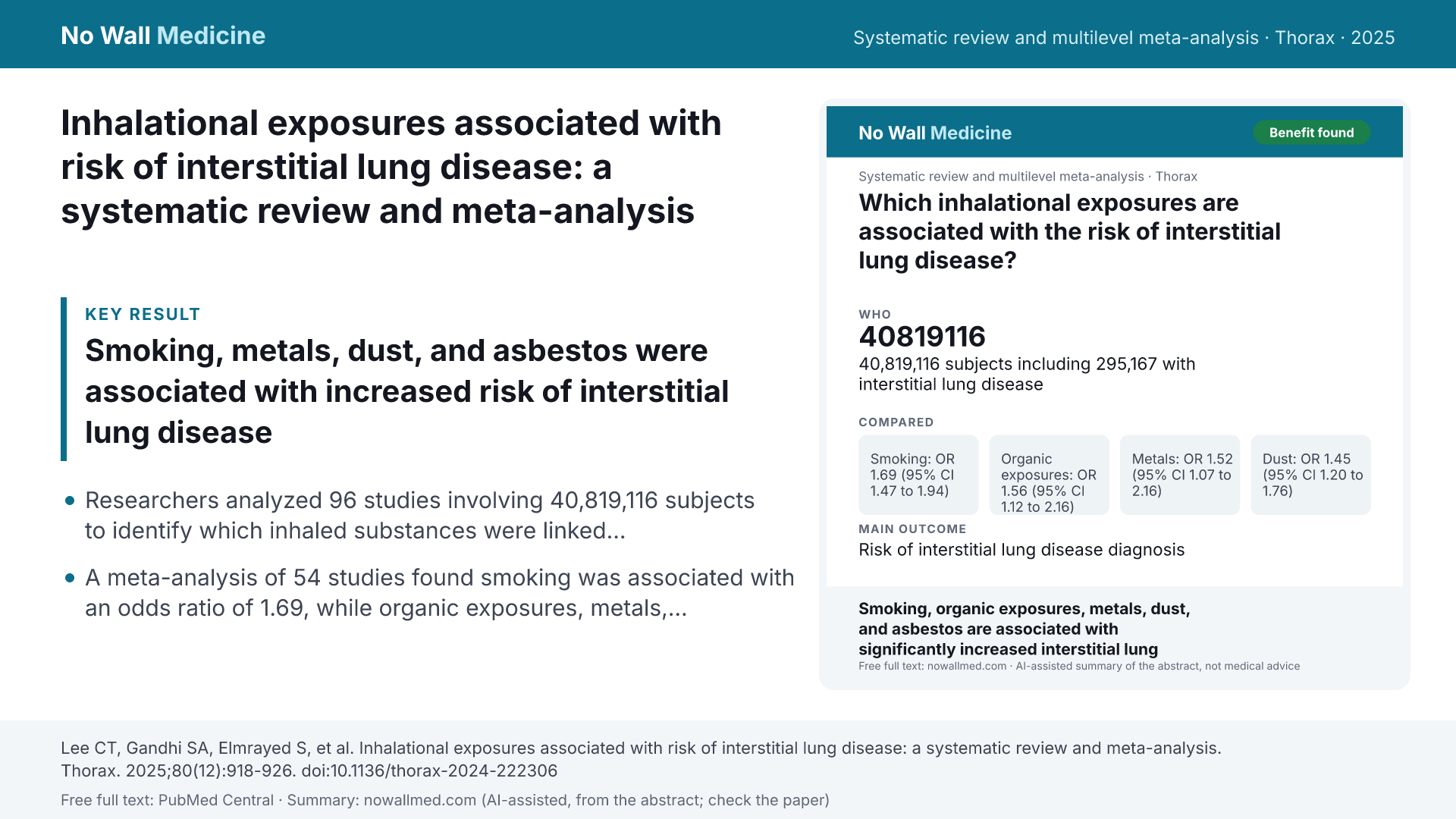
Smoking, metals, dust, and asbestos were associated with increased risk of interstitial lung disease
Inhalational exposures associated with risk of interstitial lung disease: a systematic review and meta-analysis
Systematic review and multilevel meta-analysisBenefit found
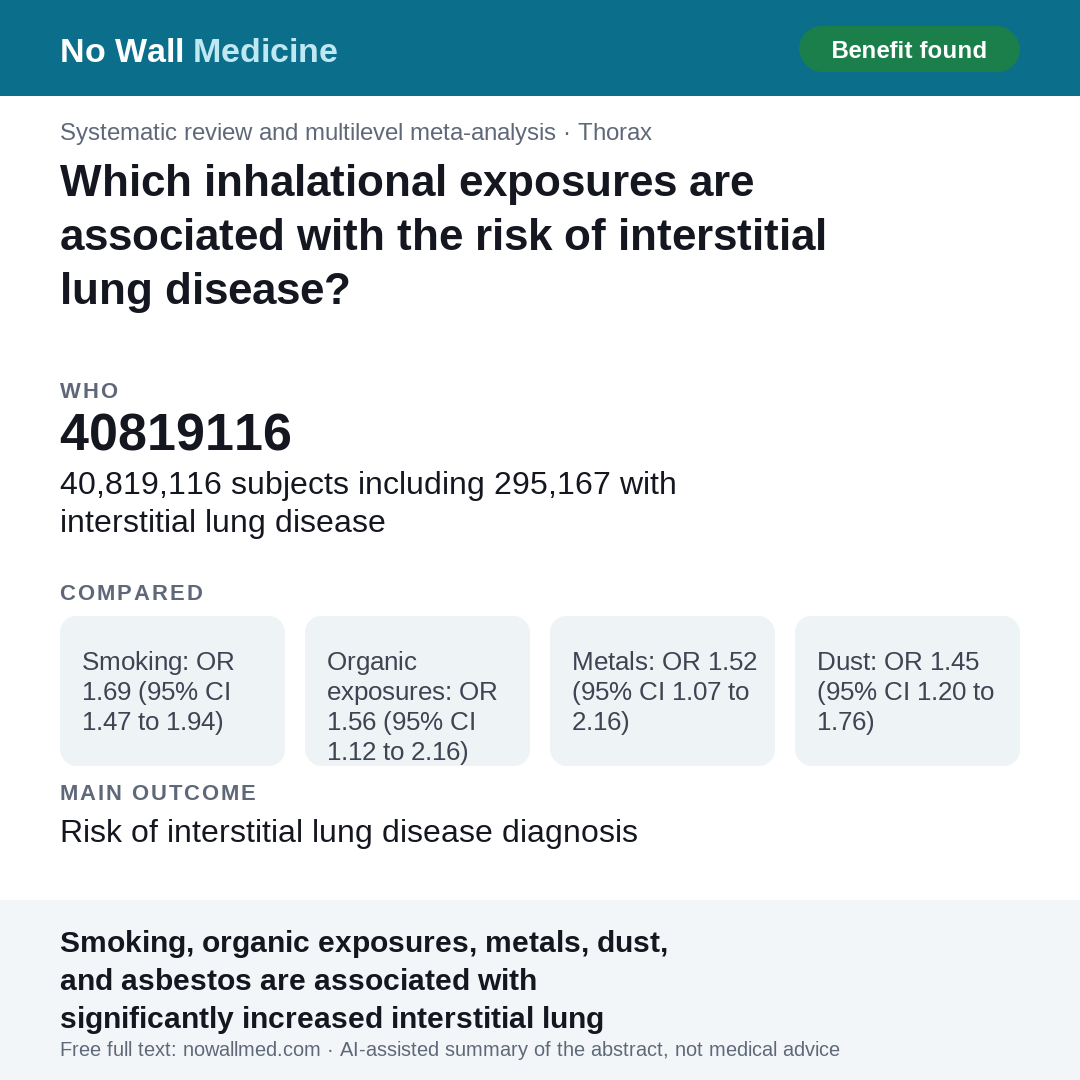
Which inhalational exposures are associated with the risk of interstitial lung disease?
Who
40819116
40,819,116 subjects including 295,167 with interstitial lung disease
Compared
Smoking: OR 1.69 (95% CI 1.47 to 1.94)
Organic exposures: OR 1.56 (95% CI 1.12 to 2.16)
Metals: OR 1.52 (95% CI 1.07 to 2.16)
Dust: OR 1.45 (95% CI 1.20 to 1.76)
Main outcome
Risk of interstitial lung disease diagnosis
Bottom line: Smoking, organic exposures, metals, dust, and asbestos are associated with significantly increased interstitial lung disease risk.
Limitation: Silica and fumes had positive associations that trended towards significance but were not significant.
Thorax · 2025-11-14Download image
Clinical question: Which inhalational exposures are associated with the risk of interstitial lung disease?
Why it matters: The relationship between specific inhaled substances and the risk of developing interstitial lung disease is poorly characterized.
Key points
- Researchers analyzed 96 studies involving 40,819,116 subjects to identify which inhaled substances were linked to interstitial lung disease, a group of lung disorders.
- A meta-analysis of 54 studies found smoking was associated with an odds ratio of 1.69, while organic exposures, metals, dust, and asbestos also showed increased risks.
- Silica and fumes were associated with interstitial lung disease, though these findings trended towards significance rather than reaching it.
Headline and key points written with AI from the paper’s abstract, with every number checked against it. Read the paper before relying on them.
Was this summary helpful?
Subject terms
Cite this article
Lee CT, Gandhi SA, Elmrayed S, Barnes H, Lorenzetti D, Salisbury ML. Inhalational exposures associated with risk of interstitial lung disease: a systematic review and meta-analysis. Thorax. 2025. doi:10.1136/thorax-2024-222306
Spotted a mistake? Suggest a correction
Top studies every Monday
The week’s key trials and guidelines in your specialties, plus any topics you follow. By email, free.
Get the weekly digest