Intermittent theta burst stimulation reduced self-injury frequency and severity in adolescents with depression
Intermittent theta burst stimulation for non-suicidal self-injury in adolescents with major depressive disorder: a randomized, sham-controlled trial
Randomized, sham-controlled clinical trialBenefit found
Is intermittent theta burst stimulation effective for non-suicidal self-injury in adolescents with major depressive disorder?
Who
60
Adolescents with major depressive disorder
Compared
active treatment
sham treatment
Main outcome
non-suicidal self-injury frequency and severity
Result: mean difference, -18.66 (95% CI, -28.35 to -8.97)
Bottom line: Intermittent theta burst stimulation is an effective and well-tolerated strategy for treating non-suicidal self-injury in adolescents.
Mol Psychiatry · 2025-08-29Download image
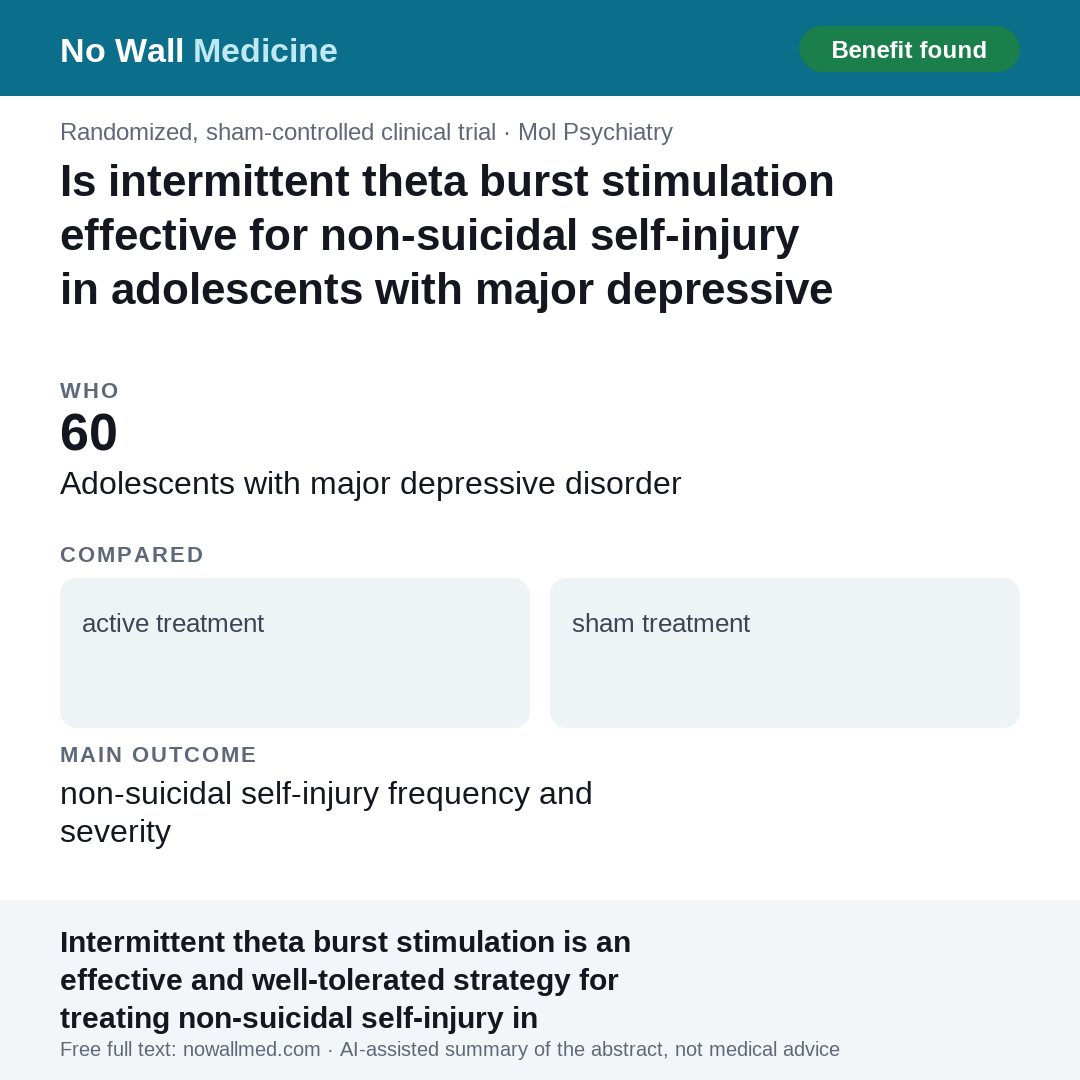
Clinical question: Is intermittent theta burst stimulation effective for non-suicidal self-injury in adolescents with major depressive disorder?
Key points
- Researchers conducted a randomized trial with 60 adolescents with major depressive disorder, where 85% completed five days of intermittent theta burst stimulation, a type of brain stimulation.
- At 4 weeks, the active treatment group had a greater reduction in self-injury scores than the sham group, with a mean difference of -18.66.
- Active treatment was also associated with greater declines in self-injury ideation and addiction subscale scores compared to the sham group.
Headline and key points written with AI from the paper’s abstract, with every number checked against it. Read the paper before relying on them.
Was this summary helpful?
Subject terms
Cite this article
Qin Y, Chen H, Liu F, Zou T, Jin K, Teng Z. Intermittent theta burst stimulation for non-suicidal self-injury in adolescents with major depressive disorder: a randomized, sham-controlled trial. Mol Psychiatry. 2025. doi:10.1038/s41380-025-03183-x
Spotted a mistake? Suggest a correction
Top studies every Monday
The week’s key trials and guidelines in your specialties, plus any topics you follow. By email, free.
Get the weekly digest