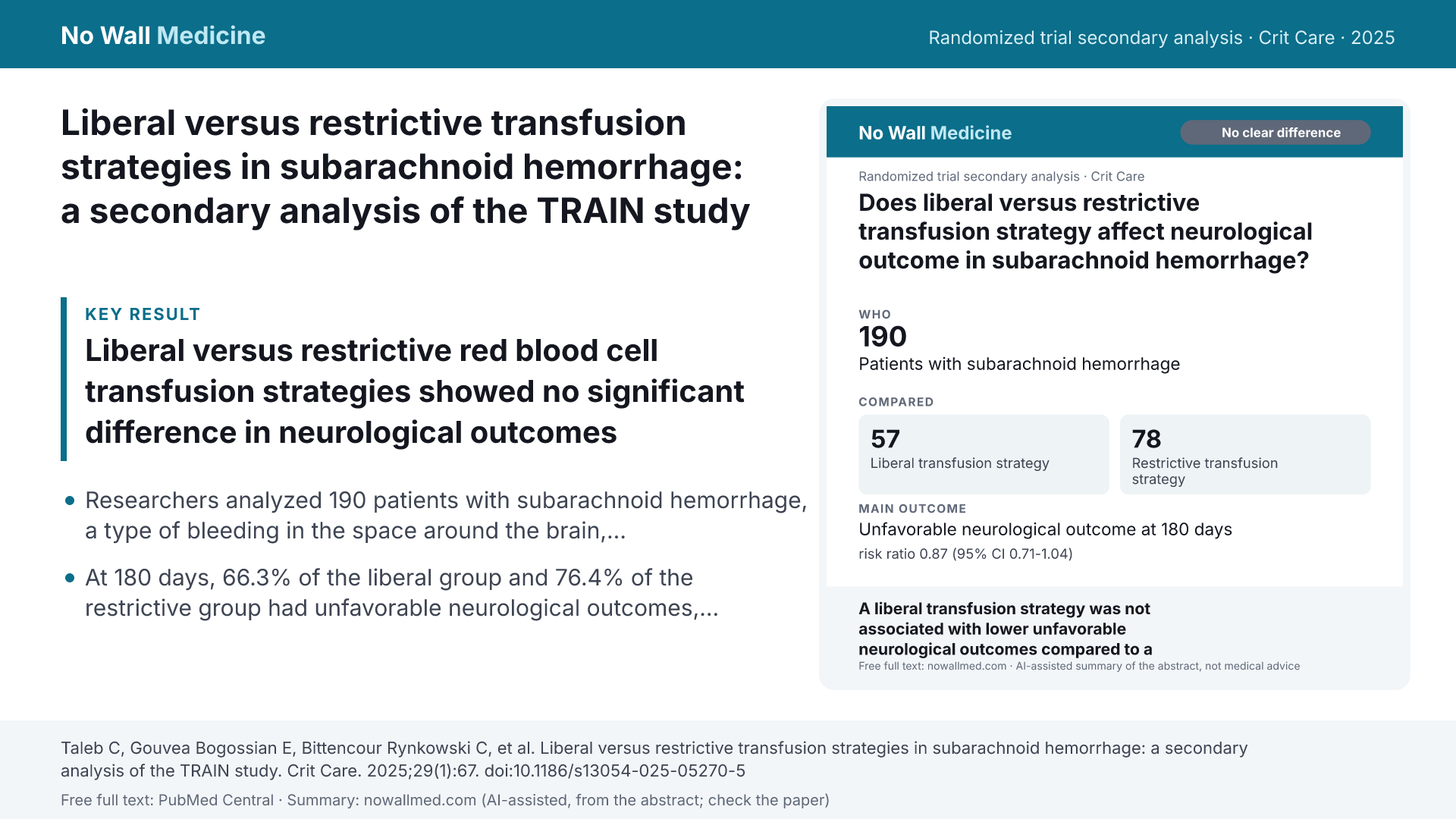
Liberal versus restrictive red blood cell transfusion strategies showed no significant difference in neurological outcomes
Liberal versus restrictive transfusion strategies in subarachnoid hemorrhage: a secondary analysis of the TRAIN study
Randomized trial secondary analysisNo clear difference
Does liberal versus restrictive transfusion strategy affect neurological outcome in subarachnoid hemorrhage?
Who
190
Patients with subarachnoid hemorrhage
Compared
57Liberal transfusion strategy (66.3%)
78Restrictive transfusion strategy (76.4%)
Main outcome
Unfavorable neurological outcome at 180 days
Result: risk ratio 0.87 (95% CI 0.71-1.04)
Bottom line: A liberal transfusion strategy was not associated with lower unfavorable neurological outcomes compared to a restrictive strategy.
Crit Care · 2025-02-07Download image
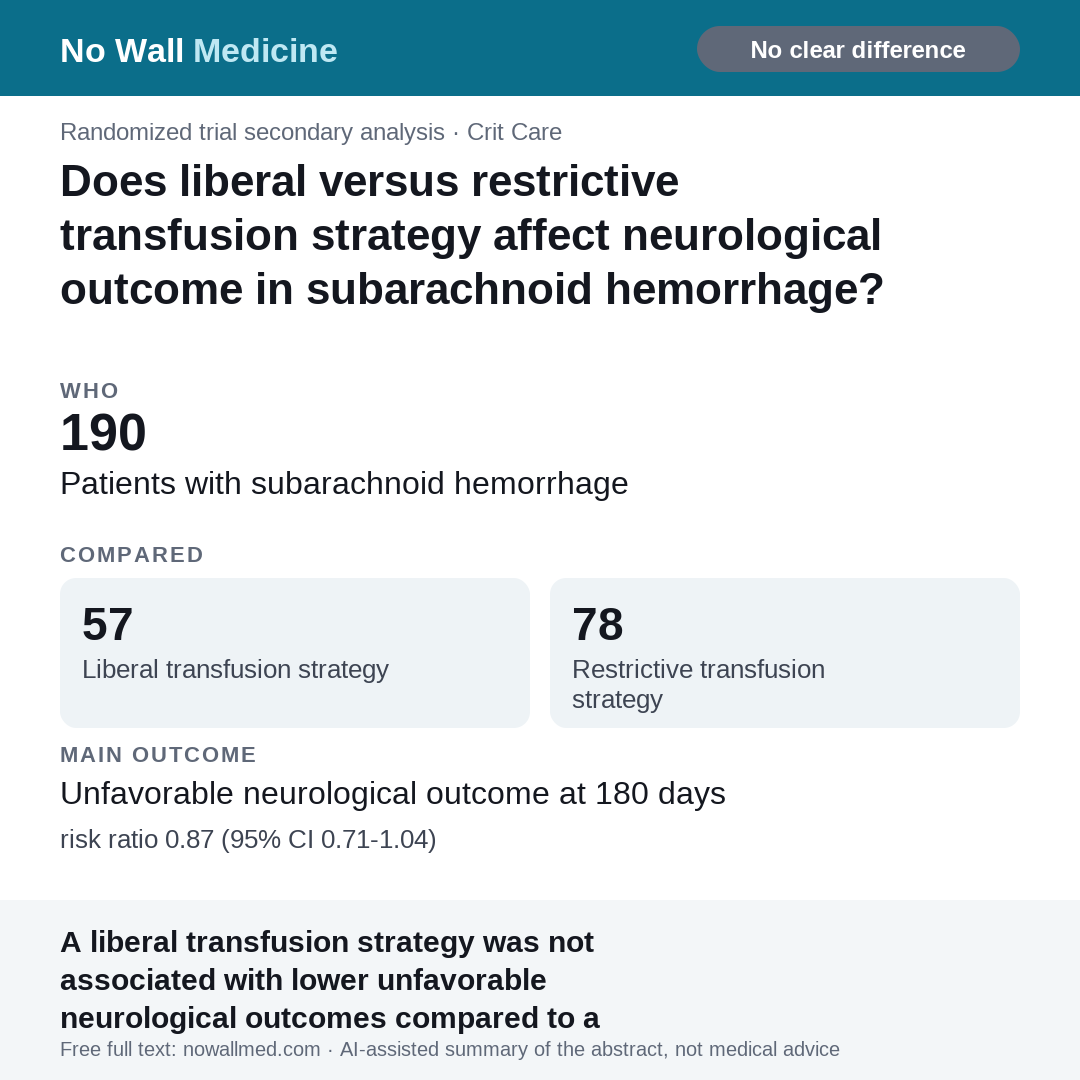
Clinical question: Does liberal versus restrictive transfusion strategy affect neurological outcome in subarachnoid hemorrhage?
Why it matters: The optimal hemoglobin threshold to trigger red blood cell transfusions in patients with subarachnoid hemorrhage is unclear.
Key points
- Researchers analyzed 190 patients with subarachnoid hemorrhage, a type of bleeding in the space around the brain, comparing transfusion triggers of 9 g/dL to 7 g/dL.
- At 180 days, 66.3% of the liberal group and 76.4% of the restrictive group had unfavorable neurological outcomes, which was not a statistically significant difference.
- The liberal transfusion group was associated with a lower risk of cerebral ischemia, which is a lack of blood flow to the brain.
Headline and key points written with AI from the paper’s abstract, with every number checked against it. Read the paper before relying on them.
Was this summary helpful?
Subject terms
Cite this article
Taleb C, Gouvea Bogossian E, Bittencour Rynkowski C, Møller K, Lormans P, Quintana Diaz M. Liberal versus restrictive transfusion strategies in subarachnoid hemorrhage: a secondary analysis of the TRAIN study. Crit Care. 2025. doi:10.1186/s13054-025-05270-5
Spotted a mistake? Suggest a correction
Top studies every Monday
The week’s key trials and guidelines in your specialties, plus any topics you follow. By email, free.
Get the weekly digest