Brain imaging shows shared networks for sensing body signals, emotion, and social cognition in neurodegenerative diseases
Neuroimaging Meta-Analyses Reveal Convergence of Interoception, Emotion, and Social Cognition Across Neurodegenerative Diseases
Meta-analysis of 170 studiesBenefit found
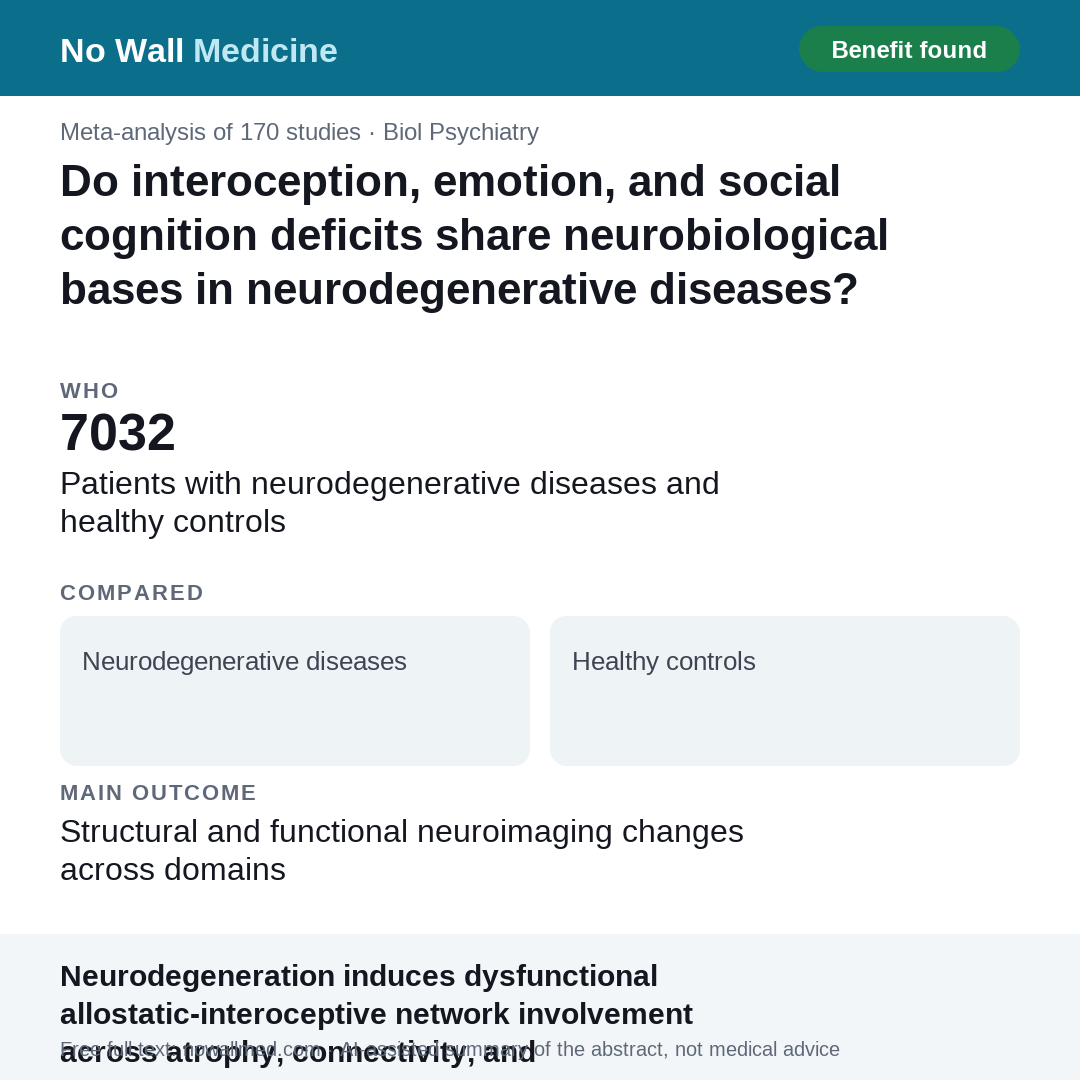
Do interoception, emotion, and social cognition deficits share neurobiological bases in neurodegenerative diseases?
Who
7032
Patients with neurodegenerative diseases and healthy controls
Compared
Neurodegenerative diseases
Healthy controls
Main outcome
Structural and functional neuroimaging changes across domains
Bottom line: Neurodegeneration induces dysfunctional allostatic-interoceptive network involvement across atrophy, connectivity, and metabolism.
Biol Psychiatry · 2024-10-21Download image
Clinical question: Do interoception, emotion, and social cognition deficits share neurobiological bases in neurodegenerative diseases?
Why it matters: It was unknown if interoception, emotion, and social cognition deficits in neurodegenerative diseases share common neurobiological bases or specific structural and functional brain changes.
Key points
- Researchers analyzed 170 studies involving 7032 participants, including 4963 patients with neurodegenerative diseases and 2069 healthy controls.
- The insula, amygdala, orbitofrontal cortex, anterior cingulate, striatum, thalamus, and hippocampus were linked to all three domains across all participants.
- In Alzheimer's disease and multiple sclerosis, disruptions in the allostatic-interoceptive network were observed during interoception, but no convergence with emotion was identified.
Headline and key points written with AI from the paper’s abstract, with every number checked against it. Read the paper before relying on them.
Was this summary helpful?
Subject terms
Cite this article
Hazelton JL, Carneiro F, Maito M, Richter F, Legaz A, Altschuler F. Neuroimaging Meta-Analyses Reveal Convergence of Interoception, Emotion, and Social Cognition Across Neurodegenerative Diseases. Biol Psychiatry. 2024. doi:10.1016/j.biopsych.2024.10.013
Spotted a mistake? Suggest a correction
Top studies every Monday
The week’s key trials and guidelines in your specialties, plus any topics you follow. By email, free.
Get the weekly digest