Intravenous dexamethasone reduced opioid use and vomiting after elective hip arthroscopy surgery
Perioperative Intravenous Dexamethasone Significantly Reduces Postoperative Opioid Requirement and Nausea After Unilateral Elective Hip Arthroscopy: A Randomized Double-blinded Placebo-controlled Trial
Randomized, double-blinded, placebo-controlled trialBenefit found
Does perioperative intravenous dexamethasone reduce postoperative opioid requirement and nausea after hip arthroscopy?
Who
50
Patients requiring unilateral elective hip arthroscopy
Compared
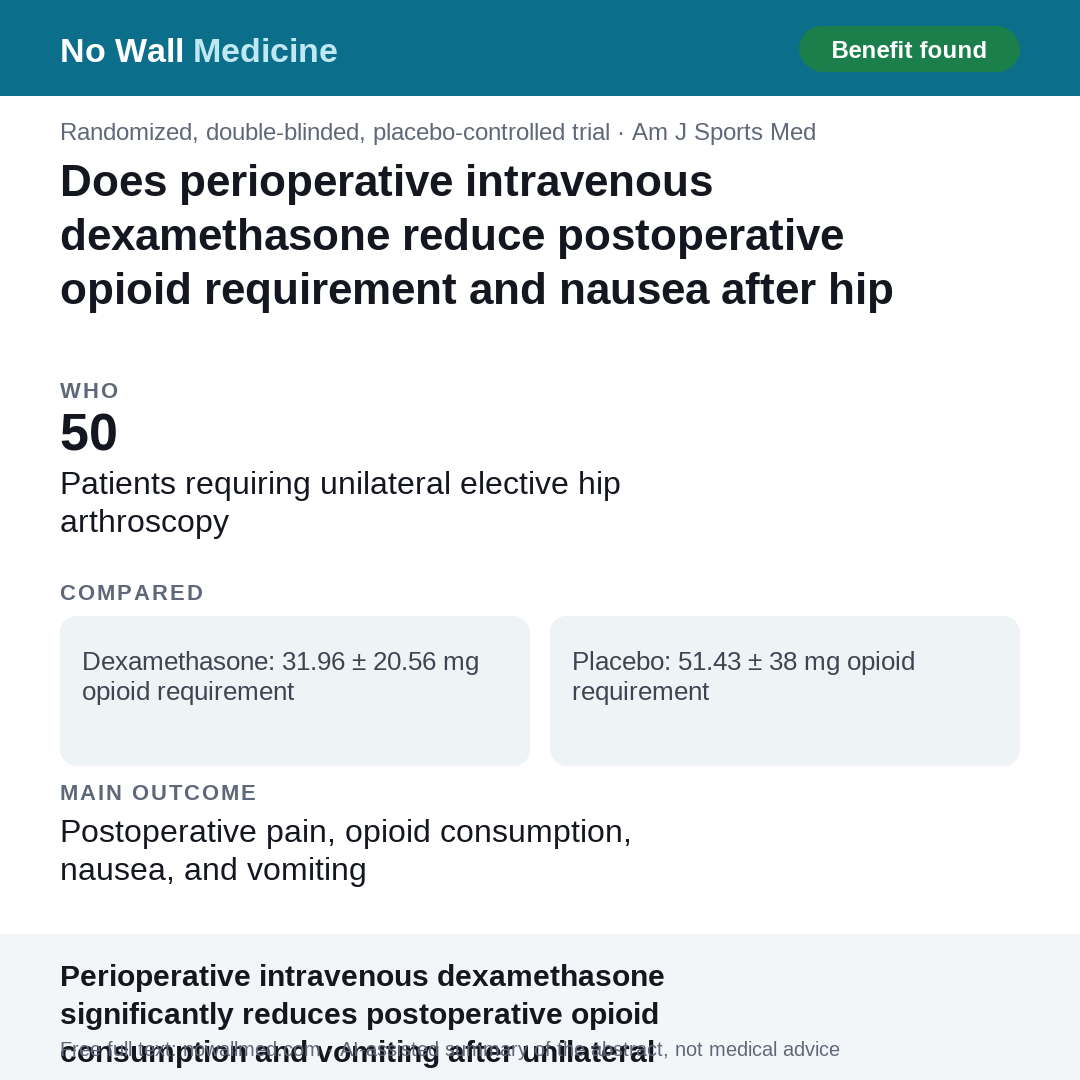
Dexamethasone: 31.96 ± 20.56 mg opioid requirement
Placebo: 51.43 ± 38 mg opioid requirement
Main outcome
Postoperative pain, opioid consumption, nausea, and vomiting
Bottom line: Perioperative intravenous dexamethasone significantly reduces postoperative opioid consumption and vomiting after unilateral elective hip arthroscopy.
Am J Sports Med · 2024-03-08Download image
Clinical question: Does perioperative intravenous dexamethasone reduce postoperative opioid requirement and nausea after hip arthroscopy?
Why it matters: It was unknown if adding dexamethasone to current pain regimens after hip arthroscopy is more effective than a placebo for managing pain and nausea.
Key points
- Researchers studied 50 patients undergoing elective hip arthroscopy who received either 2 doses of 12 mg dexamethasone or a placebo.
- The dexamethasone group required less opioid medication during hospitalization (31.96 ± 20.56 mg) compared to the placebo group (51.43 ± 38 mg).
- Vomiting events were lower in the dexamethasone group (0.15 ± 0.59) than in the placebo group (0.65 ± 0.91).
Headline and key points written with AI from the paper’s abstract, with every number checked against it. Read the paper before relying on them.
Was this summary helpful?
Subject terms
Cite this article
Kaiser D, Hoch A, Dimitriou D, Groeber T, Bomberg H, Aguirre JA. Perioperative Intravenous Dexamethasone Significantly Reduces Postoperative Opioid Requirement and Nausea After Unilateral Elective Hip Arthroscopy: A Randomized Double-blinded Placebo-controlled Trial. Am J Sports Med. 2024. doi:10.1177/03635465241232157
Spotted a mistake? Suggest a correction
Top studies every Monday
The week’s key trials and guidelines in your specialties, plus any topics you follow. By email, free.
Get the weekly digest