Insulin with glucose and salbutamol were associated with lower potassium levels in hyperkalaemia
Pharmacological interventions for the acute treatment of hyperkalaemia: A systematic review and meta-analysis
Critical CareAdult and pediatric
Systematic review and meta-analysisMixed results
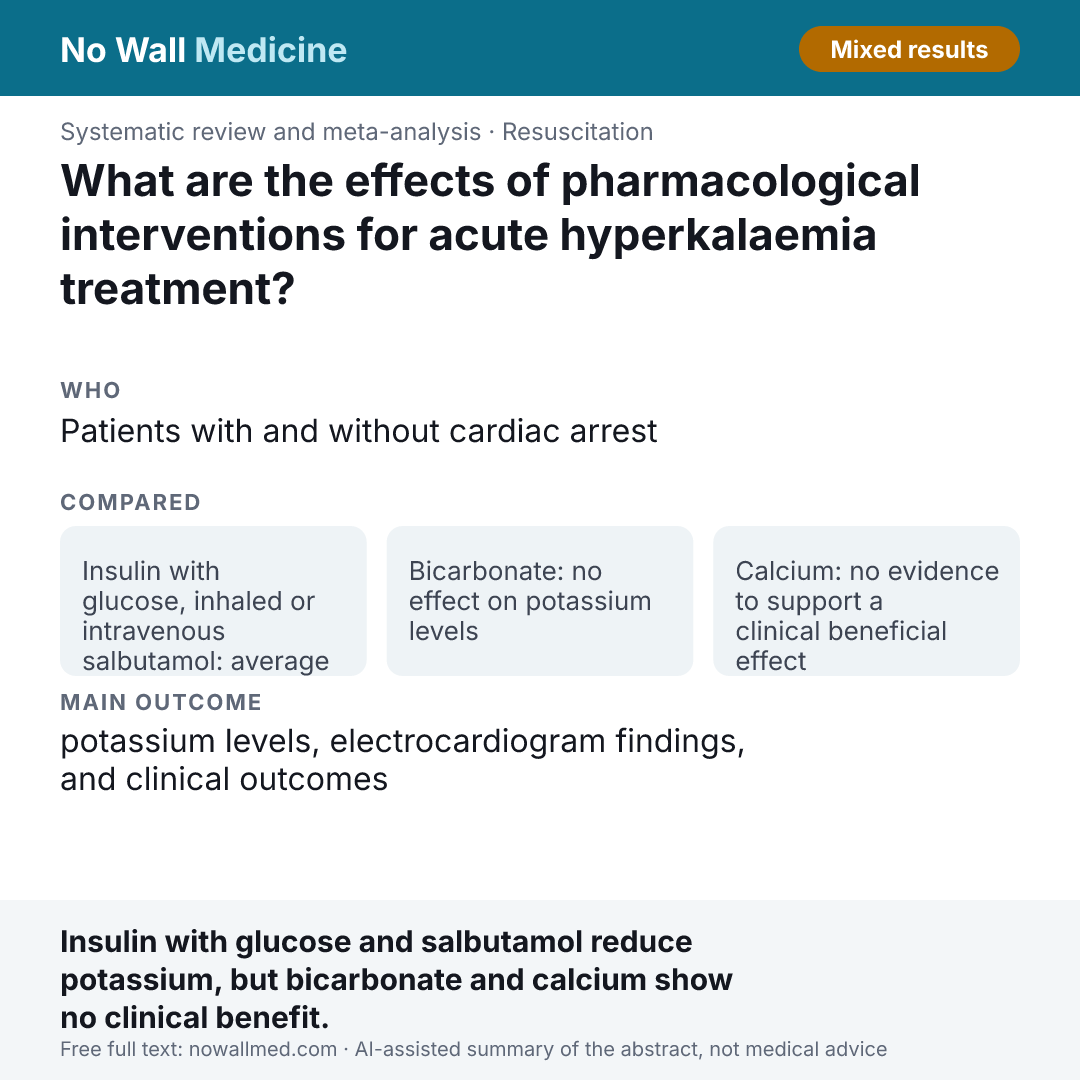
What are the effects of pharmacological interventions for acute hyperkalaemia treatment?
Who
Patients with and without cardiac arrest
Compared
Insulin with glucose, inhaled or intravenous salbutamol: average reduction in potassium between 0.7 and 1.2 mmol/l
Bicarbonate: no effect on potassium levels
Calcium: no evidence to support a clinical beneficial effect
Main outcome
potassium levels, electrocardiogram findings, and clinical outcomes
Bottom line: Insulin with glucose and salbutamol reduce potassium, but bicarbonate and calcium show no clinical benefit.
Limitation: very low to low certainty of evidence
Resuscitation · 2025-01-04 · Save PNG
Clinical question: What are the effects of pharmacological interventions for acute hyperkalaemia treatment?
Why it matters: The effectiveness of different pharmacological interventions for treating life-threatening high potassium levels in patients with or without cardiac arrest was not clearly established.
Key points
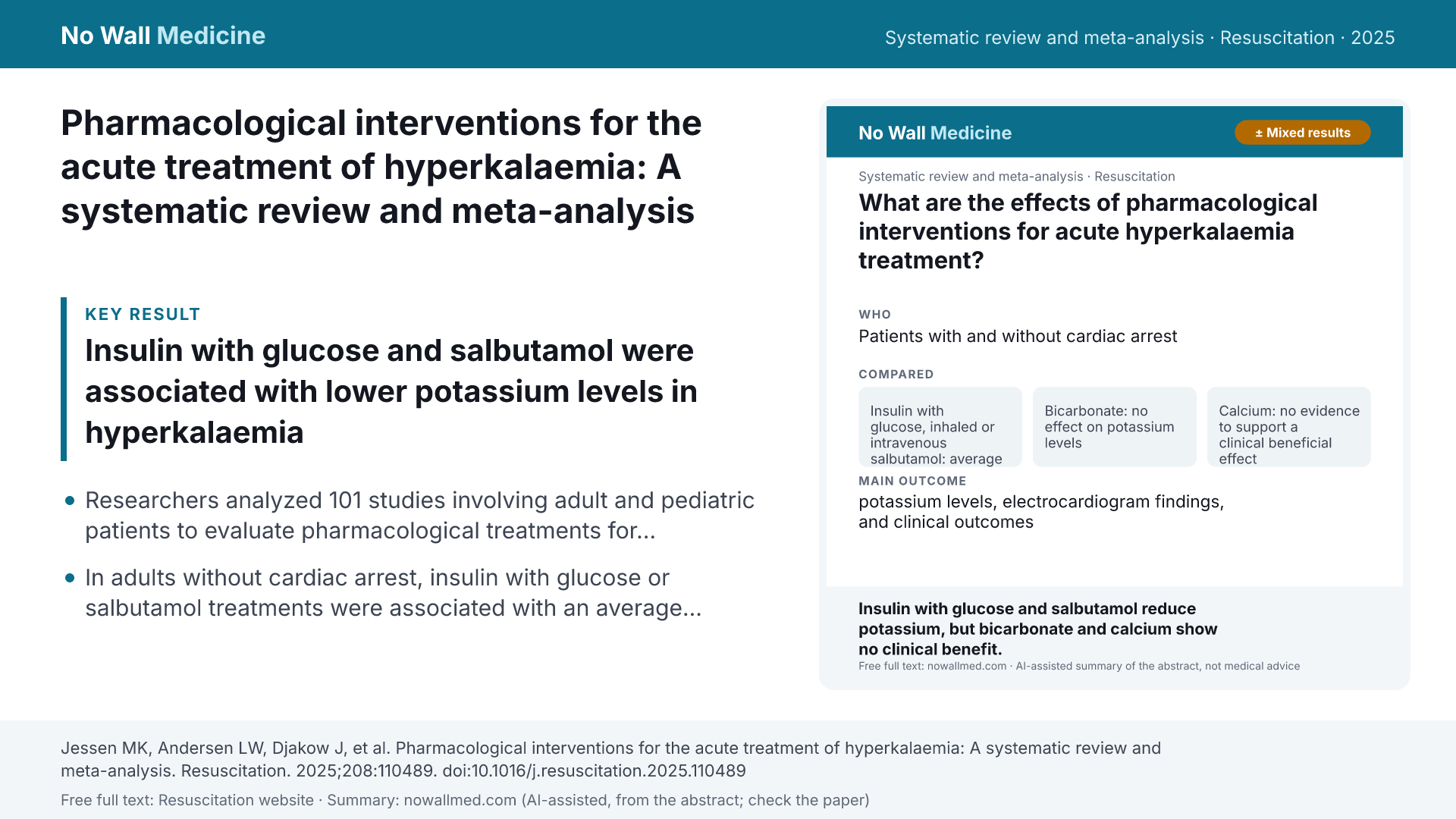
- Researchers analyzed 101 studies involving adult and pediatric patients to evaluate pharmacological treatments for high potassium levels.
- In adults without cardiac arrest, insulin with glucose or salbutamol treatments were associated with an average potassium reduction of 0.7 to 1.2 mmol/l.
- In neonatal and pediatric populations, inhaled or intravenous salbutamol was associated with an average potassium reduction of 0.9 to 1.0 mmol/l.
Limitation the authors note: The certainty of evidence for the main findings was rated as very low to low.
Headline and key points written with AI from the paper’s abstract, with every number checked against it. Read the paper before relying on them.
Was this summary helpful?
Subject terms
Headline, design, result, key points, caveat and citation as plain text.
Cite this article
Jessen MK, Andersen LW, Djakow J, et al. Pharmacological interventions for the acute treatment of hyperkalaemia: A systematic review and meta-analysis. Resuscitation. 2025;208:110489. doi:10.1016/j.resuscitation.2025.110489
Spotted a mistake? Suggest a correction