Intermittent noninvasive ventilation did not prevent acute respiratory failure after high-risk surgery
Postoperative prophylactic intermittent noninvasive ventilation versus usual postoperative care for patients at high risk of pulmonary complications: a multicentre randomised trial
Open, multicentre randomised trialNo clear difference
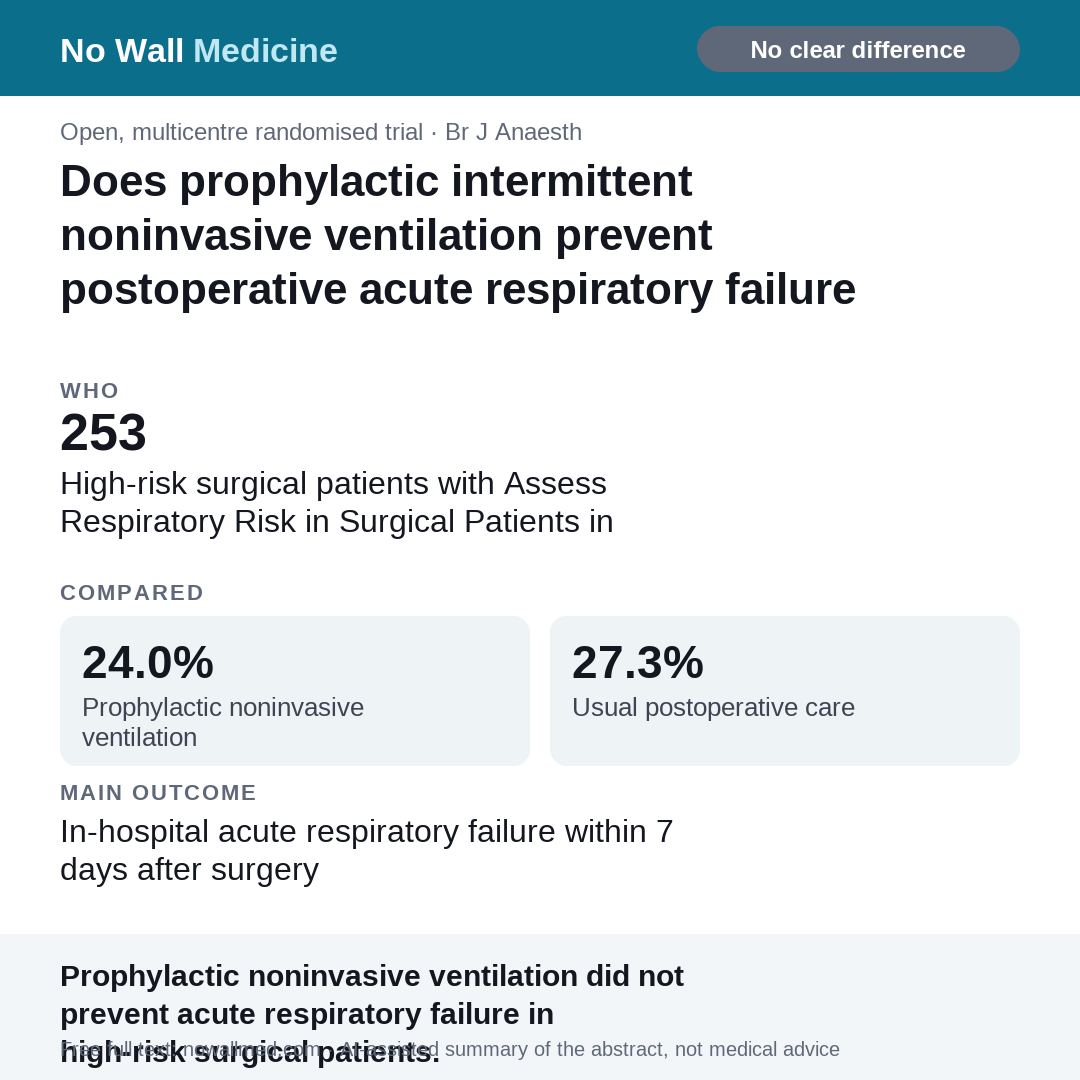
Does prophylactic intermittent noninvasive ventilation prevent postoperative acute respiratory failure in high-risk patients?
Who
253
High-risk surgical patients with Assess Respiratory Risk in Surgical Patients in Catalonia score ≥45 · Multicentre
Compared
24.0%Prophylactic noninvasive ventilation
27.3%Usual postoperative care
Main outcome
In-hospital acute respiratory failure within 7 days after surgery
Result: odds ratio 0.97 (95% CI 0.90 to 1.04)
Bottom line: Prophylactic noninvasive ventilation did not prevent acute respiratory failure in high-risk surgical patients.
Br J Anaesth · 2022-01-05Download image
Clinical question: Does prophylactic intermittent noninvasive ventilation prevent postoperative acute respiratory failure in high-risk patients?
Why it matters: It was unknown if using intermittent noninvasive ventilation as a preventative measure could reduce the occurrence of acute respiratory failure in patients at high risk for pulmonary complications.
Key points
- Researchers studied 253 high-risk surgical patients to compare 6-8 hours of daily face-mask noninvasive ventilation, a type of breathing support, against usual postoperative care.
- The incidence of acute respiratory failure within 7 days was 24.0% in the noninvasive ventilation group compared to 27.3% in the usual care group.
- Unplanned termination of the breathing support occurred in 58 subjects in the noninvasive ventilation group, which was linked to discomfort for 36 subjects.
Headline and key points written with AI from the paper’s abstract, with every number checked against it. Read the paper before relying on them.
Was this summary helpful?
Subject terms
Cite this article
Abrard S, Rineau E, Seegers V, Lebrec N, Sargentini C, Jeanneteau A. Postoperative prophylactic intermittent noninvasive ventilation versus usual postoperative care for patients at high risk of pulmonary complications: a multicentre randomised trial. Br J Anaesth. 2022. doi:10.1016/j.bja.2021.11.033
Spotted a mistake? Suggest a correction
Top studies every Monday
The week’s key trials and guidelines in your specialties, plus any topics you follow. By email, free.
Get the weekly digest