Simulation training did not change the total number of high-risk medication orders for older adults
Pragmatic trial evaluating the impact of simulation training on high-risk prescribing to older adults by junior physicians
Two-arm pragmatic randomized trialNo clear difference
Does simulation training impact high-risk prescribing to older adults by junior physicians?
Who
40
First-year medical resident physicians on inpatient general medicine services · One academic medical center
Compared
4.9%Intervention (immersive simulation training)
5.0%Control (online educational training)
Main outcome
Number of new high-risk medication orders for treatment-naïve older adults
Result: Rate Ratio 0.85 (95%CI: 0.31-2.35)
Bottom line: Simulation training did not impact total high-risk prescribing but resulted in fewer as-needed orders.
J Am Geriatr Soc · 2024-03-08Download image
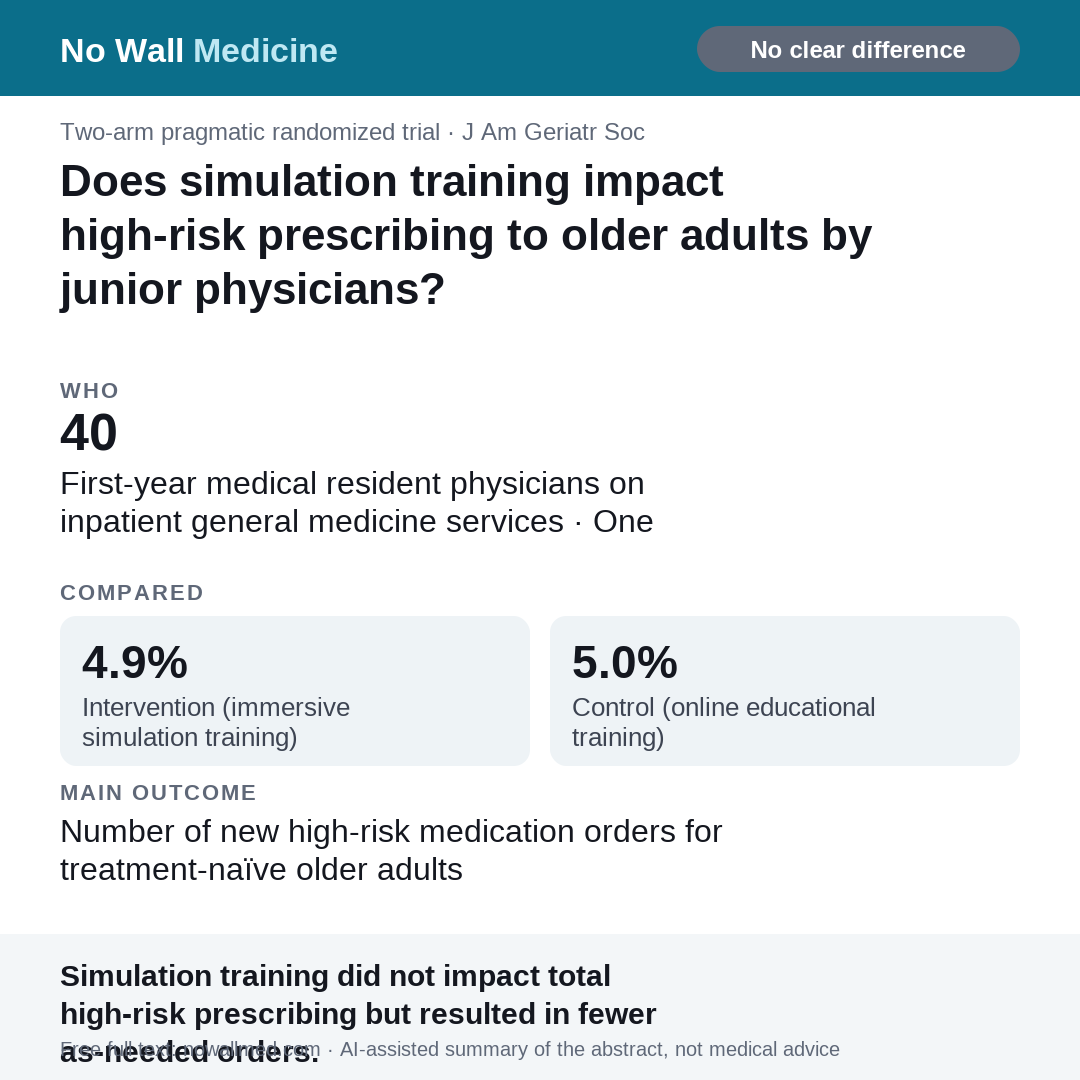
Clinical question: Does simulation training impact high-risk prescribing to older adults by junior physicians?
Why it matters: It is unknown if simulation training can improve prescribing decisions for high-risk medications like benzodiazepines, sedative hypnotics, and antipsychotics in hospitalized older adults.
Key points
- Researchers randomized 40 first-year medical residents to either 40-minute immersive simulation training or online educational training to observe prescribing habits for 522 treatment-naïve older patients.
- The simulation intervention led to no difference in the number of new high-risk medication orders compared to the control group (Rate Ratio: 0.85, 95%CI: 0.31-2.35).
- Interns in the simulation group wrote significantly fewer as-needed orders for high-risk medications (Rate Ratio: 0.29, 95%CI: 0.08-0.99) than those in the control group.
Headline and key points written with AI from the paper’s abstract, with every number checked against it. Read the paper before relying on them.
Was this summary helpful?
Subject terms
Cite this article
Lauffenburger JC, DiFrancesco MF, Bhatkhande G, Crum KL, Kim E, Robertson T. Pragmatic trial evaluating the impact of simulation training on high-risk prescribing to older adults by junior physicians. J Am Geriatr Soc. 2024. doi:10.1111/jgs.18862
Spotted a mistake? Suggest a correction
Top studies every Monday
The week’s key trials and guidelines in your specialties, plus any topics you follow. By email, free.
Get the weekly digest