UK primary care data can identify preconception health indicators and potential pregnancy risks
Preconception indicators and associations with health outcomes reported in UK routine primary care data: a systematic review
Systematic reviewUnclear result
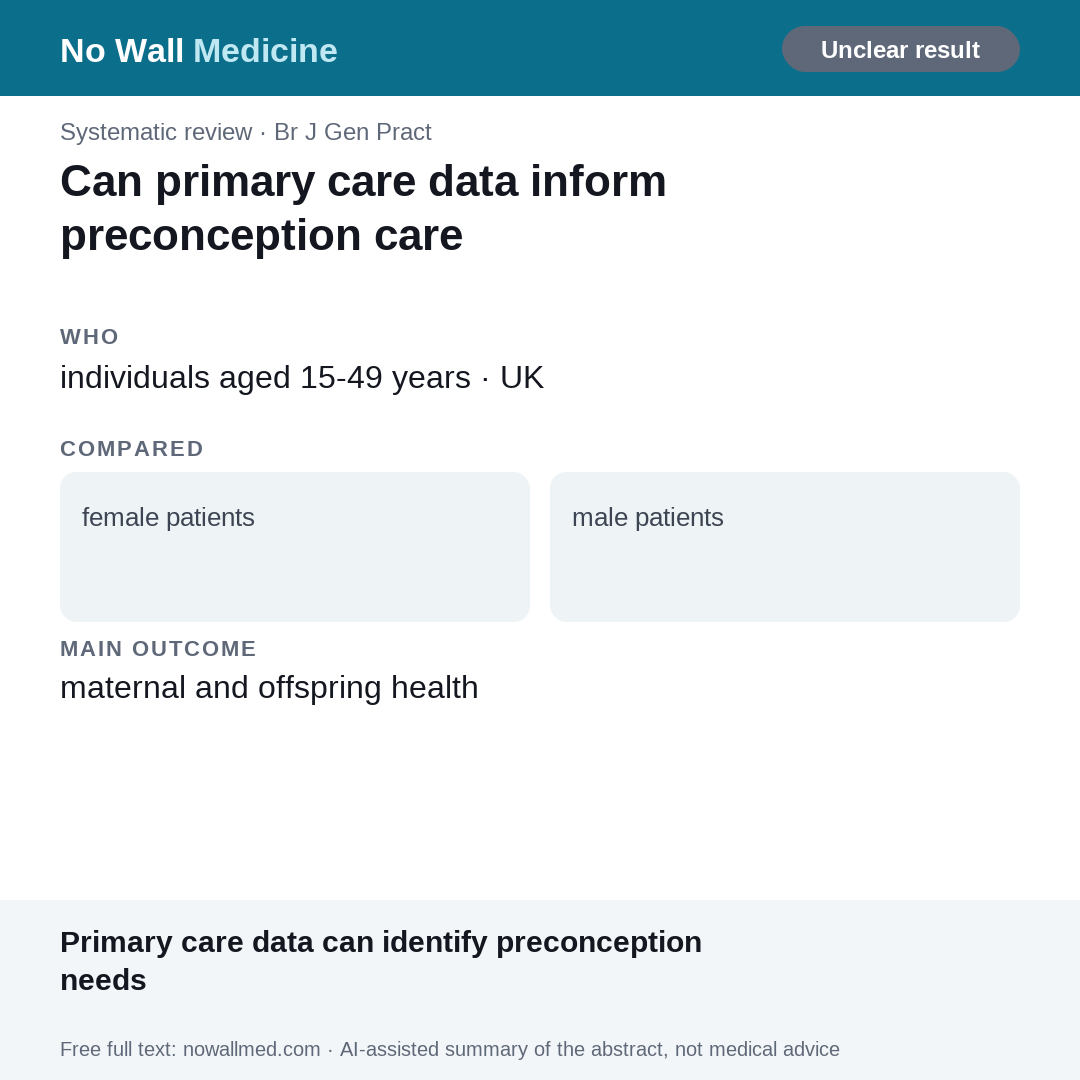
Can primary care data inform preconception care
Who
individuals aged 15-49 years · UK
Compared
female patients
male patients
Main outcome
maternal and offspring health
Bottom line: Primary care data can identify preconception needs
Limitation: missing data may limit generalisability
Br J Gen Pract · 2025-01-30Download image
Why it matters: It is unknown how effectively routine primary care data can identify preconception health needs and their links to maternal and offspring outcomes.
Key points
- Researchers reviewed 42 observational studies using national primary care data from individuals aged 15-49 years.
- Prevalence of 37 preconception indicators ranged from 0.01% for sickle cell disease to >20% for obesity, smoking, and depression.
- Only 5 studies reported associations between preconception indicators and health outcomes for mothers or children.
Limitation the authors note: Missing data may limit the generalisability of the findings.
Headline and key points written with AI from the paper’s abstract, with every number checked against it. Read the paper before relying on them.
Was this summary helpful?
Subject terms
Cite this article
Schoenaker D, Lovegrove EM, Cassinelli EH, Hall J, McGranahan M, McGowan L. Preconception indicators and associations with health outcomes reported in UK routine primary care data: a systematic review. Br J Gen Pract. 2025. doi:10.3399/BJGP.2024.0082
Spotted a mistake? Suggest a correction
Top studies every Monday
The week’s key trials and guidelines in your specialties, plus any topics you follow. By email, free.
Get the weekly digest