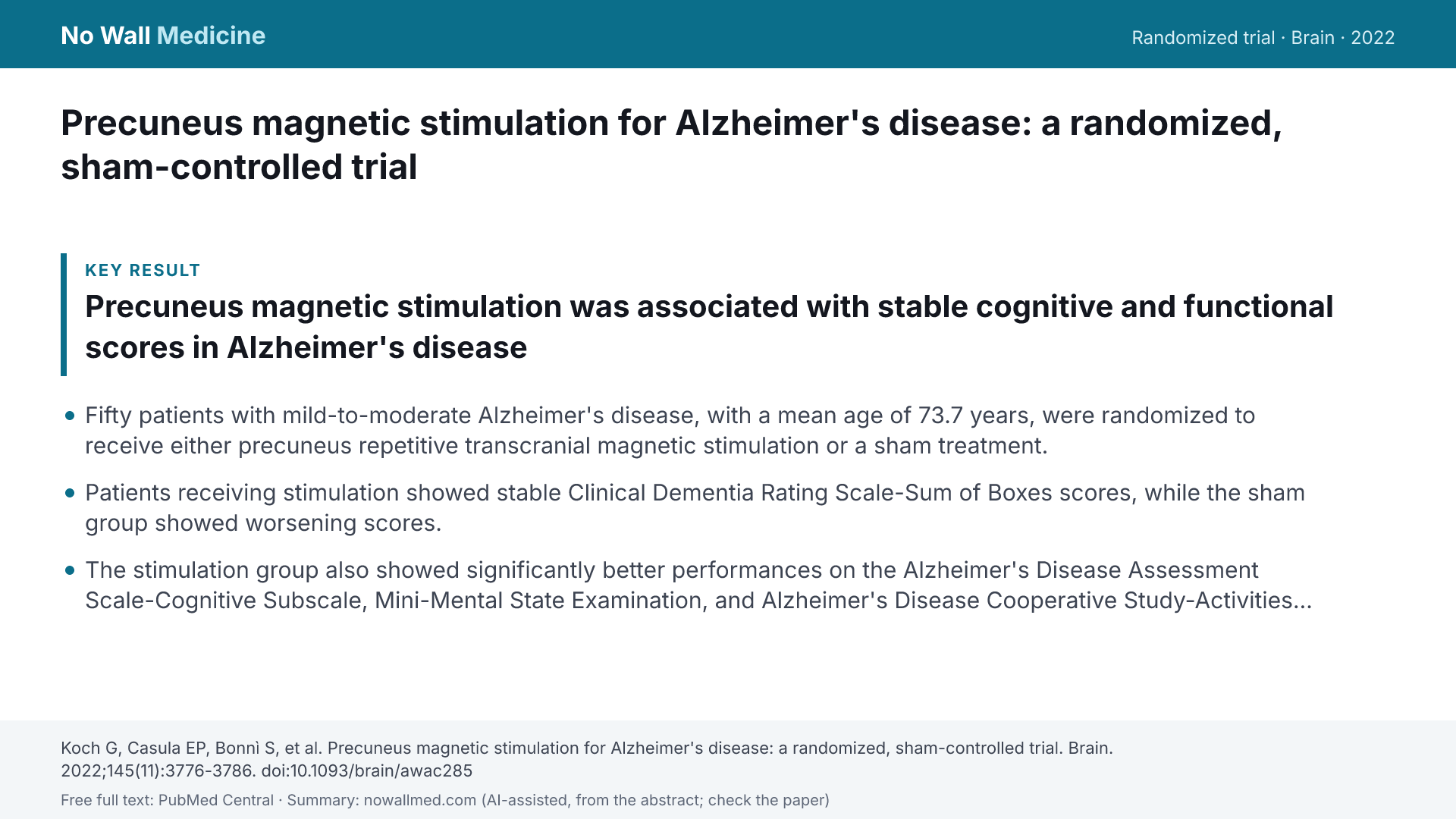
Precuneus magnetic stimulation was associated with stable cognitive and functional scores in Alzheimer's disease
Precuneus magnetic stimulation for Alzheimer's disease: a randomized, sham-controlled trial
Why it matters: It was unknown if targeting the precuneus, a key node in the default mode network, could slow cognitive and functional decline in Alzheimer's disease.
Key points
- Fifty patients with mild-to-moderate Alzheimer's disease, with a mean age of 73.7 years, were randomized to receive either precuneus repetitive transcranial magnetic stimulation or a sham treatment.
- Patients receiving stimulation showed stable Clinical Dementia Rating Scale-Sum of Boxes scores, while the sham group showed worsening scores.
- The stimulation group also showed significantly better performances on the Alzheimer's Disease Assessment Scale-Cognitive Subscale, Mini-Mental State Examination, and Alzheimer's Disease Cooperative Study-Activities of Daily Living scale.
Headline and key points written with AI from the paper’s abstract, with every number checked against it. Read the paper before relying on them.
Was this summary helpful?
Subject terms
Cite this article
Koch G, Casula EP, Bonnì S, et al. Precuneus magnetic stimulation for Alzheimer's disease: a randomized, sham-controlled trial. Brain. 2022. doi:10.1093/brain/awac285
Spotted a mistake? Suggest a correction