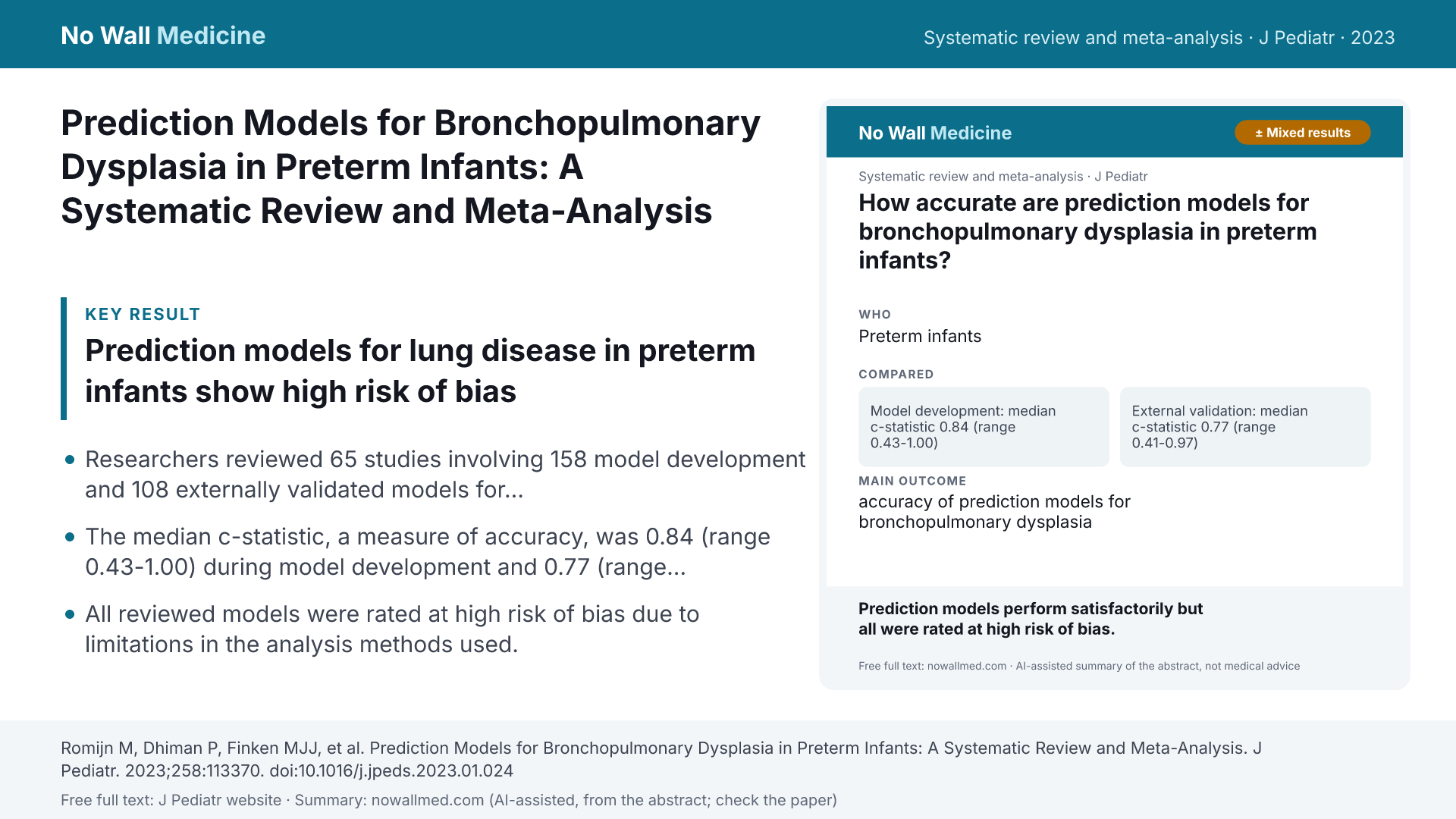
Prediction models for lung disease in preterm infants show high risk of bias
Prediction Models for Bronchopulmonary Dysplasia in Preterm Infants: A Systematic Review and Meta-Analysis
Systematic review and meta-analysisMixed results
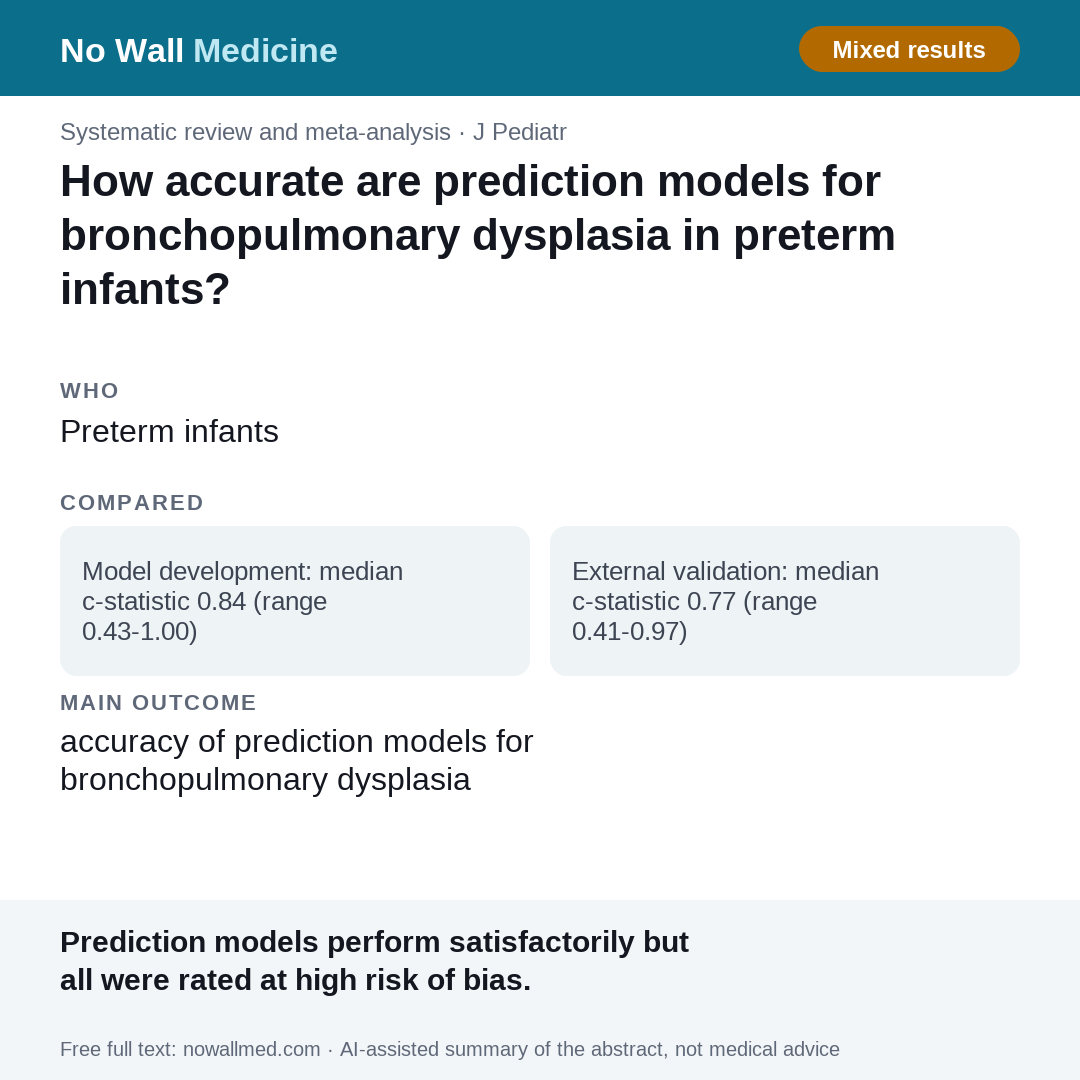
How accurate are prediction models for bronchopulmonary dysplasia in preterm infants?
Who
Preterm infants
Compared
Model development: median c-statistic 0.84 (range 0.43-1.00)
External validation: median c-statistic 0.77 (range 0.41-0.97)
Main outcome
accuracy of prediction models for bronchopulmonary dysplasia
Bottom line: Prediction models perform satisfactorily but all were rated at high risk of bias.
Limitation: All models were rated at high risk of bias due to analysis limitations.
J Pediatr · 2023-04-13Download image
Clinical question: How accurate are prediction models for bronchopulmonary dysplasia in preterm infants?
Why it matters: It is unknown if current prediction models for bronchopulmonary dysplasia are accurate and reliable enough for use in clinical practice.
Key points
- Researchers reviewed 65 studies involving 158 model development and 108 externally validated models for bronchopulmonary dysplasia, a chronic lung disease in preterm infants.
- The median c-statistic, a measure of accuracy, was 0.84 (range 0.43-1.00) during model development and 0.77 (range 0.41-0.97) during external validation.
- All reviewed models were rated at high risk of bias due to limitations in the analysis methods used.
Limitation the authors note: All models were rated at high risk of bias due to limitations in the analysis part.
Headline and key points written with AI from the paper’s abstract, with every number checked against it. Read the paper before relying on them.
Was this summary helpful?
Subject terms
Cite this article
Romijn M, Dhiman P, Finken MJJ, van Kaam AH, Katz TA, Rotteveel J. Prediction Models for Bronchopulmonary Dysplasia in Preterm Infants: A Systematic Review and Meta-Analysis. J Pediatr. 2023. doi:10.1016/j.jpeds.2023.01.024
Spotted a mistake? Suggest a correction
Top studies every Monday
The week’s key trials and guidelines in your specialties, plus any topics you follow. By email, free.
Get the weekly digest