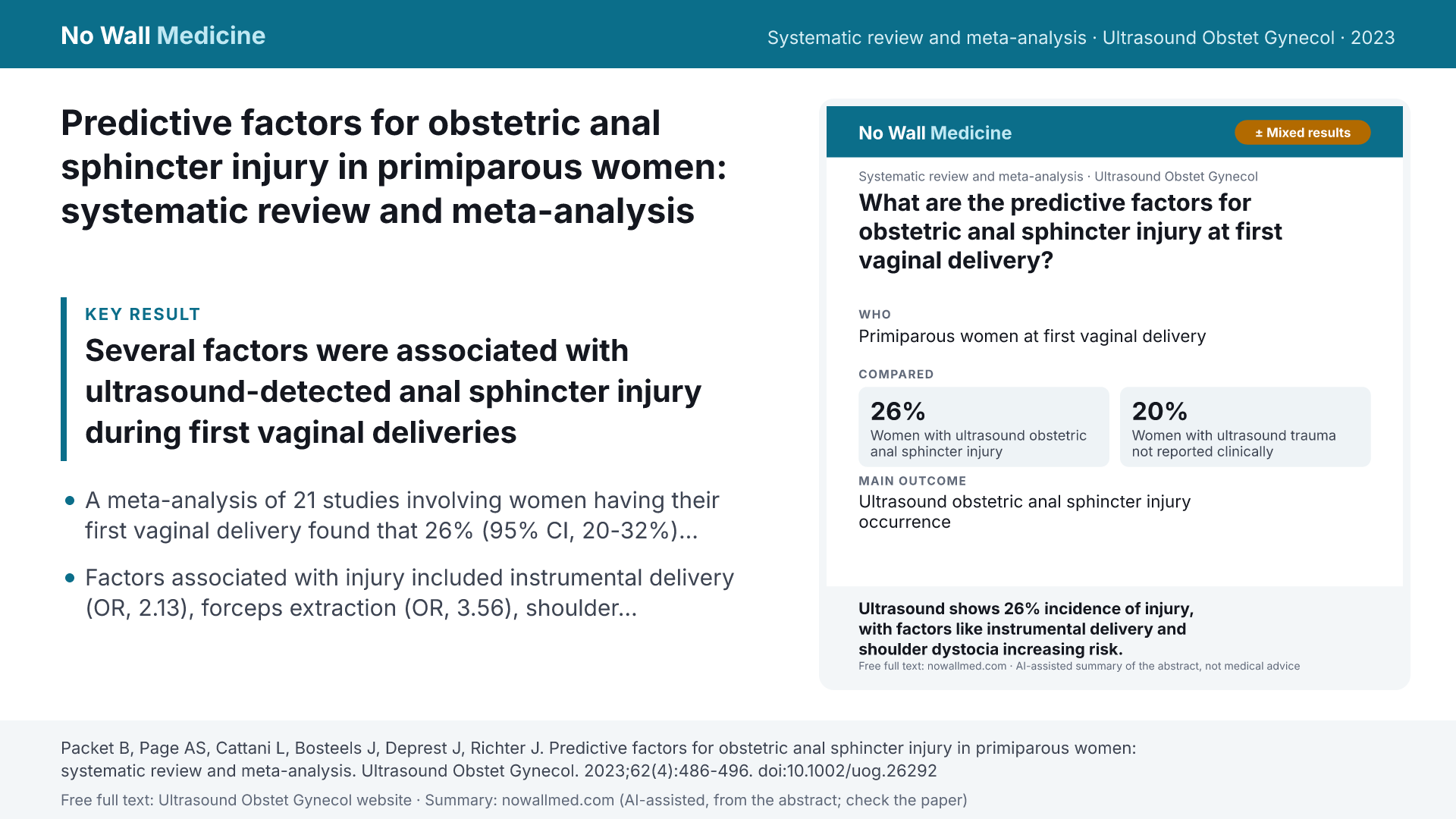
Several factors were associated with ultrasound-detected anal sphincter injury during first vaginal deliveries
Predictive factors for obstetric anal sphincter injury in primiparous women: systematic review and meta-analysis
Systematic review and meta-analysisMixed results
What are the predictive factors for obstetric anal sphincter injury at first vaginal delivery?
Who
Primiparous women at first vaginal delivery
Compared
26%Women with ultrasound obstetric anal sphincter injury (95% CI, 20-32%)
20%Women with ultrasound trauma not reported clinically (95% CI, 14-28%)
Main outcome
Ultrasound obstetric anal sphincter injury occurrence
Bottom line: Ultrasound shows 26% incidence of injury, with factors like instrumental delivery and shoulder dystocia increasing risk.
Limitation: Most studies were judged to be at high risk of bias in at least one domain.
Ultrasound Obstet Gynecol · 2023-06-17 · Save PNG
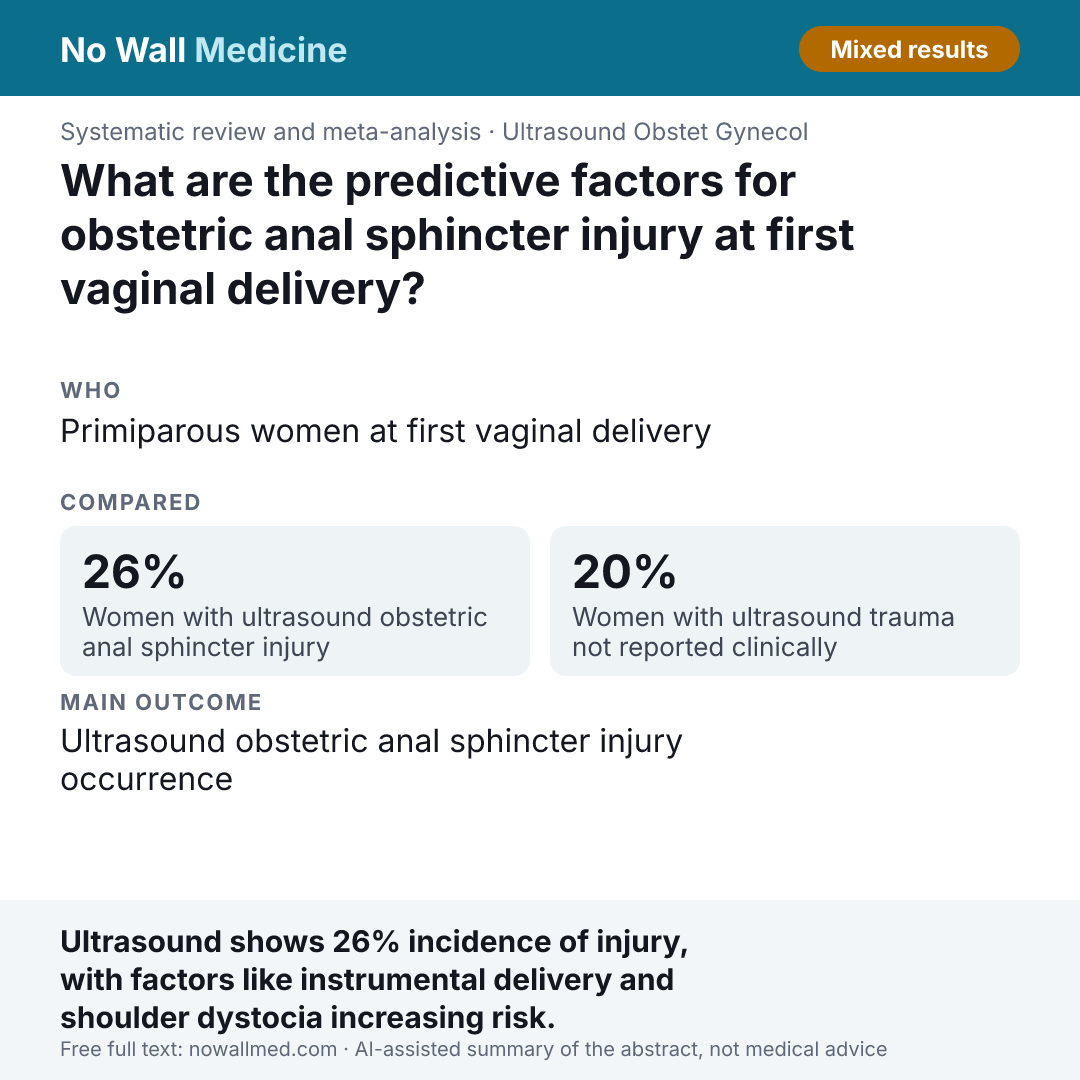
Clinical question: What are the predictive factors for obstetric anal sphincter injury at first vaginal delivery?
Key points
- A meta-analysis of 21 studies involving women having their first vaginal delivery found that 26% (95% CI, 20-32%) had ultrasound-detected obstetric anal sphincter injury.
- Factors associated with injury included instrumental delivery (OR, 2.13), forceps extraction (OR, 3.56), shoulder dystocia (OR, 12.07), episiotomy use (OR, 1.85), and shorter perineal body length (MD, -0.60 cm).
- Ultrasound showed that 20% (95% CI, 14-28%) of women had anal sphincter trauma that was not clinically reported at the time of childbirth.
Limitation the authors note: Most studies (81%) were judged to be at high risk of bias in at least one domain.
Headline and key points written with AI from the paper’s abstract, with every number checked against it. Read the paper before relying on them.
Was this summary helpful?
Subject terms
Headline, design, result, key points, caveat and citation as plain text.
Cite this article
Packet B, Page AS, Cattani L, Bosteels J, Deprest J, Richter J. Predictive factors for obstetric anal sphincter injury in primiparous women: systematic review and meta-analysis. Ultrasound Obstet Gynecol. 2023;62(4):486-496. doi:10.1002/uog.26292
Spotted a mistake? Suggest a correction