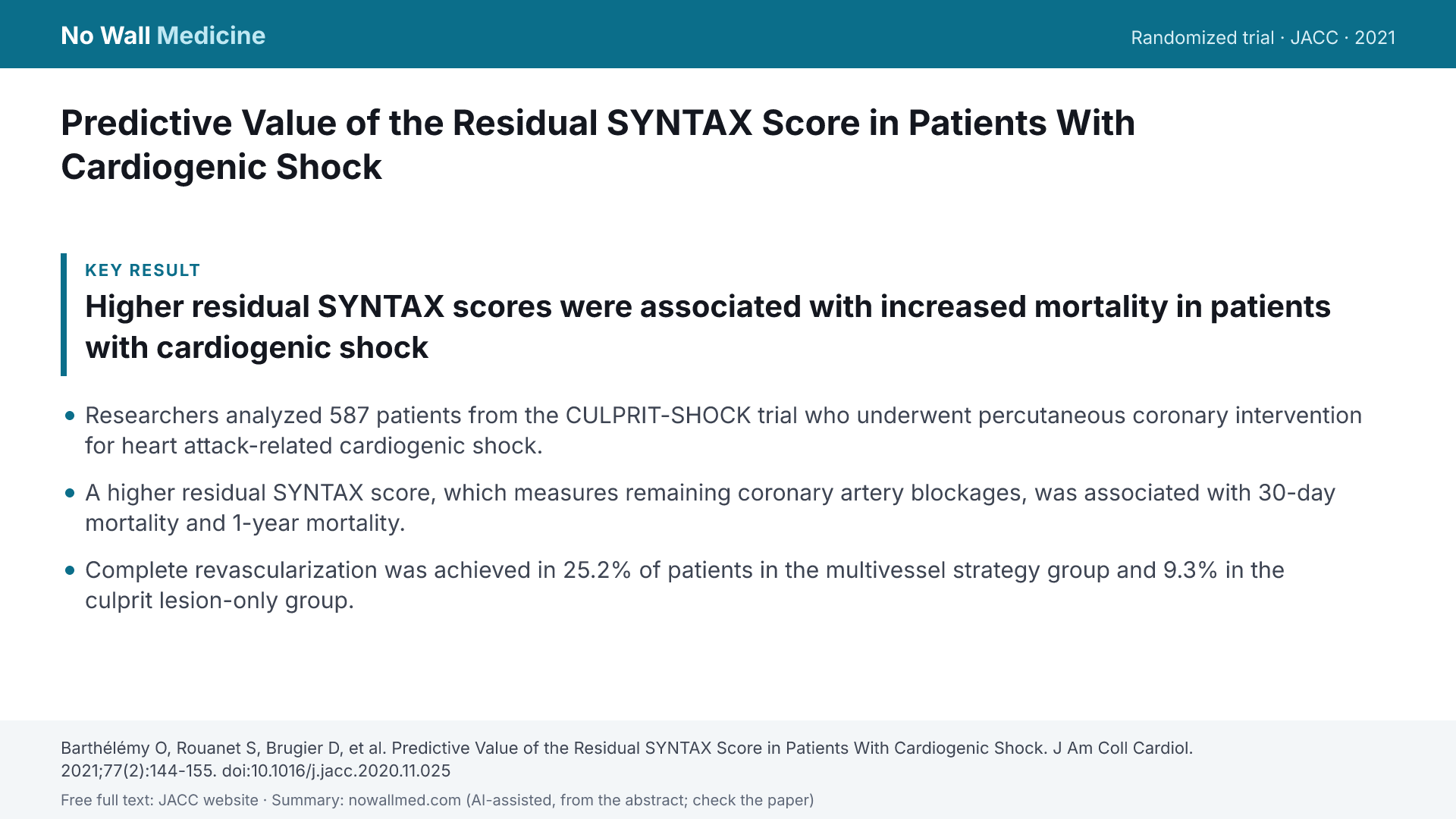
Higher residual SYNTAX scores were associated with increased mortality in patients with cardiogenic shock
Predictive Value of the Residual SYNTAX Score in Patients With Cardiogenic Shock
Randomized trialHarm found
Does the residual SYNTAX score predict mortality in cardiogenic shock patients?
Who
587
Patients with multivessel coronary artery disease and myocardial infarction-related cardiogenic shock
Compared
residual SYNTAX score per 10 units: 30-day mortality adjusted odds ratio 1.49 (95% CI 1.11 to 2.01)
residual SYNTAX score per 10 units: 1-year mortality adjusted odds ratio 1.52 (95% CI 1.11 to 2.07)
Main outcome
30-day mortality or severe renal failure and 1-year mortality
Result: adjusted odds ratio per 10 units: 1.49 (95% CI 1.11 to 2.01)
Bottom line: The residual SYNTAX score is independently associated with early and late mortality in patients with cardiogenic shock.
JACC · 2021-01-15Download image
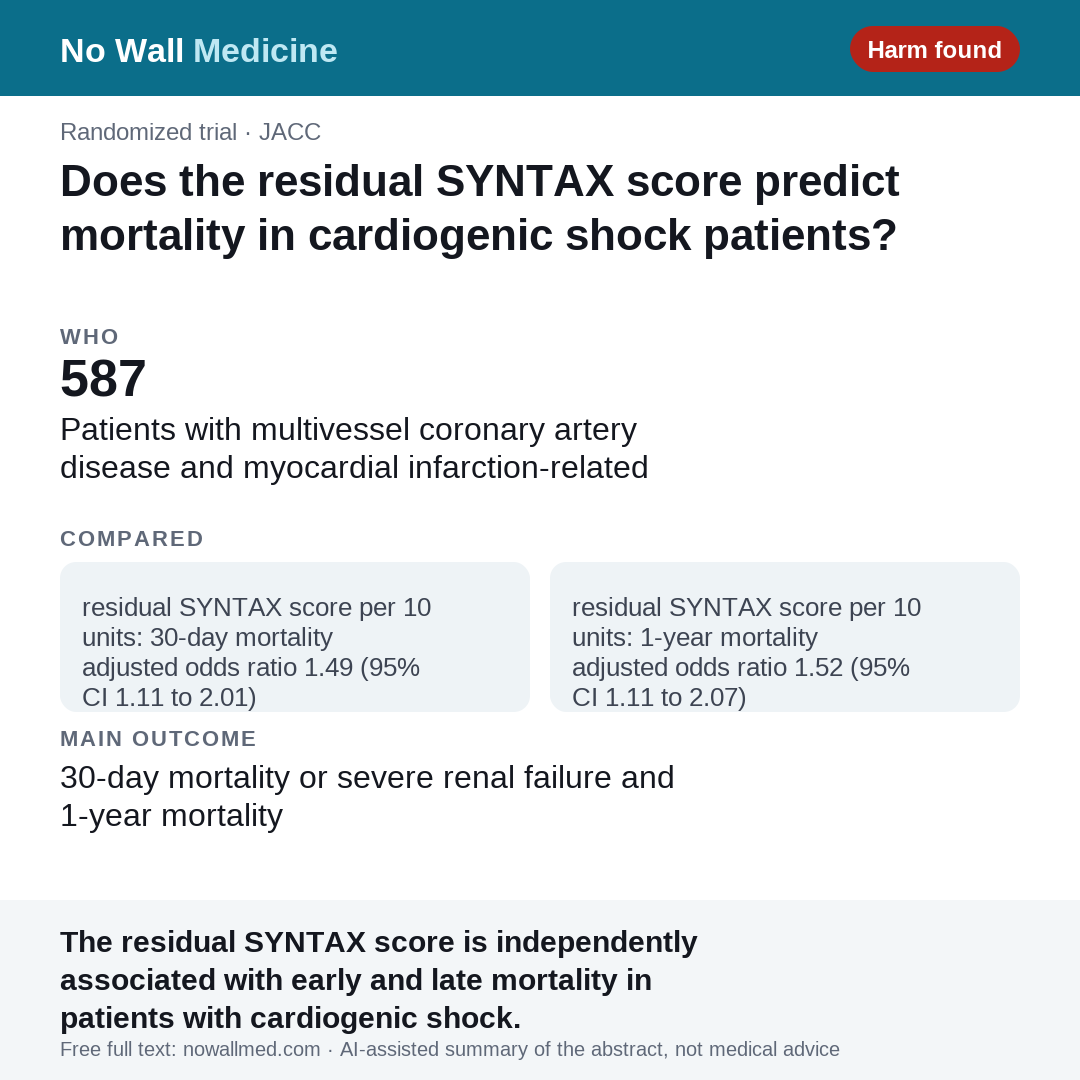
Clinical question: Does the residual SYNTAX score predict mortality in cardiogenic shock patients?
Why it matters: It was unknown if the severity of remaining coronary artery blockages after percutaneous coronary intervention predicts survival in patients experiencing cardiogenic shock.
Key points
- Researchers analyzed 587 patients from the CULPRIT-SHOCK trial who underwent percutaneous coronary intervention for heart attack-related cardiogenic shock.
- A higher residual SYNTAX score, which measures remaining coronary artery blockages, was associated with 30-day mortality and 1-year mortality.
- Complete revascularization was achieved in 25.2% of patients in the multivessel strategy group and 9.3% in the culprit lesion-only group.
Headline and key points written with AI from the paper’s abstract, with every number checked against it. Read the paper before relying on them.
Was this summary helpful?
Subject terms
Cite this article
Barthélémy O, Rouanet S, Brugier D, Vignolles N, Bertin B, Zeitouni M. Predictive Value of the Residual SYNTAX Score in Patients With Cardiogenic Shock. JACC. 2021. doi:10.1016/j.jacc.2020.11.025
Spotted a mistake? Suggest a correction