Bag-valve mask with positive end-expiratory pressure increases oxygen concentration compared to nonrebreather masks
Preoxygenation With and Without Positive End-Expiratory Pressure in Lung-Healthy Volunteers: A Randomized Clinical Trial
PulmonologyAdult and pediatric
Crossover randomized clinical trialBenefit found
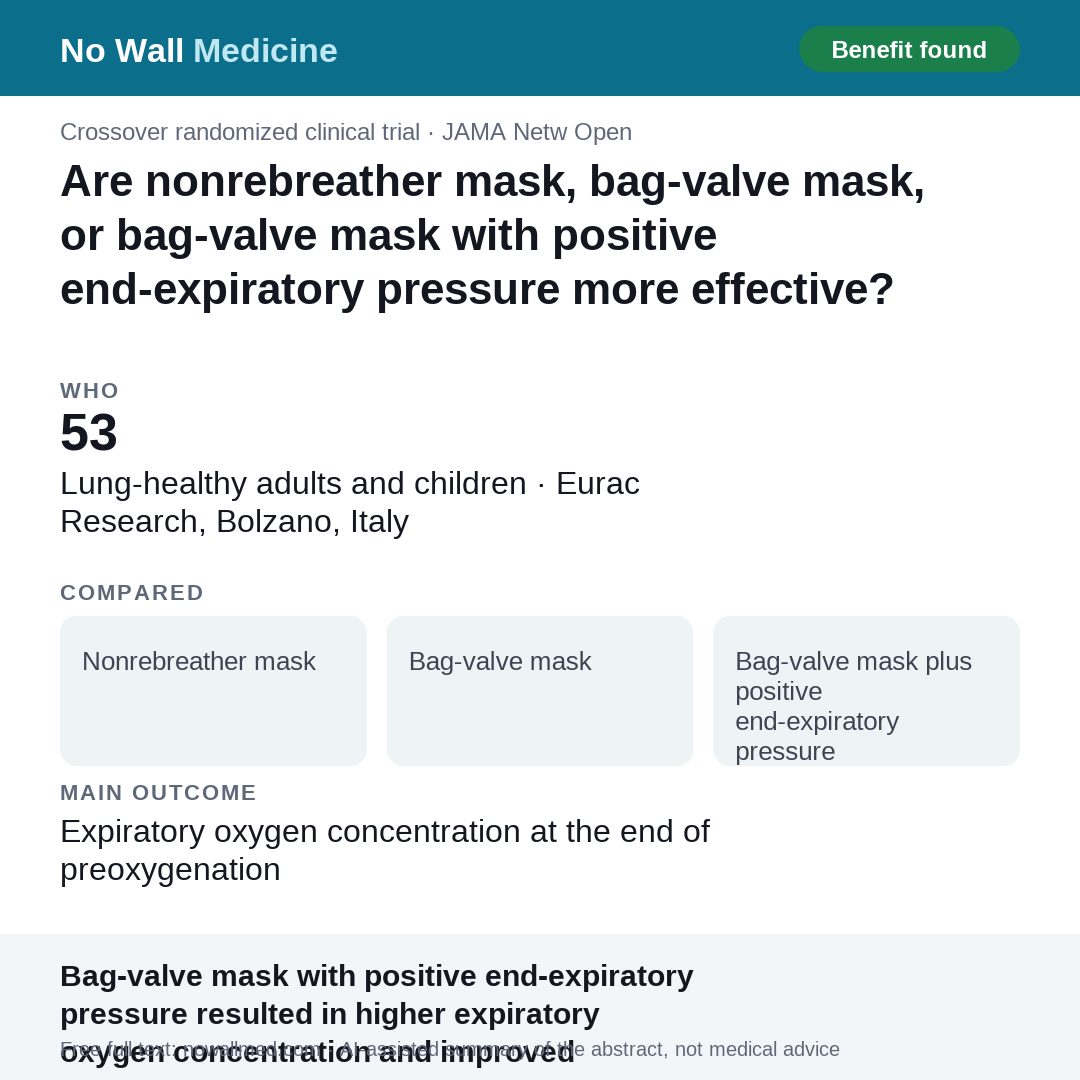
Are nonrebreather mask, bag-valve mask, or bag-valve mask with positive end-expiratory pressure more effective?
Who
53
Lung-healthy adults and children · Eurac Research, Bolzano, Italy
Compared
Nonrebreather mask
Bag-valve mask
Bag-valve mask plus positive end-expiratory pressure
Main outcome
Expiratory oxygen concentration at the end of preoxygenation
Bottom line: Bag-valve mask with positive end-expiratory pressure resulted in higher expiratory oxygen concentration and improved ventilation compared to other devices.
JAMA Netw Open · 2025-05-01Download image
Clinical question: Are nonrebreather mask, bag-valve mask, or bag-valve mask with positive end-expiratory pressure more effective?
Why it matters: Identifying the most effective preoxygenation device across diverse patient groups is a clinical priority to prevent oxygen desaturation during airway management.
Key points
- Researchers studied 53 lung-healthy volunteers, including 16 normal weight adults, 18 overweight or obese adults, and 19 children, comparing three oxygen delivery devices.
- Expiratory oxygen concentration was higher with bag-valve mask and bag-valve mask plus positive end-expiratory pressure than with nonrebreather masks in all participant groups.
- In children, bag-valve mask plus positive end-expiratory pressure resulted in higher ventilation in dependent lung regions and a longer time for the oxygenation reserve index to return to baseline.
Headline and key points written with AI from the paper’s abstract, with every number checked against it. Read the paper before relying on them.
Was this summary helpful?
Subject terms
Cite this article
Roveri G, Camporesi A, Hofer A, Kahlen S, Breidt F, Rauch S. Preoxygenation With and Without Positive End-Expiratory Pressure in Lung-Healthy Volunteers: A Randomized Clinical Trial. JAMA Netw Open. 2025. doi:10.1001/jamanetworkopen.2025.11569
Spotted a mistake? Suggest a correction
Top studies every Monday
The week’s key trials and guidelines in your specialties, plus any topics you follow. By email, free.
Get the weekly digest