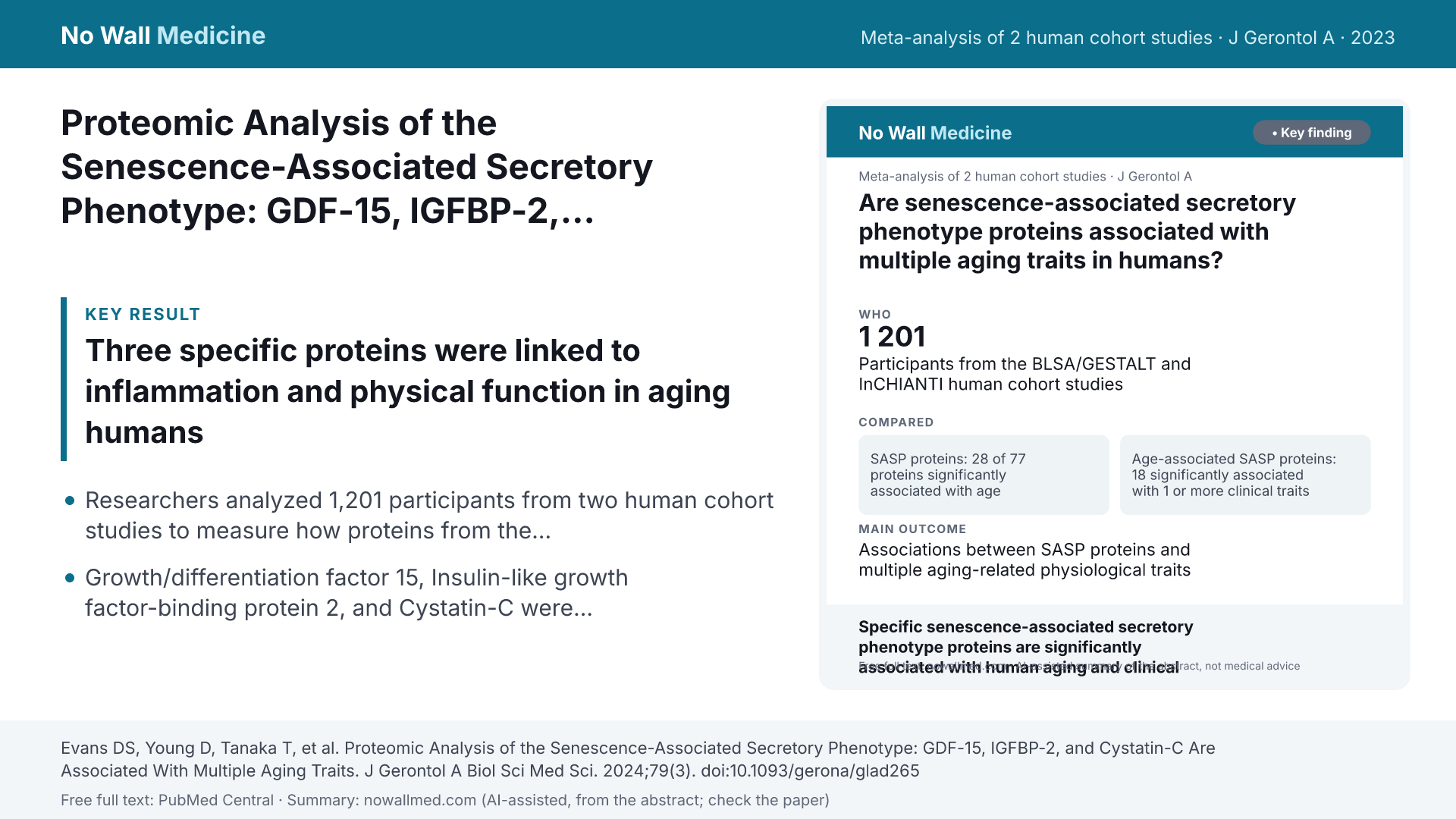
Three specific proteins were linked to inflammation and physical function in aging humans
Proteomic Analysis of the Senescence-Associated Secretory Phenotype: GDF-15, IGFBP-2, and Cystatin-C Are Associated With Multiple Aging Traits
Meta-analysis of 2 human cohort studiesKey finding
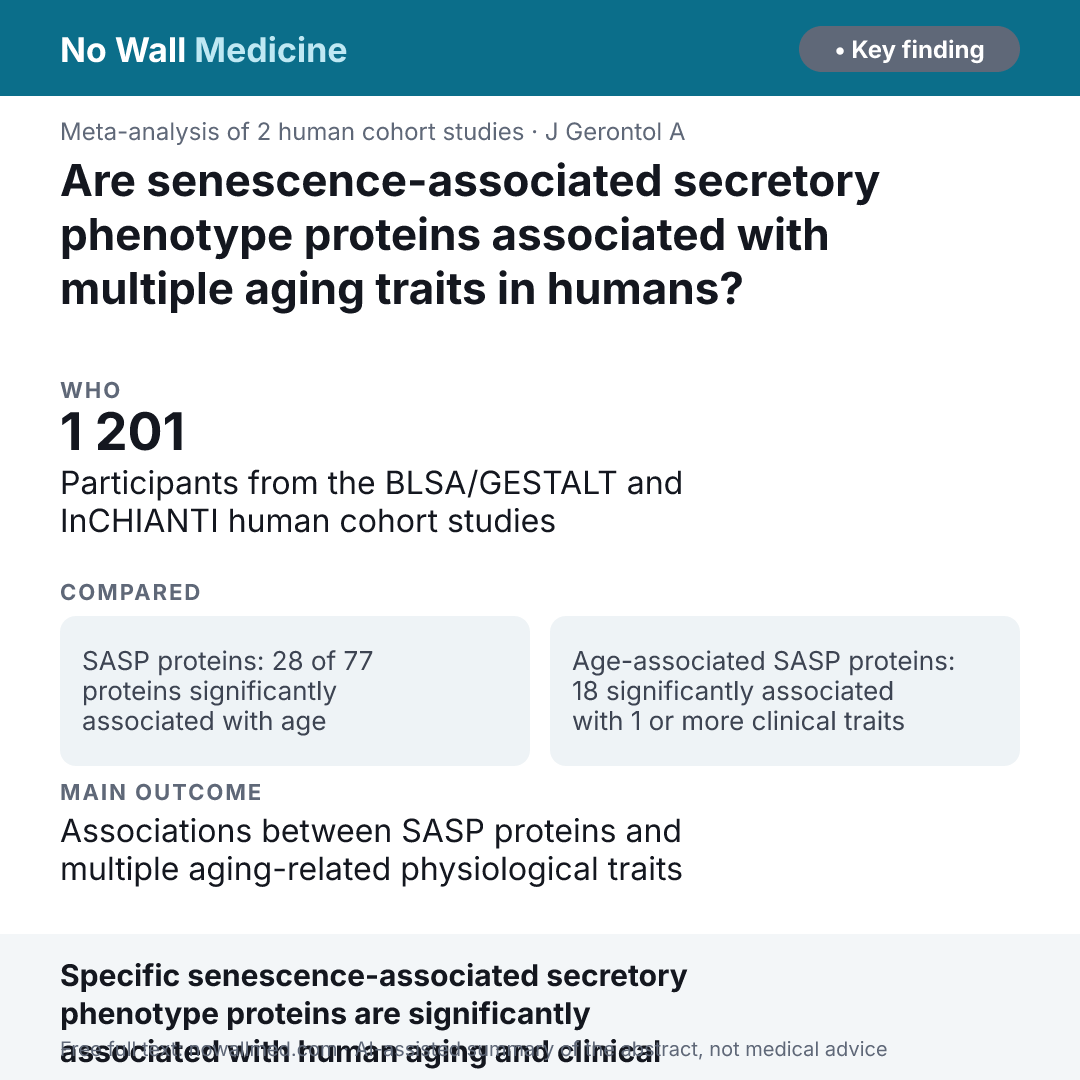
Are senescence-associated secretory phenotype proteins associated with multiple aging traits in humans?
Who
1 201
Participants from the BLSA/GESTALT and InCHIANTI human cohort studies
Compared
SASP proteins: 28 of 77 proteins significantly associated with age
Age-associated SASP proteins: 18 significantly associated with 1 or more clinical traits
Main outcome
Associations between SASP proteins and multiple aging-related physiological traits
Bottom line: Specific senescence-associated secretory phenotype proteins are significantly associated with human aging and clinical traits.
J Gerontol A · 2023-11-20 · Save PNG
Clinical question: Are senescence-associated secretory phenotype proteins associated with multiple aging traits in humans?
Key points
- Researchers analyzed 1,201 participants from two human cohort studies to measure how proteins from the senescence-associated secretory phenotype, a set of molecules released by aging cells, relate to health traits.
- Growth/differentiation factor 15, Insulin-like growth factor-binding protein 2, and Cystatin-C were significantly associated with inflammatory markers and measures of physical function like grip strength or gait speed.
- In a meta-analysis, 28 of 77 proteins were significantly associated with age, and 7 proteins were significantly associated with 3 or more clinical traits.
Headline and key points written with AI from the paper’s abstract, with every number checked against it. Read the paper before relying on them.
Was this summary helpful?
Subject terms
Headline, design, result, key points, caveat and citation as plain text.
Cite this article
Evans DS, Young D, Tanaka T, et al. Proteomic Analysis of the Senescence-Associated Secretory Phenotype: GDF-15, IGFBP-2, and Cystatin-C Are Associated With Multiple Aging Traits. J Gerontol A Biol Sci Med Sci. 2024;79(3). doi:10.1093/gerona/glad265
Spotted a mistake? Suggest a correction