Targeted lung denervation did not change the time to first moderate or severe COPD exacerbation
Randomized Sham-controlled Trial of Targeted Lung Denervation in Patients with Chronic Obstructive Pulmonary Disease (AIRFLOW-3)
Randomized, double-blind, sham-controlled trialNo clear difference
Does targeted lung denervation reduce chronic obstructive pulmonary disease exacerbations?
Who
388
Symptomatic patients with moderate to very severe airflow obstruction · 32 sites
Compared
Targeted lung denervation plus optimal medical treatment
Sham procedure plus optimal medical treatment
Main outcome
Time to the first moderate or severe COPD exacerbation
Result: hazard ratio 1.268 (95% confidence interval 0.988-1.628)
Bottom line: Targeted lung denervation did not significantly reduce the risk of moderate or severe COPD exacerbations compared to sham.
Limitation: Post hoc analyses suggest failure was driven by insufficient patients with an airway-predominant phenotype.
AJRCCM · 2025-09-08Download image
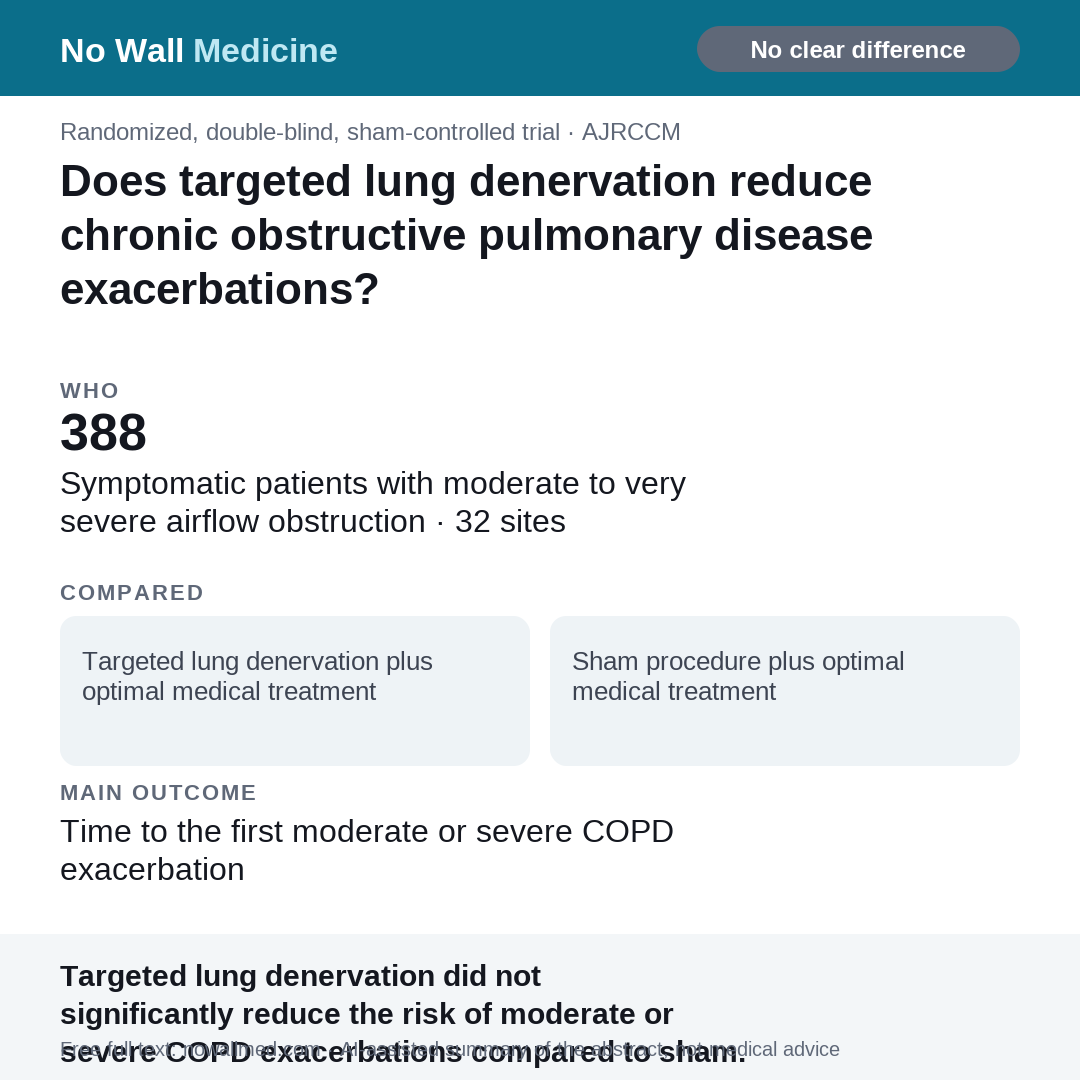
Clinical question: Does targeted lung denervation reduce chronic obstructive pulmonary disease exacerbations?
Why it matters: It is unclear if targeted lung denervation, a procedure to disrupt nerve signals in the lungs, can reduce the frequency of exacerbations in patients with chronic obstructive pulmonary disease.
Key points
- Researchers conducted a randomized, double-blind trial with 388 patients with moderate to very severe airflow obstruction and frequent exacerbations.
- The treatment group showed no difference in the probability of having a moderate or severe exacerbation compared to the sham group (hazard ratio, 1.268; 95% confidence interval, 0.988-1.628).
- At 1 year, the treatment group had a higher rate of improvement in shortness of breath compared to the sham group (35.4% vs. 24.1%).
Limitation the authors note: Post hoc analyses suggested the primary endpoint was not met because there were not enough patients with an airway-predominant phenotype.
Headline and key points written with AI from the paper’s abstract, with every number checked against it. Read the paper before relying on them.
Was this summary helpful?
Subject terms
Cite this article
Shah PL, Slebos DJ, Sue R, Bhatt SP, Ghattas C, Strange C. Randomized Sham-controlled Trial of Targeted Lung Denervation in Patients with Chronic Obstructive Pulmonary Disease (AIRFLOW-3). AJRCCM. 2025. doi:10.1164/rccm.202502-0404OC
Spotted a mistake? Suggest a correction
Top studies every Monday
The week’s key trials and guidelines in your specialties, plus any topics you follow. By email, free.
Get the weekly digest