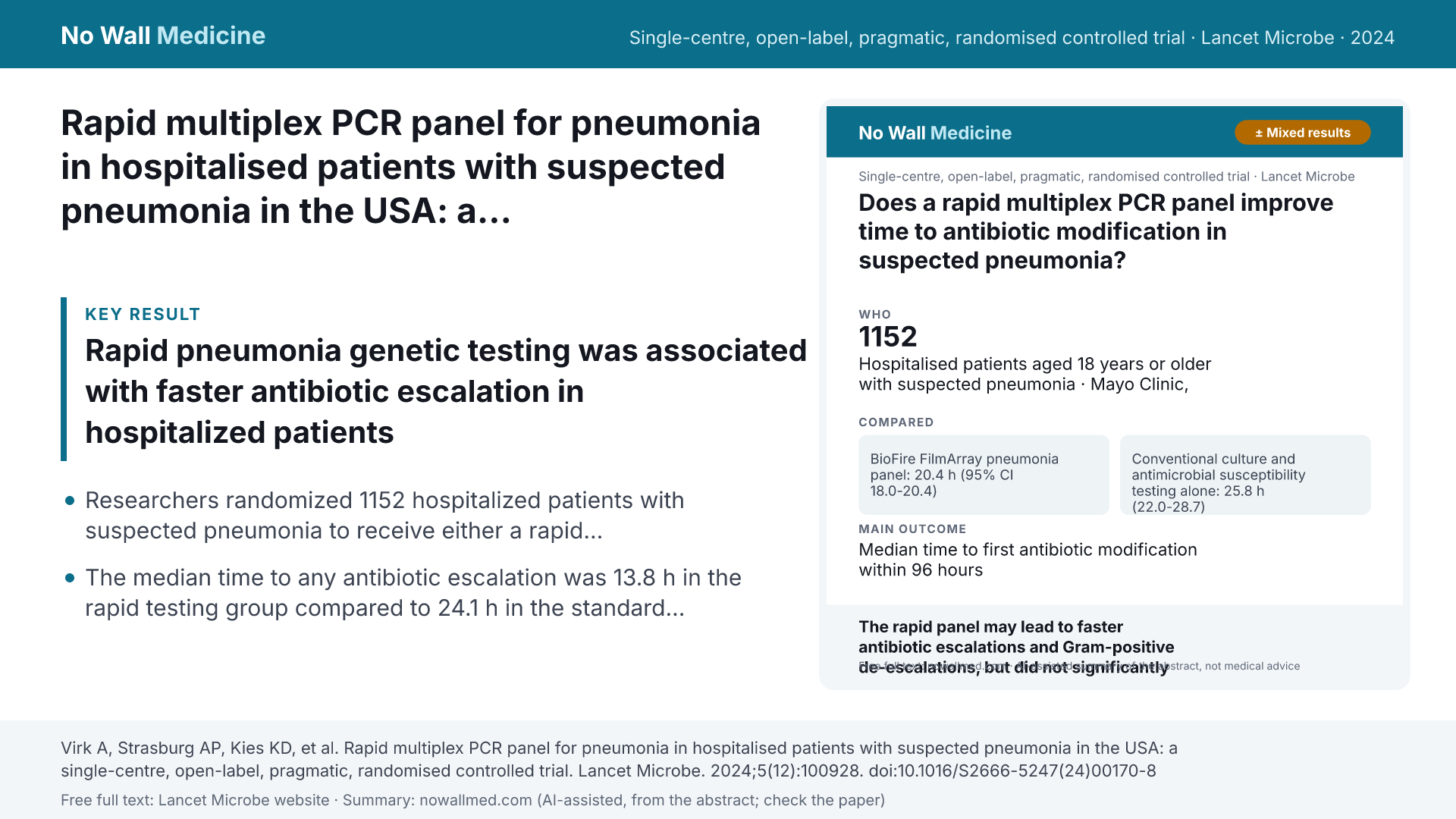
Rapid pneumonia genetic testing was associated with faster antibiotic escalation in hospitalized patients
Rapid multiplex PCR panel for pneumonia in hospitalised patients with suspected pneumonia in the USA: a single-centre, open-label, pragmatic, randomised controlled trial
Single-centre, open-label, pragmatic, randomised controlled trialMixed results
Does a rapid multiplex PCR panel improve time to antibiotic modification in suspected pneumonia?
Who
1152
Hospitalised patients aged 18 years or older with suspected pneumonia · Mayo Clinic, Rochester, MN, USA
Compared
BioFire FilmArray pneumonia panel: 20.4 h (95% CI 18.0-20.4)
Conventional culture and antimicrobial susceptibility testing alone: 25.8 h (22.0-28.7)
Main outcome
Median time to first antibiotic modification within 96 hours
Result: p=0.076
Bottom line: The rapid panel may lead to faster antibiotic escalations and Gram-positive de-escalations, but did not significantly change overall modification time.
Funded by: bioMérieux
Lancet Microbe · 2024-10-17Download image
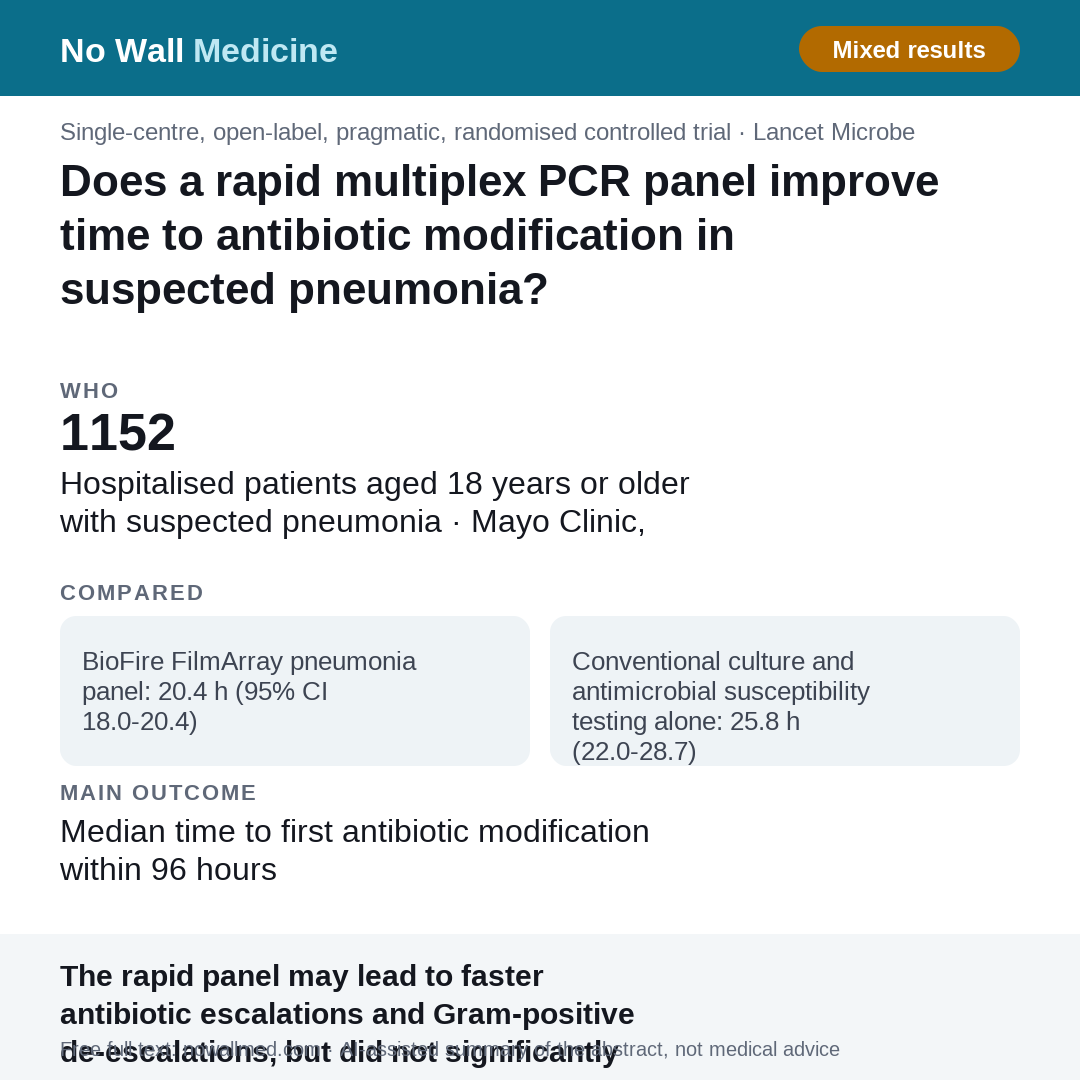
Clinical question: Does a rapid multiplex PCR panel improve time to antibiotic modification in suspected pneumonia?
Why it matters: The clinical utility of rapid multiplex respiratory specimen polymerase chain reaction (PCR) panels for pneumonia in hospitalized patients is undefined.
Key points
- Researchers randomized 1152 hospitalized patients with suspected pneumonia to receive either a rapid multiplex polymerase chain reaction (PCR) panel or standard culture and susceptibility testing.
- The median time to any antibiotic escalation was 13.8 h in the rapid testing group compared to 24.1 h in the standard care group.
- The median time to the first antibiotic modification of any kind did not show a statistically significant difference between the two groups (20.4 h versus 25.8 h).
Headline and key points written with AI from the paper’s abstract, with every number checked against it. Read the paper before relying on them.
Was this summary helpful?
Subject terms
Cite this article
Virk A, Strasburg AP, Kies KD, et al. Rapid multiplex PCR panel for pneumonia in hospitalised patients with suspected pneumonia in the USA: a single-centre, open-label, pragmatic, randomised controlled trial. Lancet Microbe. 2024. doi:10.1016/S2666-5247(24)00170-8
Spotted a mistake? Suggest a correction