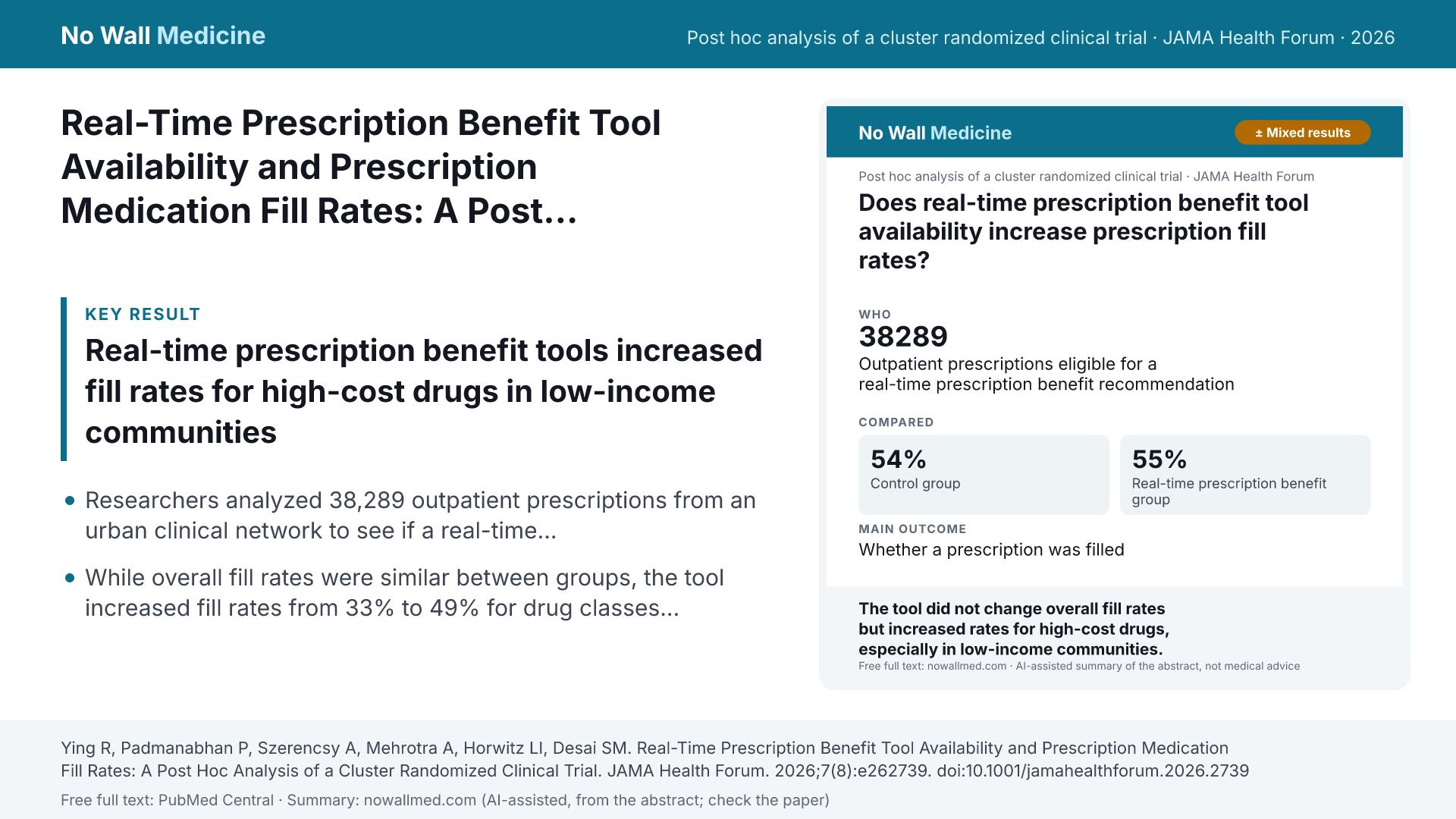
Real-time prescription benefit tools increased fill rates for high-cost drugs in low-income communities
Real-Time Prescription Benefit Tool Availability and Prescription Medication Fill Rates: A Post Hoc Analysis of a Cluster Randomized Clinical Trial
Post hoc analysis of a cluster randomized clinical trialMixed results
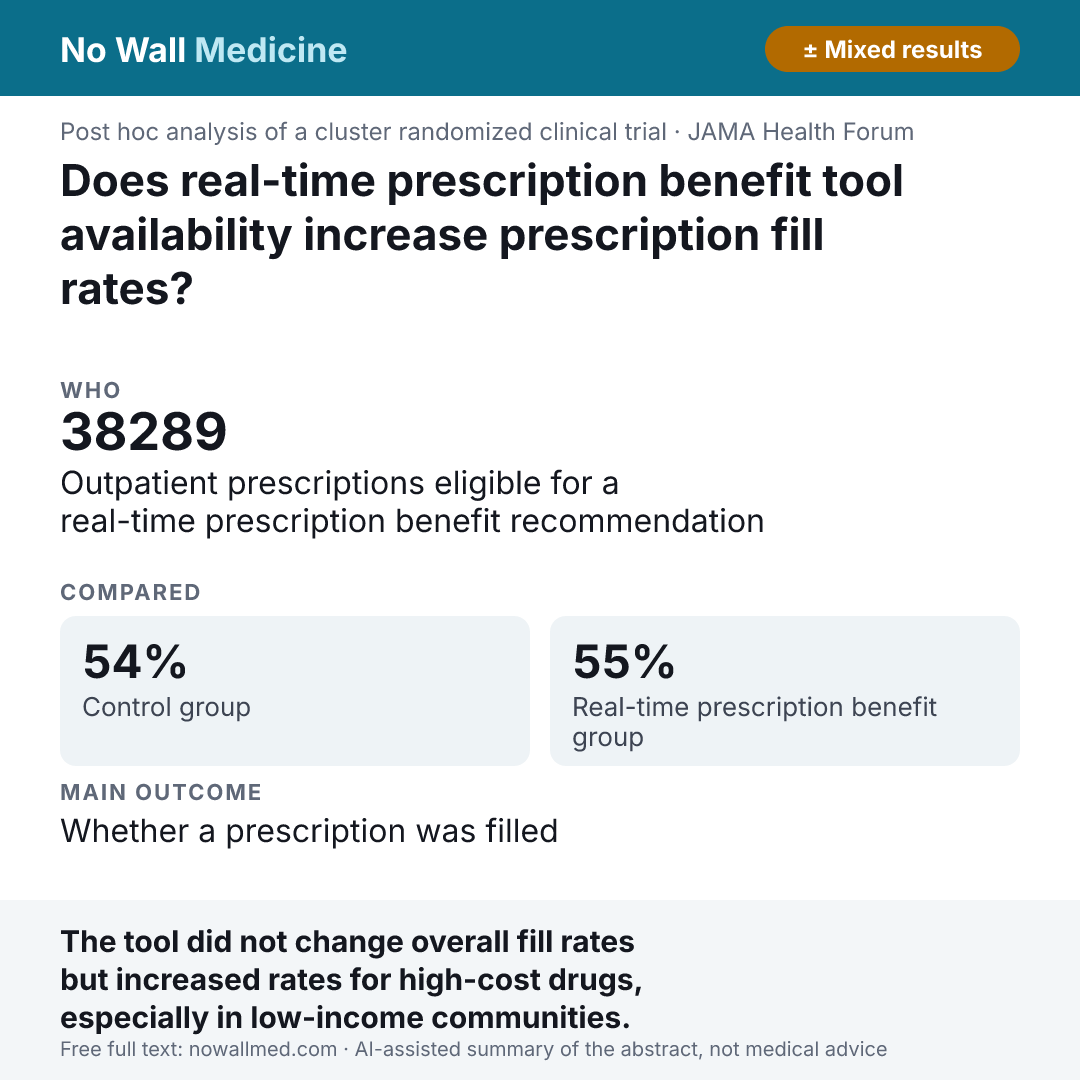
Does real-time prescription benefit tool availability increase prescription fill rates?
Who
38289
Outpatient prescriptions eligible for a real-time prescription benefit recommendation · Urban ambulatory clinical network
Compared
54%Control group
55%Real-time prescription benefit group
Main outcome
Whether a prescription was filled
Result: adjusted difference: 1.2 percentage points (95% CI, -1.3 to 3.7 pp)
Bottom line: The tool did not change overall fill rates but increased rates for high-cost drugs, especially in low-income communities.
Limitation: Recommendations were made for a small proportion of orders, limiting applicability to a narrow population segment.
JAMA Health Forum · 2026-08-07 · Save PNG
Clinical question: Does real-time prescription benefit tool availability increase prescription fill rates?
Why it matters: Patients often do not fill prescriptions because of high out-of-pocket costs, and it is unclear if tools recommending lower-cost alternatives can help.
Key points
- Researchers analyzed 38,289 outpatient prescriptions from an urban clinical network to see if a real-time prescription benefit tool improved medication fill rates.
- While overall fill rates were similar between groups, the tool increased fill rates from 33% to 49% for drug classes with average out-of-pocket costs over $120.83.
- The largest increase in fill rates for high-cost drugs occurred in low-income communities at 30.3 percentage points, compared to 1.0 percentage point in high-income communities.
Limitation the authors note: The tool provided recommendations for only a small proportion of orders, which limits how these findings apply to the wider population.
Headline and key points written with AI from the paper’s abstract, with every number checked against it. Read the paper before relying on them.
Was this summary helpful?
Subject terms
Headline, design, result, key points, caveat and citation as plain text.
Cite this article
Ying R, Padmanabhan P, Szerencsy A, Mehrotra A, Horwitz LI, Desai SM. Real-Time Prescription Benefit Tool Availability and Prescription Medication Fill Rates: A Post Hoc Analysis of a Cluster Randomized Clinical Trial. JAMA Health Forum. 2026;7(8):e262739. doi:10.1001/jamahealthforum.2026.2739
Spotted a mistake? Suggest a correction