Strategies to include dying patients in a clinical trial helped recruit 229 participants
Reflections on Including Patients in a Randomized Placebo-Controlled Multicentre Trial in the Dying Phase - the SILENCE Study
Randomized, placebo-controlled trialUnclear result
How can patients be included in a randomized placebo-controlled trial at the end of life?
Who
1097
Dying patients in inpatient hospice facilities · Six inpatient hospice facilities
Compared
626Eligible patients
229Patients who gave informed consent (37%)
Main outcome
Recruitment, participation, and strategies for end of life trials
Bottom line: Using advance consent and training healthcare professionals can facilitate patient recruitment in end of life trials.
J Pain Symptom Manage · 2021-12-23Download image
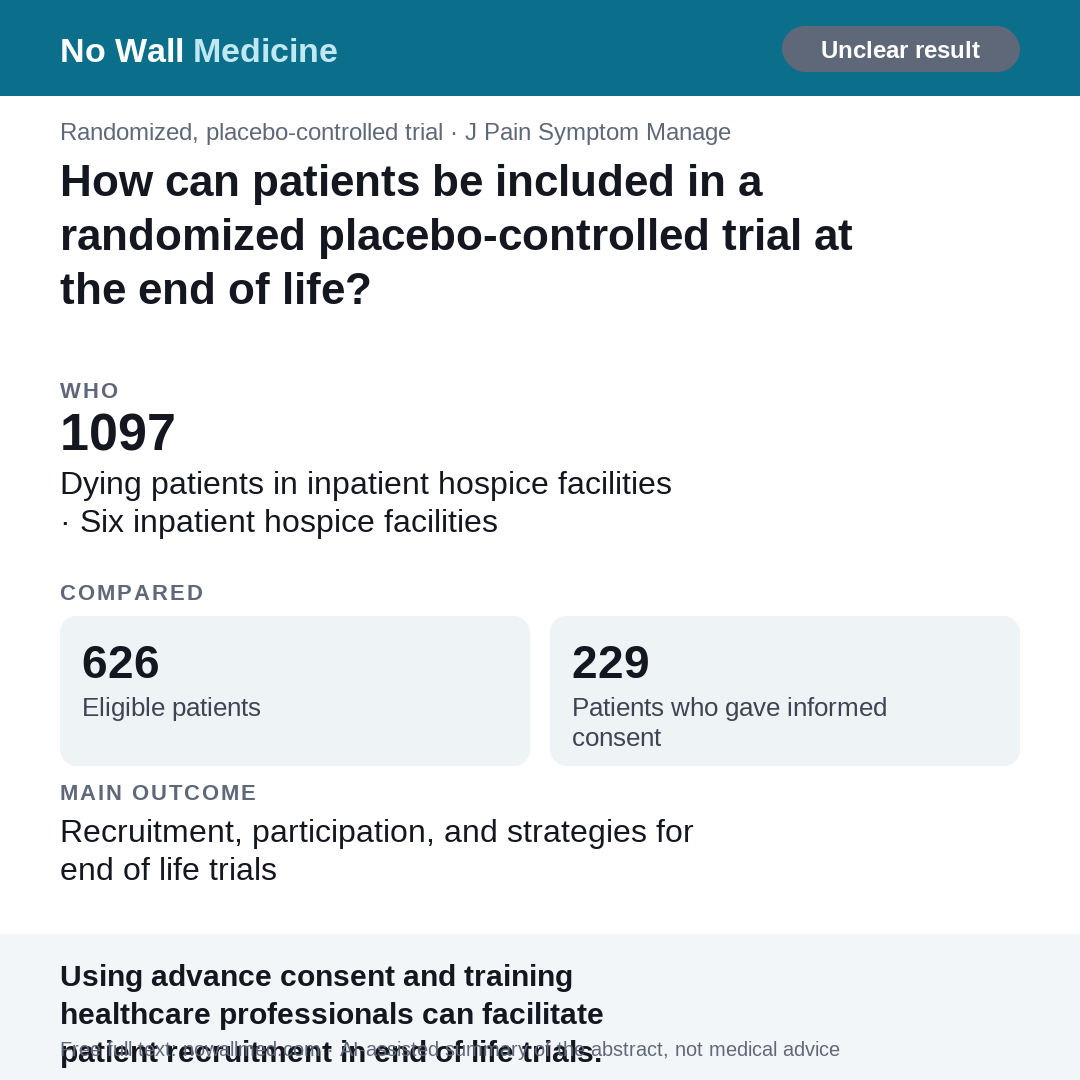
Clinical question: How can patients be included in a randomized placebo-controlled trial at the end of life?
Why it matters: It is difficult to perform randomized controlled trials at the end of life due to patient vulnerability and potential gatekeeping by healthcare professionals or relatives.
Key points
- Researchers analyzed recruitment and participation in the SILENCE study, a placebo-controlled trial involving 1097 patients admitted to six inpatient hospice facilities.
- Of the 626 eligible patients, 229 (37%) gave informed consent to participate in the study regarding scopolamine butylbromide for death rattle.
- The most significant barrier to recruitment was patient vulnerability, while gatekeeping by healthcare professionals and relatives occurred in a small number of cases.
Headline and key points written with AI from the paper’s abstract, with every number checked against it. Read the paper before relying on them.
Was this summary helpful?
Subject terms
Cite this article
van Esch HJ, Prins SD, van de Vathorst S, van der Rijt CCD, van der Heide A, van Zuylen L. Reflections on Including Patients in a Randomized Placebo-Controlled Multicentre Trial in the Dying Phase - the SILENCE Study. J Pain Symptom Manage. 2021. doi:10.1016/j.jpainsymman.2021.12.018
Spotted a mistake? Suggest a correction
Top studies every Monday
The week’s key trials and guidelines in your specialties, plus any topics you follow. By email, free.
Get the weekly digest