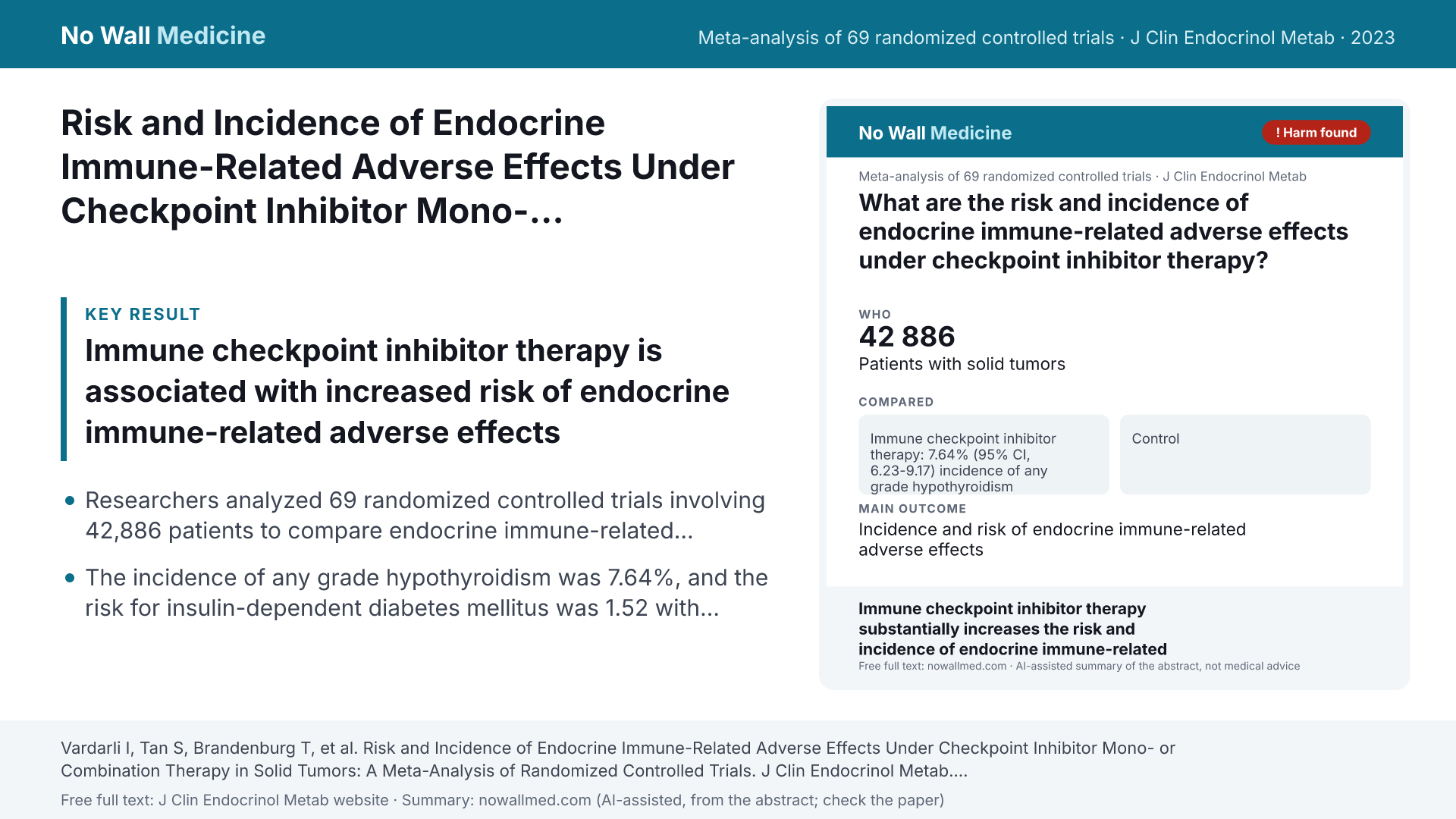
Immune checkpoint inhibitor therapy is associated with increased risk of endocrine immune-related adverse effects
Risk and Incidence of Endocrine Immune-Related Adverse Effects Under Checkpoint Inhibitor Mono- or Combination Therapy in Solid Tumors: A Meta-Analysis of Randomized Controlled Trials
Meta-analysis of 69 randomized controlled trialsHarm found
What are the risk and incidence of endocrine immune-related adverse effects under checkpoint inhibitor therapy?
Who
42 886
Patients with solid tumors
Compared
Immune checkpoint inhibitor therapy: 7.64% (95% CI, 6.23-9.17) incidence of any grade hypothyroidism
Control
Main outcome
Incidence and risk of endocrine immune-related adverse effects
Result: risk ratio 7.81 (95% CI, 5.68-10.74) for any grade hypothyroidism
Bottom line: Immune checkpoint inhibitor therapy substantially increases the risk and incidence of endocrine immune-related adverse effects.
J Clin Endocrinol Metab · 2023-11-15 · Save PNG
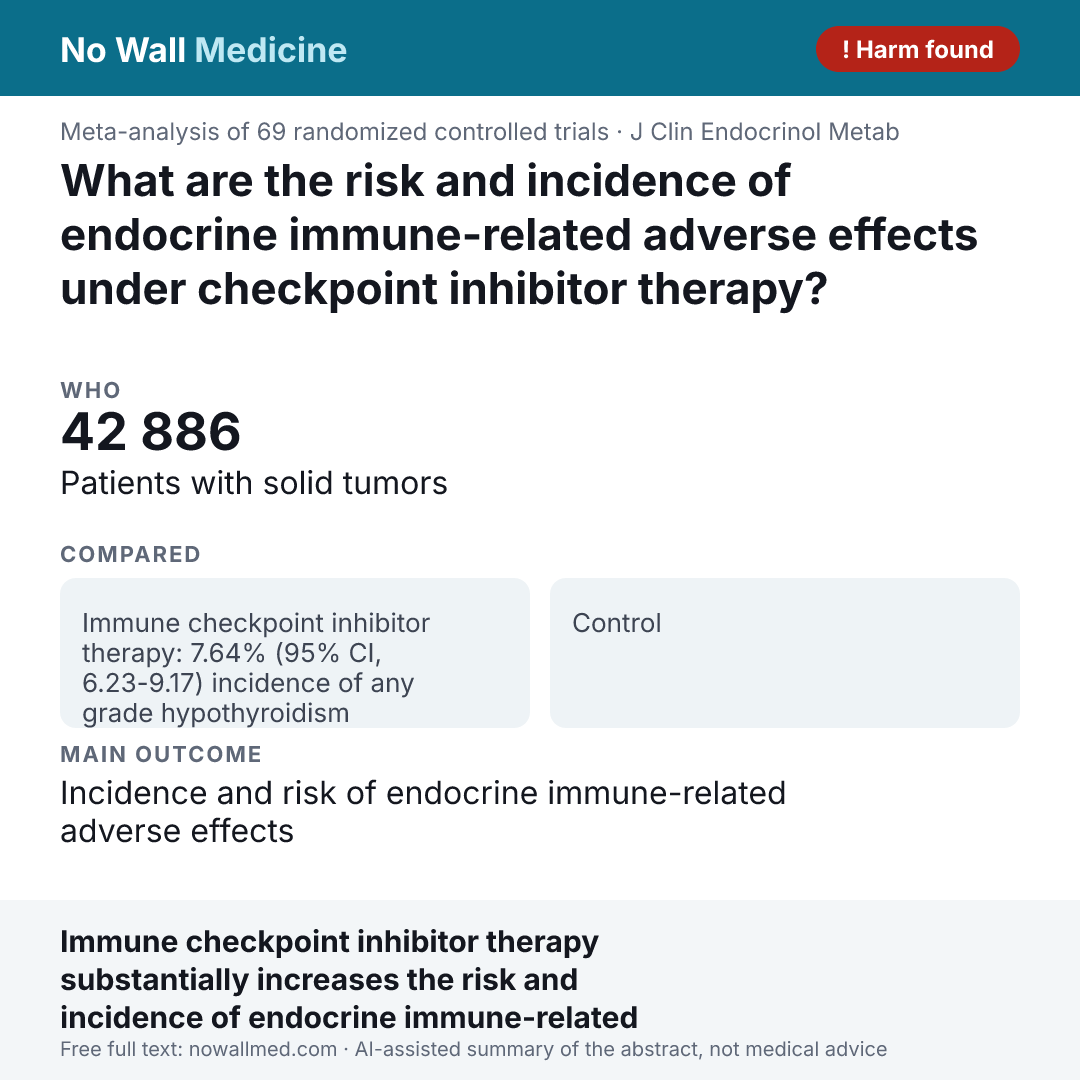
Clinical question: What are the risk and incidence of endocrine immune-related adverse effects under checkpoint inhibitor therapy?
Why it matters: The incidence and risk of endocrine immune-related adverse effects under various immune checkpoint inhibitor treatment regimens were not fully established by previous meta-analyses.
Key points
- Researchers analyzed 69 randomized controlled trials involving 42,886 patients to compare endocrine immune-related adverse effects between immune checkpoint inhibitor monotherapy and combination therapy.
- The incidence of any grade hypothyroidism was 7.64%, and the risk for insulin-dependent diabetes mellitus was 1.52 with an incidence of 0.087%.
- Combining specific immune checkpoint inhibitors was an independent risk factor for any grade hypophysitis/hypopituitarism, which is inflammation of the pituitary gland.
Headline and key points written with AI from the paper’s abstract, with every number checked against it. Read the paper before relying on them.
Was this summary helpful?
Subject terms
Headline, design, result, key points, caveat and citation as plain text.
Cite this article
Vardarli I, Tan S, Brandenburg T, et al. Risk and Incidence of Endocrine Immune-Related Adverse Effects Under Checkpoint Inhibitor Mono- or Combination Therapy in Solid Tumors: A Meta-Analysis of Randomized Controlled Trials. J Clin Endocrinol Metab. 2024;109(4):1132-1144. doi:10.1210/clinem/dgad670
Spotted a mistake? Suggest a correction