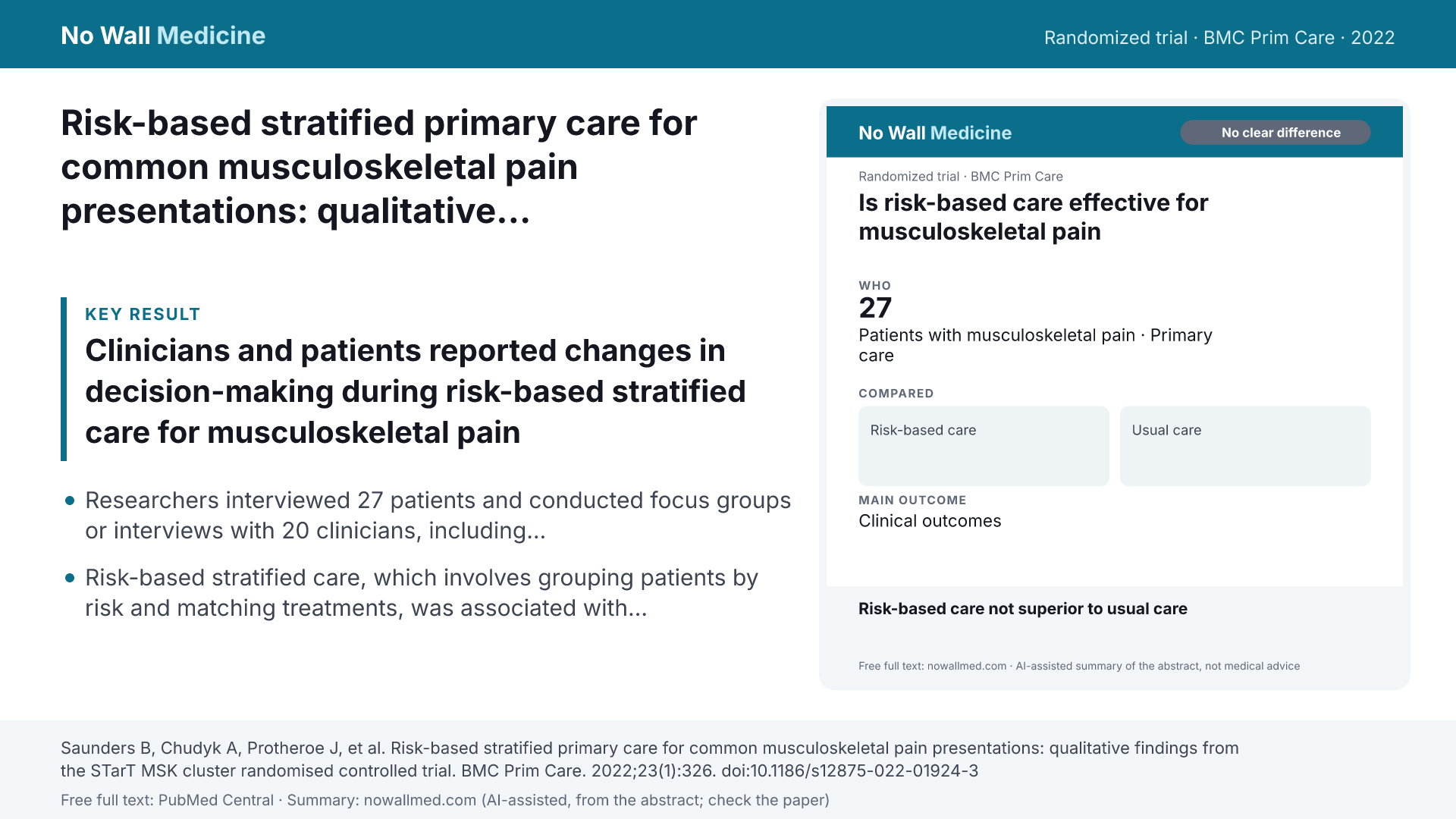
Clinicians and patients reported changes in decision-making during risk-based stratified care for musculoskeletal pain
Risk-based stratified primary care for common musculoskeletal pain presentations: qualitative findings from the STarT MSK cluster randomised controlled trial
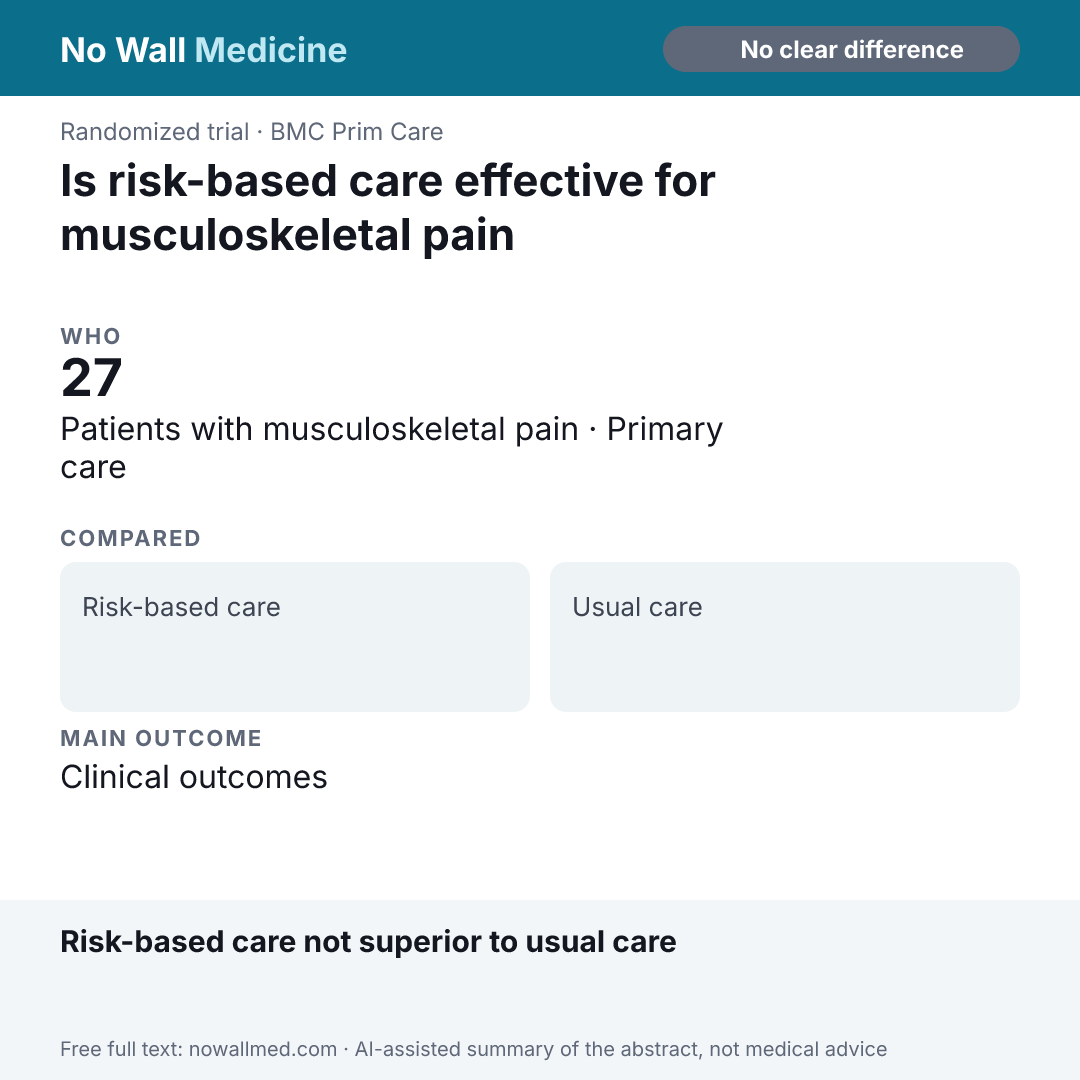
Randomized trialNo clear difference
Is risk-based care effective for musculoskeletal pain
Who
27
Patients with musculoskeletal pain · Primary care
Compared
Risk-based care
Usual care
Main outcome
Clinical outcomes
Bottom line: Risk-based care not superior to usual care
BMC Prim Care · 2022-12-16 · Save PNG
Same trial (ISRCTN15366334)
Papers we list that report this registered trial, oldest first. Read a secondary analysis alongside the main results.
- Main results No clear difference
Risk-based stratified care for common musculoskeletal pain showed no significant difference in pain or function Lancet Rheumatol 2022-07 - Related analysis No clear difference
This paper BMC Prim Care 2022-12
Key points
- Researchers interviewed 27 patients and conducted focus groups or interviews with 20 clinicians, including general practitioners and physiotherapists, involved in the intervention arm of a trial.
- Risk-based stratified care, which involves grouping patients by risk and matching treatments, was associated with increased attention to psychosocial factors and facilitated negotiation of treatment options.
- Some general practitioners reported that the risk-stratification tool did not fit with usual consultation methods and added to time-pressured appointments.
Headline and key points written with AI from the paper’s abstract, with every number checked against it. Read the paper before relying on them.
Was this summary helpful?
Subject terms
Headline, design, result, key points, caveat and citation as plain text.
Cite this article
Saunders B, Chudyk A, Protheroe J, et al. Risk-based stratified primary care for common musculoskeletal pain presentations: qualitative findings from the STarT MSK cluster randomised controlled trial. BMC Prim Care. 2022;23(1):326. doi:10.1186/s12875-022-01924-3
Spotted a mistake? Suggest a correction