Rivaroxaban monotherapy was associated with lower total thrombotic and bleeding events than combination therapy
Rivaroxaban Monotherapy vs Combination Therapy With Antiplatelets on Total Thrombotic and Bleeding Events in Atrial Fibrillation With Stable Coronary Artery Disease: A Post Hoc Secondary Analysis of the AFIRE Trial
Post hoc secondary analysis of a randomized clinical trialBenefit found
Does rivaroxaban monotherapy or combination therapy reduce total thrombotic and bleeding events?
Who
2215
Patients with atrial fibrillation and stable coronary artery disease · Multicenter
Compared
12.2%Rivaroxaban monotherapy
19.2%Combined rivaroxaban and antiplatelet therapy
Main outcome
Total incidence of thrombotic, bleeding, and fatal events
Result: hazard ratio 0.62 (95% CI 0.48-0.80)
Bottom line: Rivaroxaban monotherapy was associated with lower risks of total thrombotic and/or bleeding events than combination therapy.
JAMA Cardiol · 2022-06-16Download image
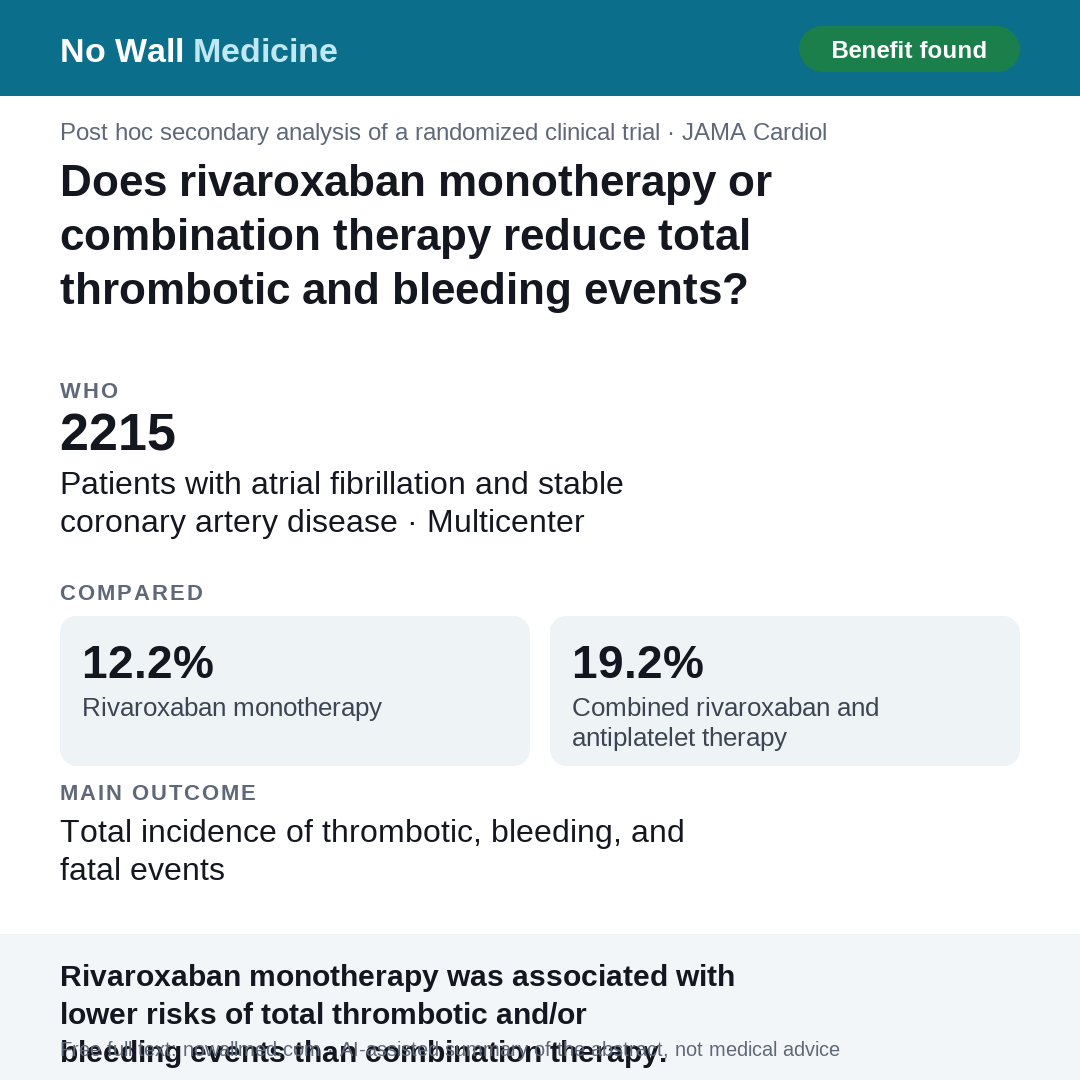
Clinical question: Does rivaroxaban monotherapy or combination therapy reduce total thrombotic and bleeding events?
Why it matters: Appropriate regimens of antithrombotic therapy for patients with atrial fibrillation and coronary artery disease have not yet been established.
Key points
- The study analyzed 2215 patients with atrial fibrillation and stable coronary artery disease who were treated with either rivaroxaban alone or rivaroxaban plus an antiplatelet medication.
- Total event rates were 12.2% in the rivaroxaban monotherapy group and 19.2% in the combination therapy group during a median follow-up of 24.1 months.
- The mortality rate was 3.7% in the monotherapy group compared to 6.6% in the combination therapy group.
Headline and key points written with AI from the paper’s abstract, with every number checked against it. Read the paper before relying on them.
Was this summary helpful?
Subject terms
Cite this article
Naito R, Miyauchi K, Yasuda S, Kaikita K, Akao M, Ako J. Rivaroxaban Monotherapy vs Combination Therapy With Antiplatelets on Total Thrombotic and Bleeding Events in Atrial Fibrillation With Stable Coronary Artery Disease: A Post Hoc Secondary Analysis of the AFIRE Trial. JAMA Cardiol. 2022. doi:10.1001/jamacardio.2022.1561
Spotted a mistake? Suggest a correction
Top studies every Monday
The week’s key trials and guidelines in your specialties, plus any topics you follow. By email, free.
Get the weekly digest