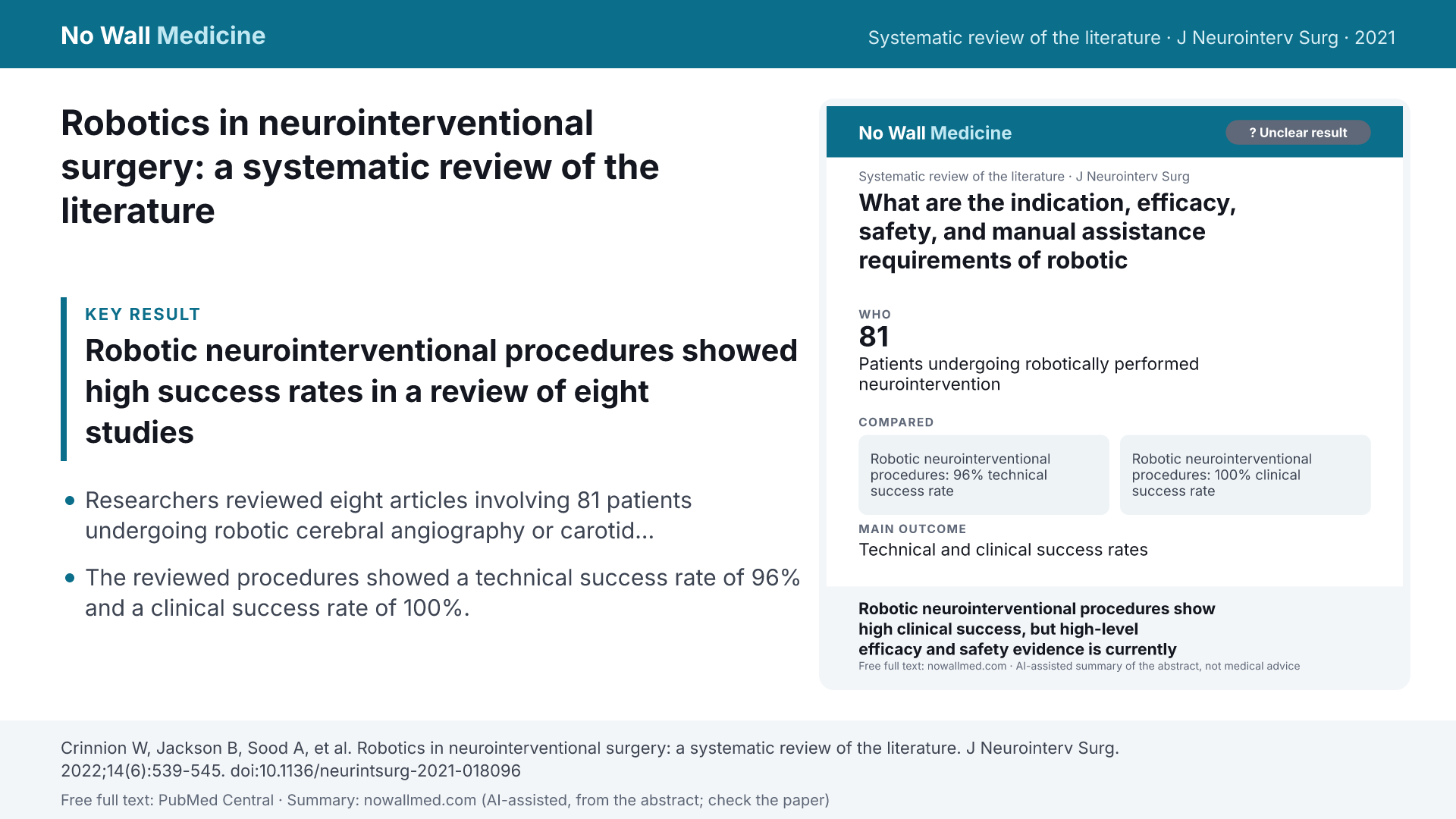
Robotic neurointerventional procedures showed high success rates in a review of eight studies
Robotics in neurointerventional surgery: a systematic review of the literature
Systematic review of the literatureUnclear result
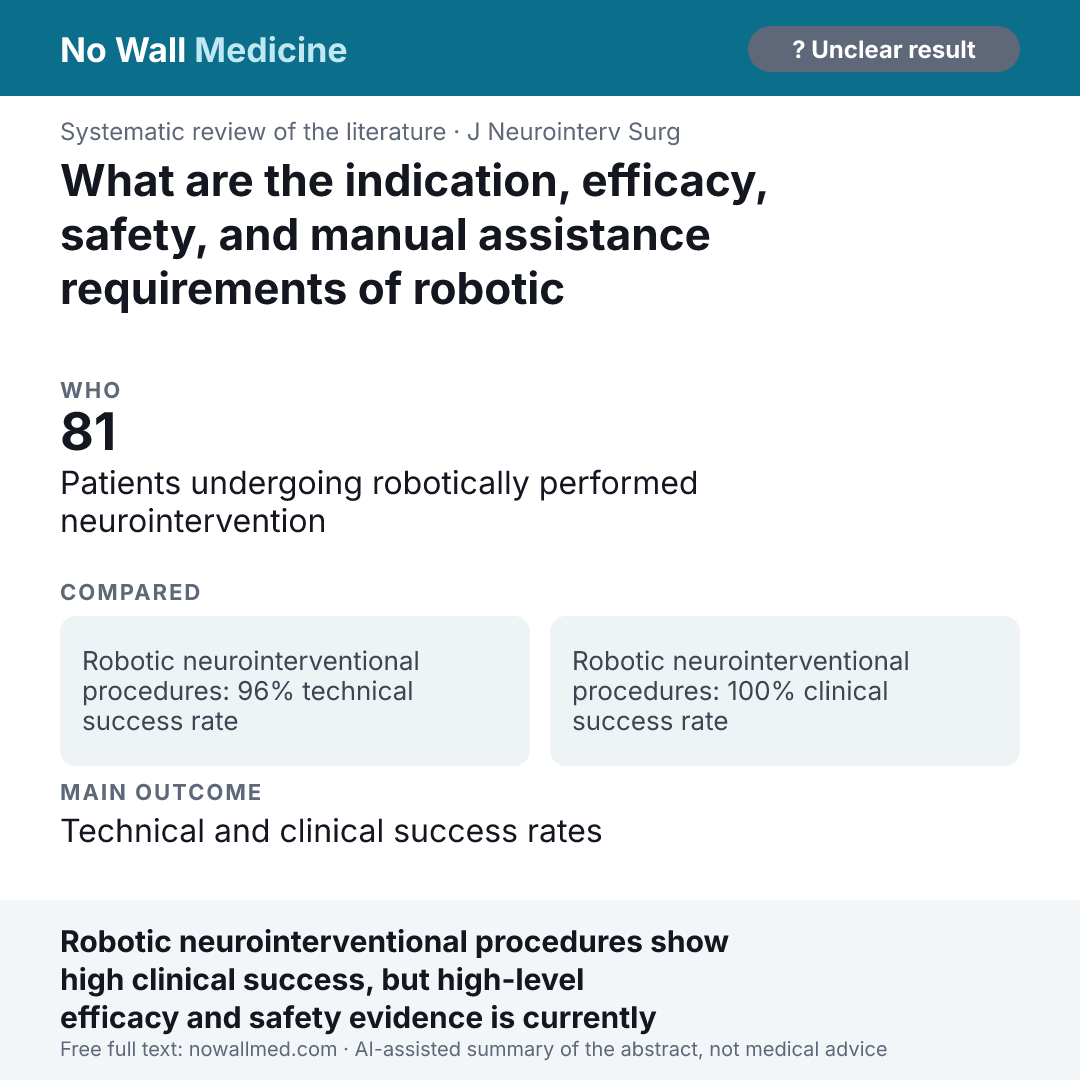
What are the indication, efficacy, safety, and manual assistance requirements of robotic neurointerventional surgery?
Who
81
Patients undergoing robotically performed neurointervention
Compared
Robotic neurointerventional procedures: 96% technical success rate
Robotic neurointerventional procedures: 100% clinical success rate
Main outcome
Technical and clinical success rates
Bottom line: Robotic neurointerventional procedures show high clinical success, but high-level efficacy and safety evidence is currently lacking.
Limitation: No studies had clearly defined patient selection criteria, reference standards, or index tests.
J Neurointerv Surg · 2021-11-19
Headline and visual abstract written with AI from the paper’s abstract, with every number checked against it. Read the paper before relying on them.
Was this summary helpful?
Abstract
Background
Robotically performed neurointerventional surgery has the potential to reduce occupational hazards to staff, perform intervention with greater precision, and could be a viable solution for teleoperated neurointerventional procedures. Objective
To determine the indication, robotic systems used, efficacy, safety, and the degree of manual assistance required for robotically performed neurointervention. Methods
We conducted a systematic review of the literature up to, and including, articles published on April 12, 2021. Medline, PubMed, Embase, and Cochrane register databases were searched using medical subject heading terms to identify reports of robotically performed neurointervention, including diagnostic cerebral angiography and carotid artery intervention. Results
A total of 8 articles treating 81 patients were included. Only one case report used a robotic system for intracranial intervention, the remaining indications being cerebral angiography and carotid artery intervention. Only one study performed a comparison of robotic and manual procedures. Across all studies, the technical success rate was 96% and the clinical success rate was 100%. All cases required a degree of manual assistance. No studies had clearly defined patient selection criteria, reference standards, or index tests, preventing meaningful statistical analysis. Conclusions
Given the clinical success, it is plausible that robotically performed neurointerventional procedures will eventually benefit patients and reduce occupational hazards for staff; however, there is no high-level efficacy and safety evidence to support this assertion. Limitations of current robotic systems and the challenges that must be overcome to realize the potential for remote teleoperated neurointervention require further investigation.
Abstract reproduced under the article’s CC BY licence.
Subject terms
Cite this article
Crinnion W, Jackson B, Sood A, et al. Robotics in neurointerventional surgery: a systematic review of the literature. J Neurointerv Surg. 2022;14(6):539-545. doi:10.1136/neurintsurg-2021-018096
Spotted a mistake? Suggest a correction