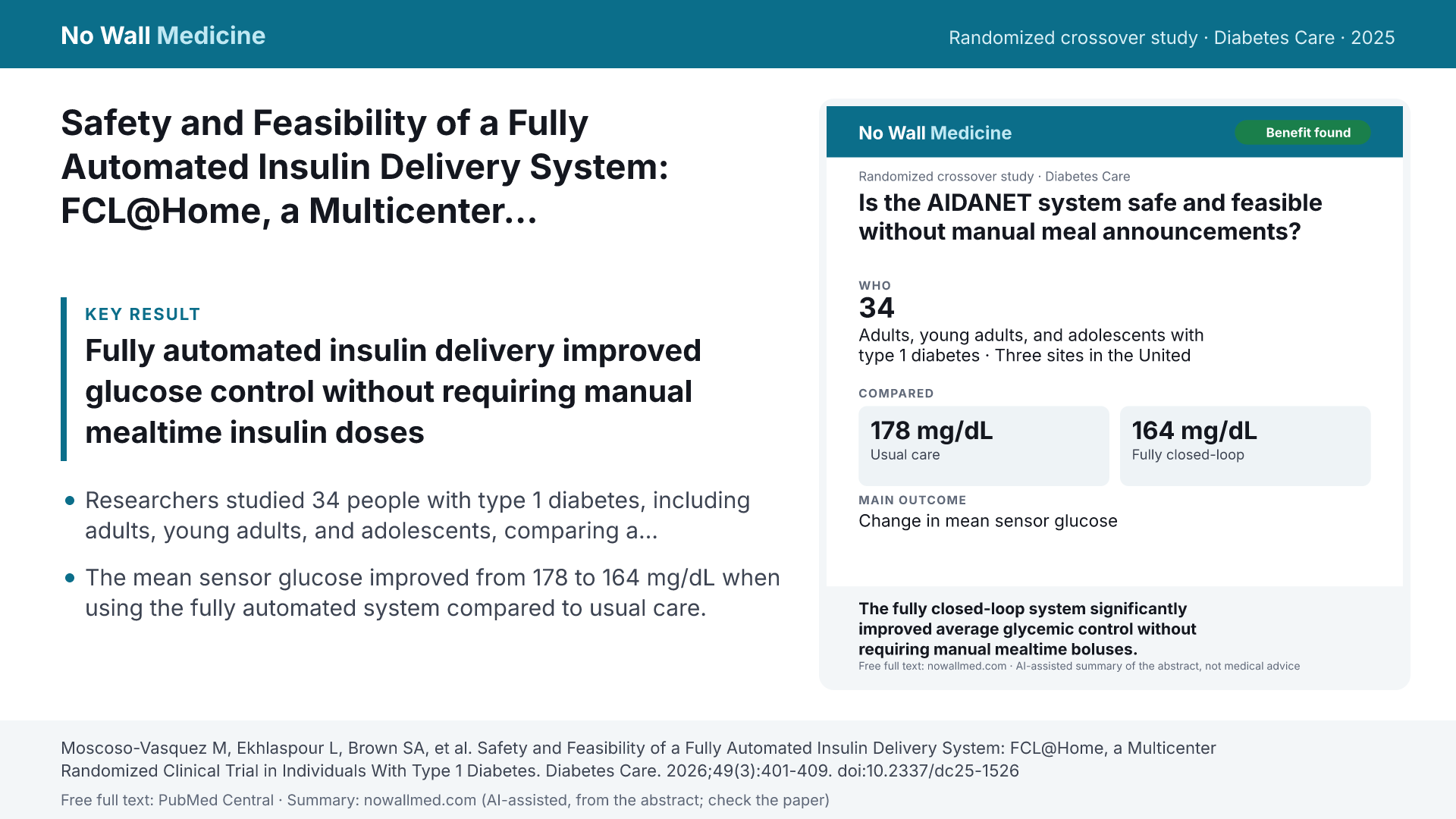
Fully automated insulin delivery improved glucose control without requiring manual mealtime insulin doses
Safety and Feasibility of a Fully Automated Insulin Delivery System: FCL@Home, a Multicenter Randomized Clinical Trial in Individuals With Type 1 Diabetes
Randomized crossover studyBenefit found
Is the AIDANET system safe and feasible without manual meal announcements?
Who
34
Adults, young adults, and adolescents with type 1 diabetes · Three sites in the United States
Compared
178 mg/dLUsual care
164 mg/dLFully closed-loop
Main outcome
Change in mean sensor glucose
Bottom line: The fully closed-loop system significantly improved average glycemic control without requiring manual mealtime boluses.
Diabetes Care · 2025-12-16 · Save PNG
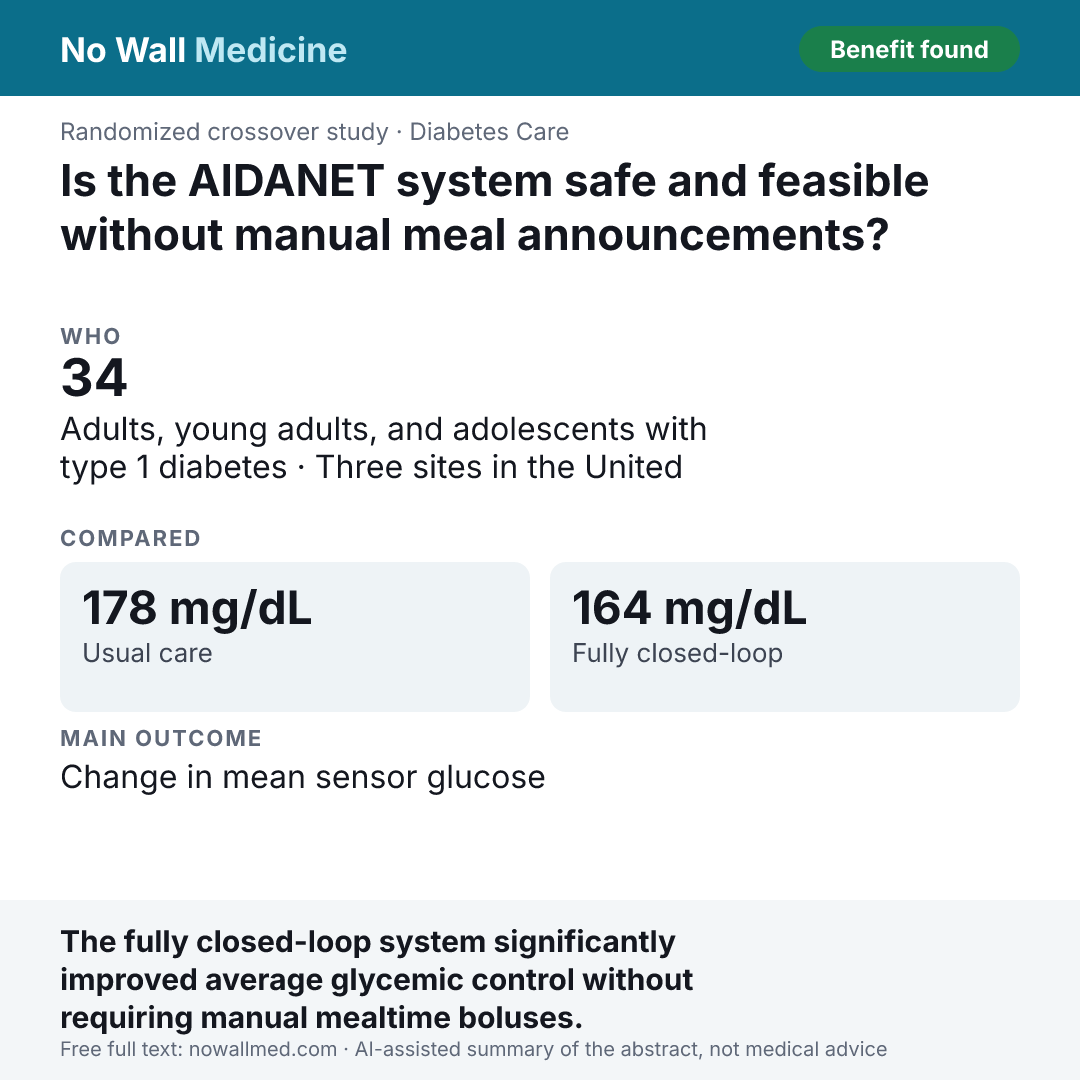
Clinical question: Is the AIDANET system safe and feasible without manual meal announcements?
Why it matters: Current standard care for type 1 diabetes requires people to manually announce meals to their insulin pumps.
Key points
- Researchers studied 34 people with type 1 diabetes, including adults, young adults, and adolescents, comparing a fully automated system to usual care.
- The mean sensor glucose improved from 178 to 164 mg/dL when using the fully automated system compared to usual care.
- The automated system also increased time spent in target glucose ranges and was not worse than usual care regarding low blood sugar levels.
Headline and key points written with AI from the paper’s abstract, with every number checked against it. Read the paper before relying on them.
Was this summary helpful?
Subject terms
Headline, design, result, key points, caveat and citation as plain text.
Cite this article
Moscoso-Vasquez M, Ekhlaspour L, Brown SA, et al. Safety and Feasibility of a Fully Automated Insulin Delivery System: FCL@Home, a Multicenter Randomized Clinical Trial in Individuals With Type 1 Diabetes. Diabetes Care. 2026;49(3):401-409. doi:10.2337/dc25-1526
Spotted a mistake? Suggest a correction