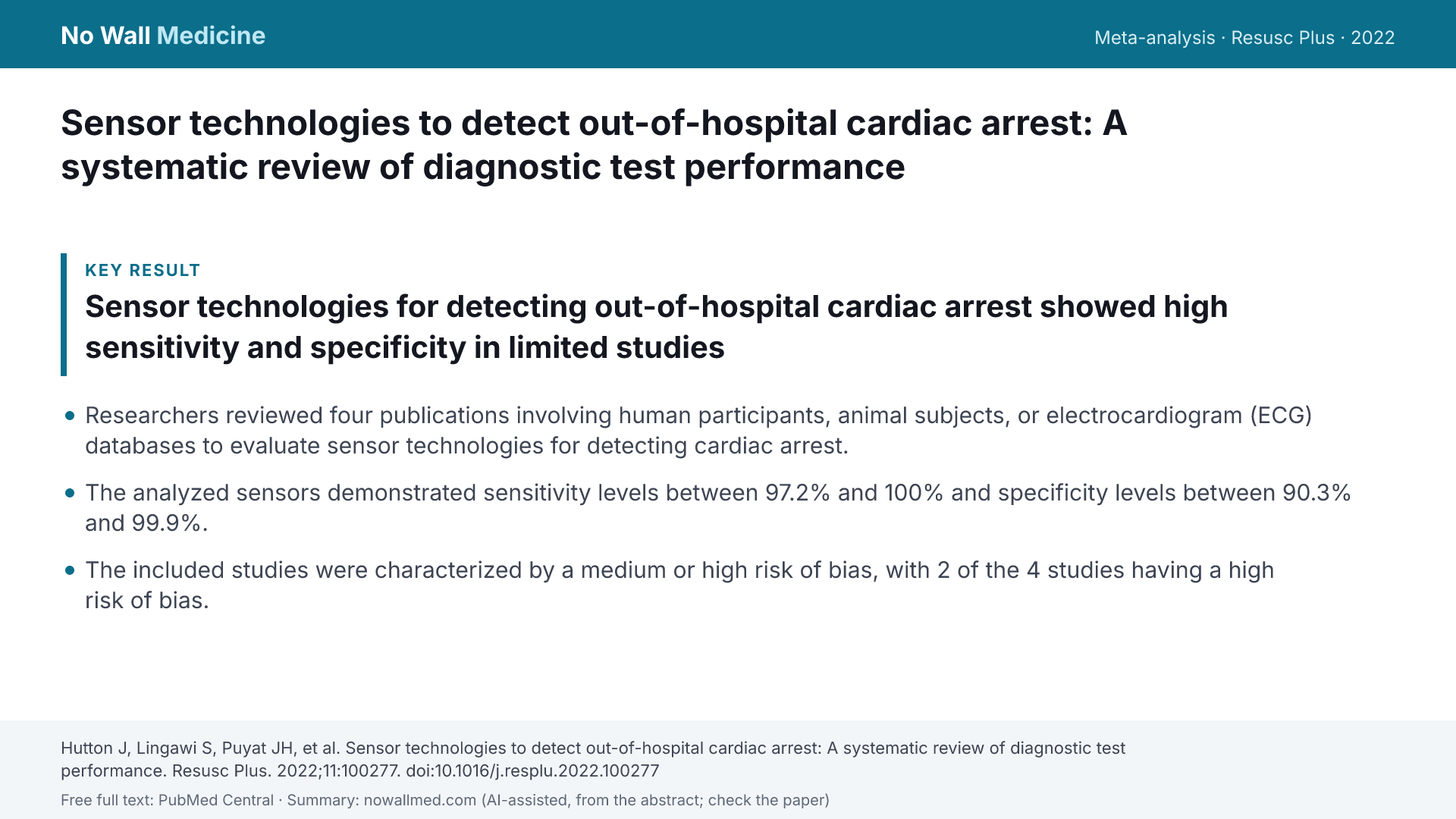
Sensor technologies for detecting out-of-hospital cardiac arrest showed high sensitivity and specificity in limited studies
Sensor technologies to detect out-of-hospital cardiac arrest: A systematic review of diagnostic test performance
Key points
- Researchers reviewed four publications involving human participants, animal subjects, or electrocardiogram (ECG) databases to evaluate sensor technologies for detecting cardiac arrest.
- The analyzed sensors demonstrated sensitivity levels between 97.2% and 100% and specificity levels between 90.3% and 99.9%.
- The included studies were characterized by a medium or high risk of bias, with 2 of the 4 studies having a high risk of bias.
Limitation the authors note: Small sample sizes and databases with low external validity limit the generalizability of the findings.
Headline and key points written with AI from the paper’s abstract, with every number checked against it. Read the paper before relying on them.
Was this summary helpful?
Headline, design, result, key points, caveat and citation as plain text.
Cite this article
Hutton J, Lingawi S, Puyat JH, et al. Sensor technologies to detect out-of-hospital cardiac arrest: A systematic review of diagnostic test performance. Resusc Plus. 2022;11:100277. doi:10.1016/j.resplu.2022.100277
Spotted a mistake? Suggest a correction