Canagliflozin use was associated with increased risks of amputation and peripheral arterial disease
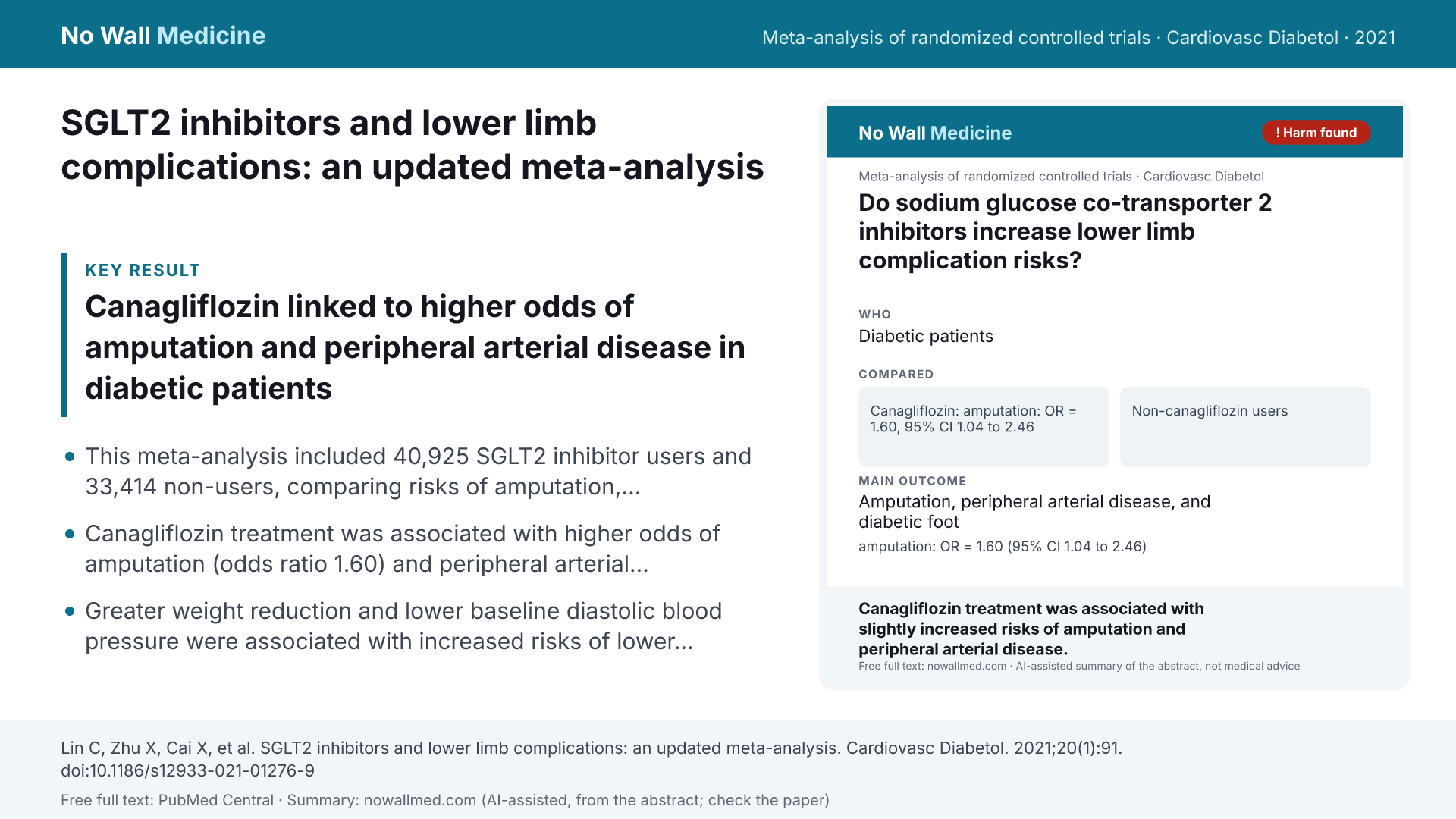
SGLT2 inhibitors and lower limb complications: an updated meta-analysis
Meta-analysis of randomized controlled trialsHarm found
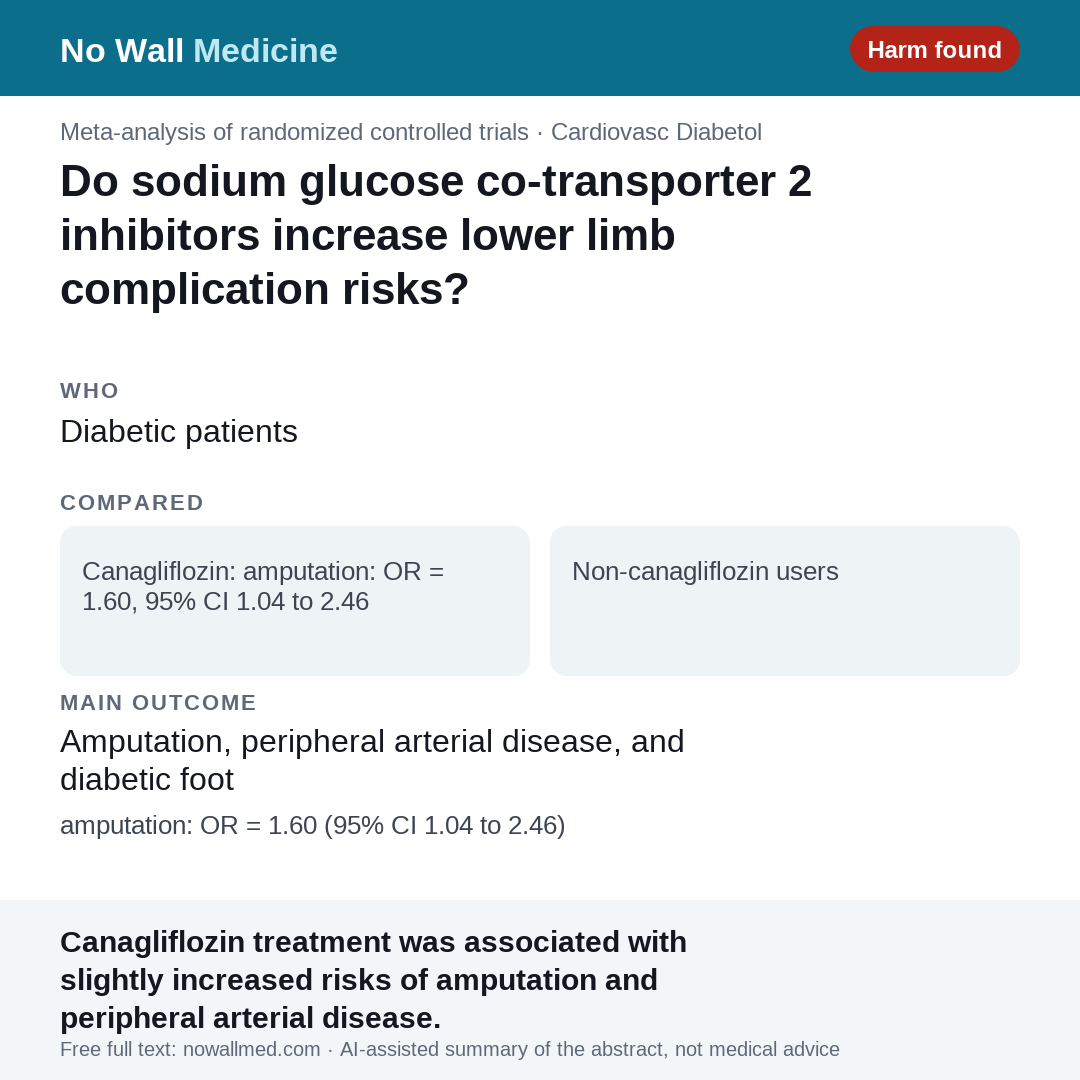
Do sodium glucose co-transporter 2 inhibitors increase lower limb complication risks?
Who
Diabetic patients
Compared
Canagliflozin: amputation: OR = 1.60, 95% CI 1.04 to 2.46
Non-canagliflozin users
Main outcome
Amputation, peripheral arterial disease, and diabetic foot
Result: amputation: OR = 1.60 (95% CI 1.04 to 2.46)
Bottom line: Canagliflozin treatment was associated with slightly increased risks of amputation and peripheral arterial disease.
Cardiovasc Diabetol · 2021-04-28Download image
Clinical question: Do sodium glucose co-transporter 2 inhibitors increase lower limb complication risks?
Why it matters: The associations between sodium glucose co-transporter 2 inhibitor use and the risk of lower limb complications in diabetic patients were not fully established.
Key points
- Researchers analyzed randomized controlled trials involving patients with diabetes to compare sodium glucose co-transporter 2 inhibitor users against non-users.
- Canagliflozin treatment was associated with an increased risk of amputation (OR = 1.60, 95% CI 1.04 to 2.46) and peripheral arterial disease (OR = 1.53, 95% CI 1.14 to 2.05).
- Greater weight reduction, lower baseline diastolic blood pressure, and greater blood pressure reductions were associated with increased risks of amputation, peripheral arterial disease, and diabetic foot.
Headline and key points written with AI from the paper’s abstract, with every number checked against it. Read the paper before relying on them.
Was this summary helpful?
Subject terms
Cite this article
Lin C, Zhu X, Cai X, et al. SGLT2 inhibitors and lower limb complications: an updated meta-analysis. Cardiovasc Diabetol. 2021. doi:10.1186/s12933-021-01276-9
Spotted a mistake? Suggest a correction