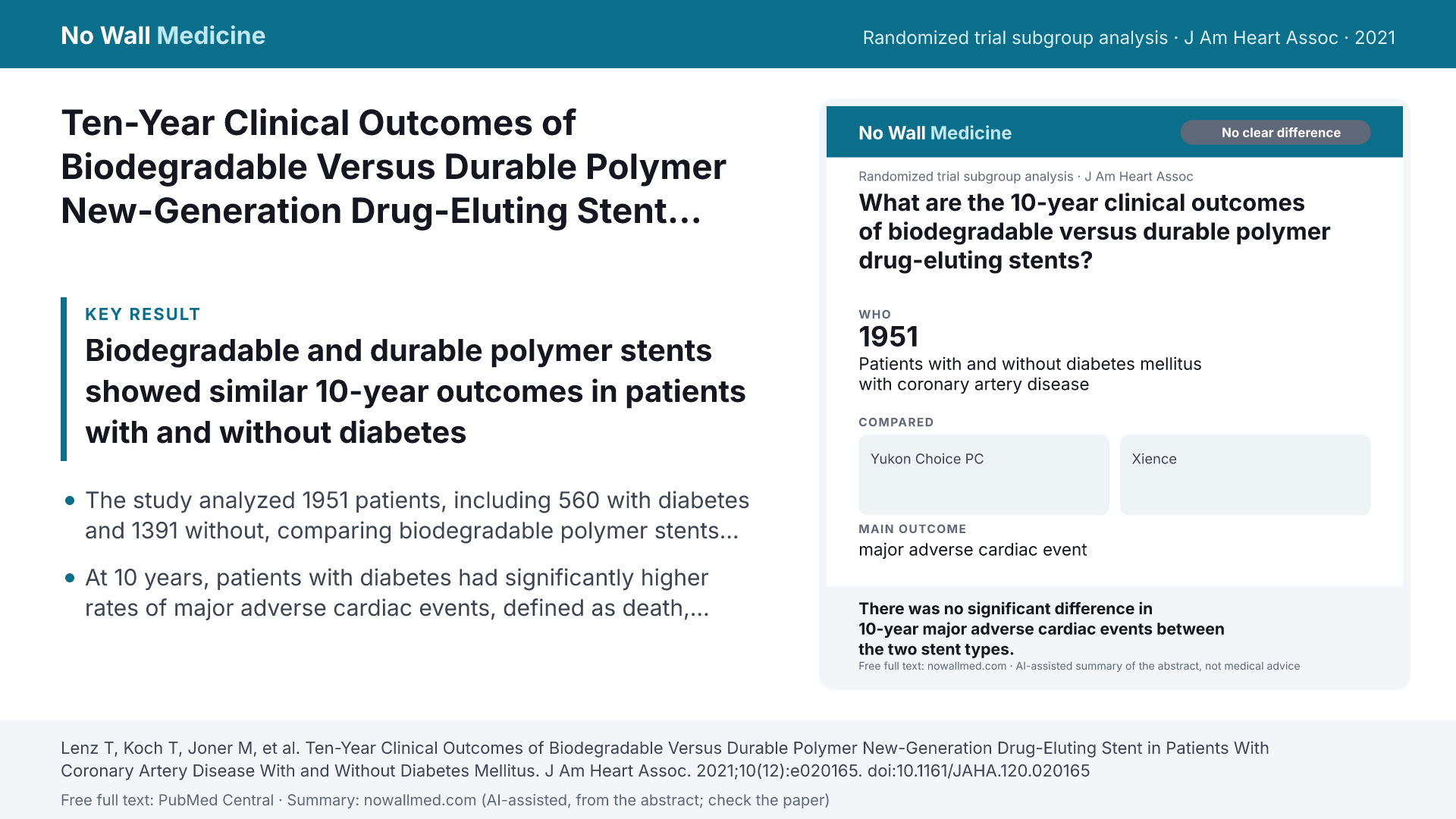
Biodegradable and durable polymer stents showed similar 10-year outcomes in patients with and without diabetes
Ten-Year Clinical Outcomes of Biodegradable Versus Durable Polymer New-Generation Drug-Eluting Stent in Patients With Coronary Artery Disease With and Without Diabetes Mellitus
Randomized trial subgroup analysisNo clear difference
What are the 10-year clinical outcomes of biodegradable versus durable polymer drug-eluting stents?
Who
1951
Patients with and without diabetes mellitus with coronary artery disease
Compared
Yukon Choice PC
Xience
Main outcome
major adverse cardiac event
Result: hazard ratio 1.01 (95% CI 0.79-1.30) in diabetes; hazard ratio 0.94 (95% CI 0.79-1.21) without diabetes
Bottom line: There was no significant difference in 10-year major adverse cardiac events between the two stent types.
J Am Heart Assoc · 2021-06-02Download image
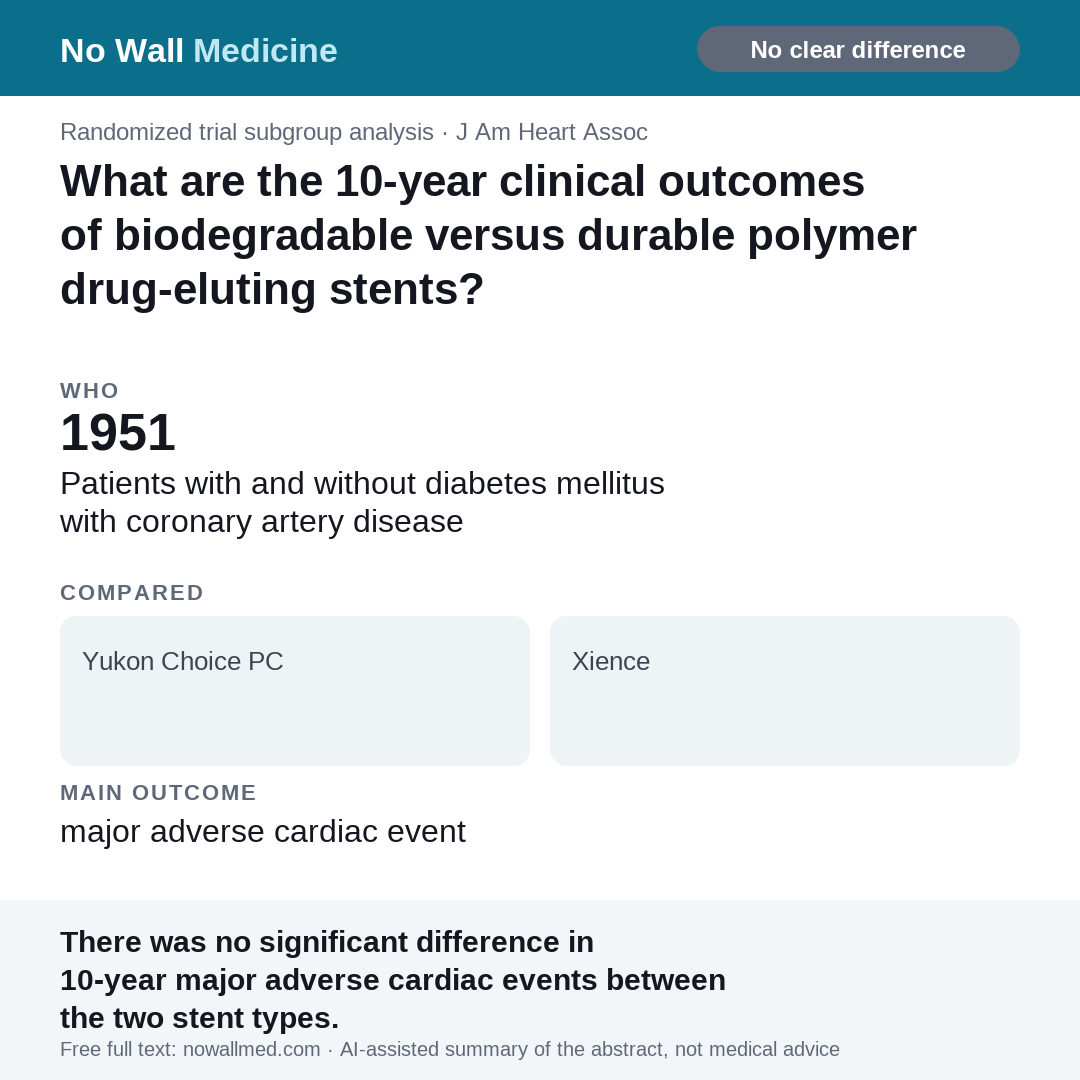
Clinical question: What are the 10-year clinical outcomes of biodegradable versus durable polymer drug-eluting stents?
Why it matters: Long-term follow-up data for new-generation drug-eluting stents in patients with diabetes mellitus is scarce.
Key points
- The study analyzed 1951 patients, including 560 with diabetes and 1391 without, comparing biodegradable polymer stents to permanent polymer stents.
- At 10 years, patients with diabetes had significantly higher rates of major adverse cardiac events, defined as death, heart attack, or repeat procedure, compared to those without diabetes (P<0.001; HR, 1.41; 95% CI, 1.22-1.63).
- There was no significant difference in major adverse cardiac events between the two stent types for patients with diabetes (P=0.91; HR, 1.01; 95% CI, 0.79-1.30) or without diabetes (P=0.50; HR, 0.94; 95% CI, 0.79-1.21).
Headline and key points written with AI from the paper’s abstract, with every number checked against it. Read the paper before relying on them.
Was this summary helpful?
Subject terms
Headline, design, result, key points, caveat and citation as plain text.
Cite this article
Lenz T, Koch T, Joner M, et al. Ten-Year Clinical Outcomes of Biodegradable Versus Durable Polymer New-Generation Drug-Eluting Stent in Patients With Coronary Artery Disease With and Without Diabetes Mellitus. J Am Heart Assoc. 2021. doi:10.1161/JAHA.120.020165
Spotted a mistake? Suggest a correction